Explore Countries
Search and filter through comprehensive country profiles with authoritative data
Showing 250 of 250 countries
 AFG
AFGAfghanistan, a landlocked nation in Central Asia with an area of 652,230 km², is home to a population of about 43.8 million people and features Kabul as its bustling capital. Known for its rugged mountainous terrain and diverse ethnic groups, the country has a complex history shaped by ancient trade routes like the Silk Road. While GDP data is currently unavailable, Afghanistan's economy relies heavily on agriculture, mining, and international aid amidst ongoing political challenges.
 ALA
ALAThe Åland Islands, an autonomous archipelago in the Baltic Sea and part of Finland, boast a small population of 30,654 spread across 1,580 km² of scenic, island-dotted terrain in Europe. With Mariehamn as its charming capital, the region thrives on shipping, tourism, and a unique demilitarized status, though GDP data is not separately available due to its integration with Finland. Known for its Swedish-speaking culture and high quality of life, Åland offers a peaceful Nordic escape with stunning maritime views and a self-governing vibe.
 ALB
ALBAlbania, a Southeastern European nation in the Balkans, boasts a population of about 2.36 million and covers 28,748 km² of diverse terrain from Adriatic beaches to rugged mountains. Its capital, Tirana, serves as the vibrant cultural and economic hub, blending Ottoman heritage with modern influences. While GDP data is unavailable here, Albania's economy thrives on tourism, agriculture, and energy, drawing visitors to its UNESCO sites and affordable coastal escapes.
 DZA
DZAAlgeria, the largest country in Africa by land area at 2,381,741 km², boasts a population of around 47.4 million and sits along the Mediterranean coast in North Africa. Its vibrant capital, Algiers, serves as a cultural and economic hub, blending historic architecture with modern energy. Though GDP figures aren't specified here, the nation thrives on vast oil and gas reserves, driving much of its economy and global trade.
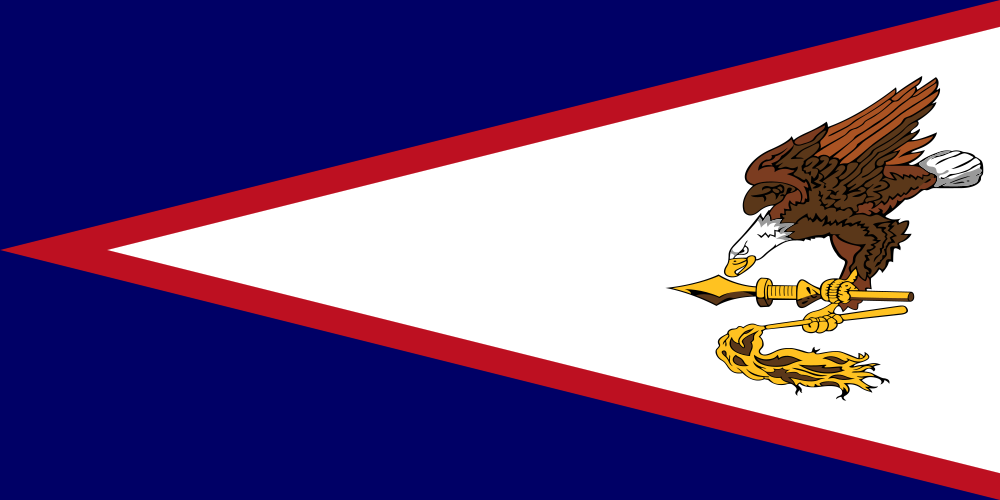 ASM
ASMAmerican Samoa is an unincorporated U.S. territory in Oceania's Polynesia region, boasting stunning volcanic islands and coral atolls spanning just 199 km². With a population of around 49,710, its capital is the bustling harbor town of Pago Pago, famous for tuna canning and Samoan culture. GDP data is unavailable, but the economy relies heavily on U.S. aid, fishing, and tourism.
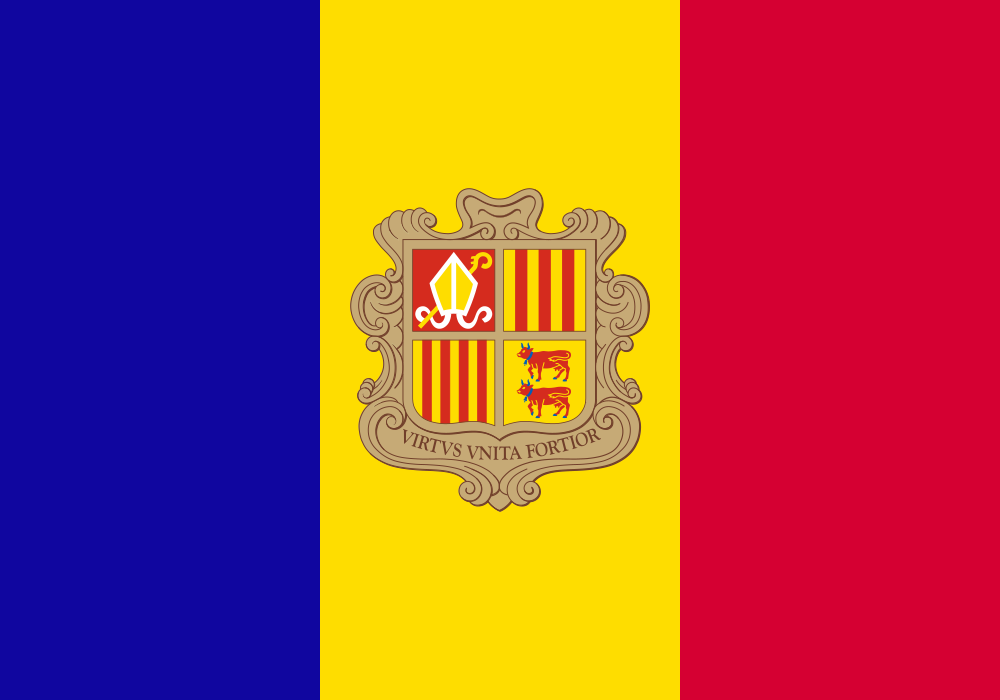 AND
ANDAndorra, a tiny landlocked principality in the Pyrenees Mountains of Europe, is nestled between Spain and France with a population of just 88,406 spread across 468 km². Its capital, Andorra la Vella, serves as a bustling hub for tax-free shopping and tourism, drawing millions of visitors annually. Though official GDP figures are not readily available, the economy thrives on retail, banking, and winter sports, making it one of Europe's wealthiest microstates per capita.
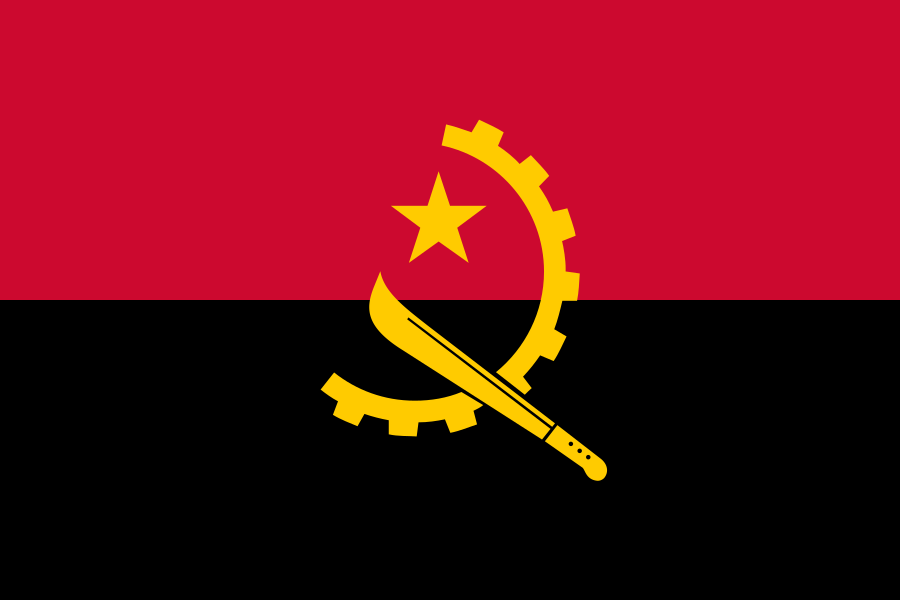 AGO
AGOAngola, a vast Southern African nation spanning 1,246,700 km², is home to over 36 million people and boasts Luanda as its bustling capital city. Rich in natural resources like oil and diamonds, it has emerged from decades of civil war to focus on economic diversification, though detailed GDP figures are currently unavailable. With stunning landscapes from Atlantic beaches to inland savannas, Angola offers a blend of vibrant culture and untapped potential.
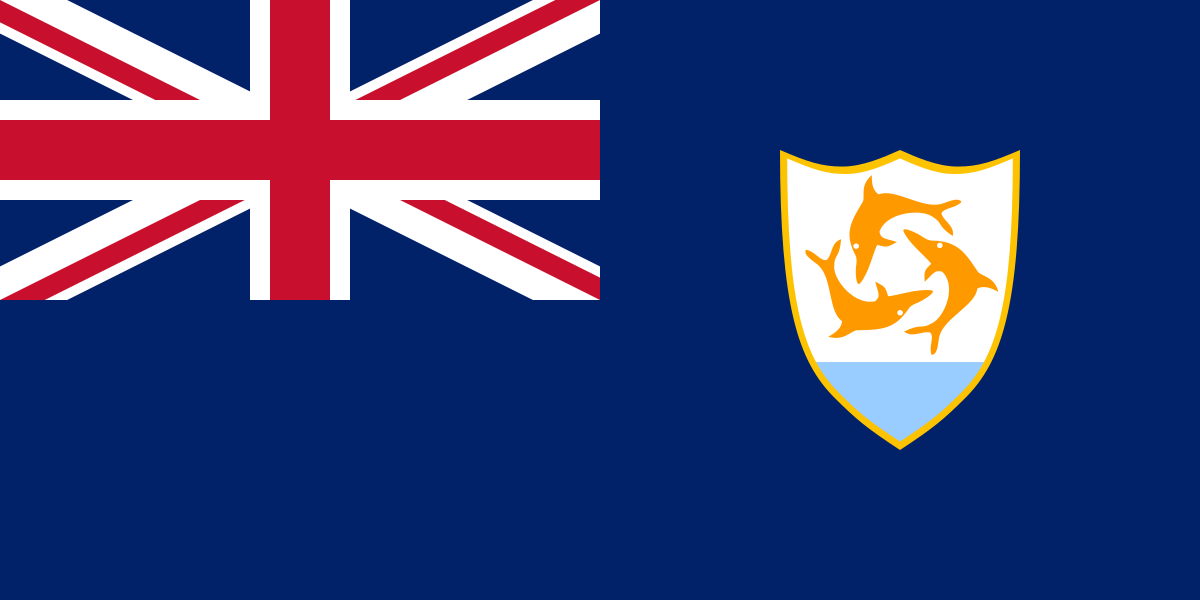 AIA
AIAAnguilla is a small British Overseas Territory in the Caribbean, part of the Americas region, boasting a population of around 16,010 across its 91 km² of coral and limestone terrain. The capital, The Valley, serves as the hub for this tourism-driven economy, where pristine beaches and luxury resorts attract visitors, though official GDP figures are unavailable. Despite its tiny size, Anguilla punches above its weight with a stable, offshore financial sector and vibrant marine life.
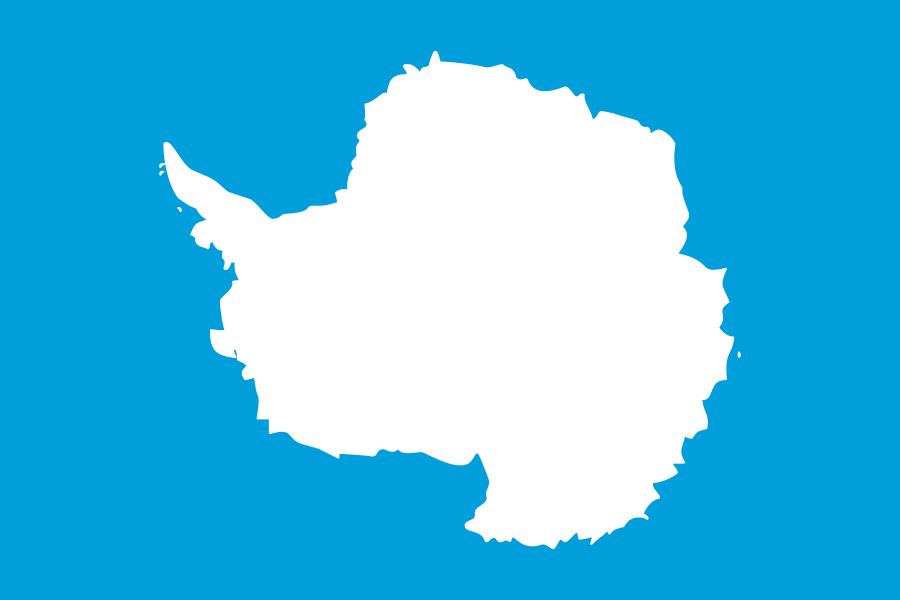 ATA
ATAAntarctica, the world's southernmost continent, spans 14,000,000 km² and is governed by the Antarctic Treaty System rather than as a sovereign nation, with no official capital or GDP. It hosts a transient population of about 1,300 people, primarily scientists and researchers enduring its extreme cold and isolation. This icy wilderness, home to unique wildlife like penguins and seals, remains a hub for global scientific collaboration and environmental preservation.
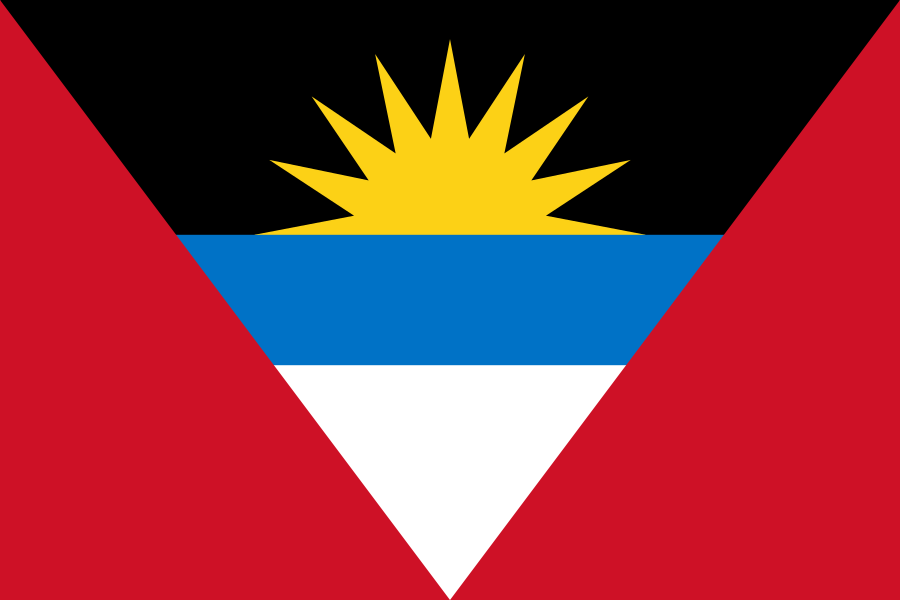 ATG
ATGAntigua and Barbuda is a twin-island nation in the Caribbean region of the Americas, with a population of about 103,603 and Saint John's as its vibrant capital. Covering a compact area of 442 km², it's renowned for its stunning beaches and tourism-driven economy, though specific GDP figures are unavailable. This former British colony gained independence in 1981 and boasts a rich cultural heritage influenced by African, European, and indigenous roots.
 ARG
ARGArgentina, a vibrant South American nation in the Americas region, boasts a population of over 46.7 million people and spans a vast area of 2,780,400 km², making it one of the largest countries in the world. Its bustling capital, Buenos Aires, serves as the cultural and economic heart, blending European influences with Latin flair. While GDP data is currently unavailable, Argentina is renowned for its diverse landscapes, from the Andes mountains to the Pampas plains, and its rich history in tango, soccer, and beef production.
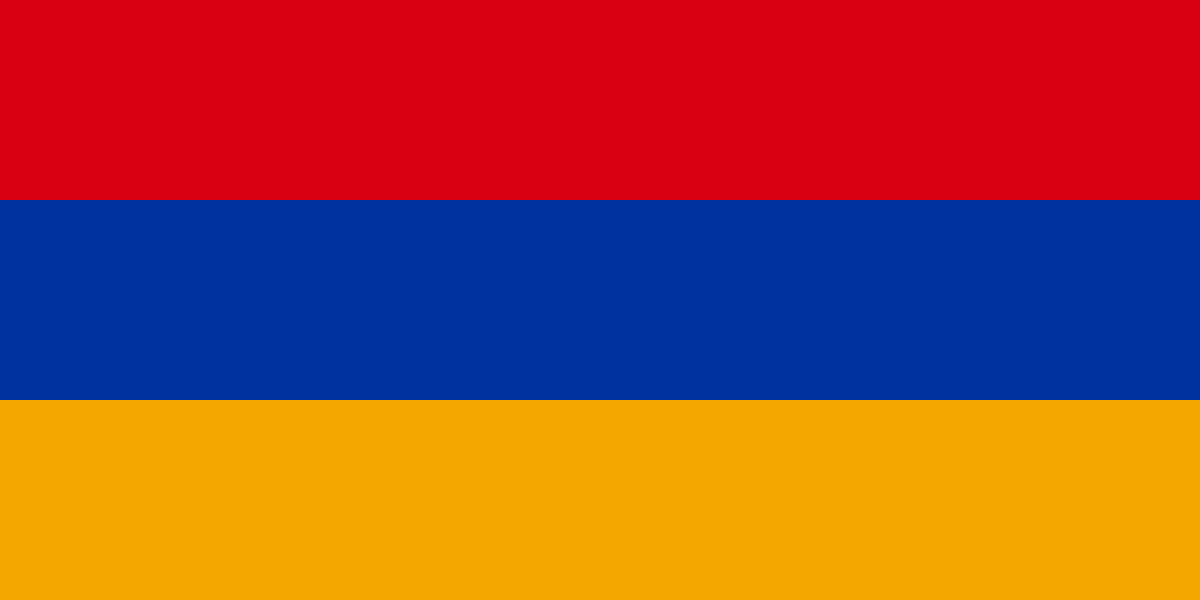 ARM
ARMArmenia, a landlocked nation in Western Asia, covers 29,743 km² and is home to about 3.07 million people, with Yerevan serving as its vibrant capital and cultural hub. Though GDP data is unavailable here, the country boasts a rich history as one of the world's oldest civilizations, blending ancient monasteries with modern tech innovation. Nestled in the Caucasus Mountains, it's famed for its dramatic landscapes, including the symbolic Mount Ararat, and a resilient spirit amid regional challenges.
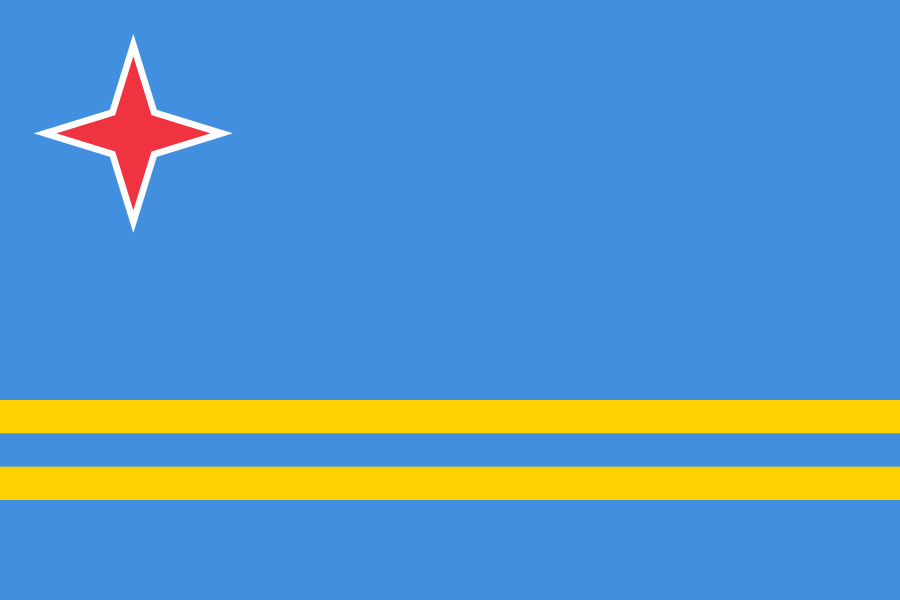 ABW
ABWAruba is a small island nation in the southern Caribbean Sea, part of the Kingdom of the Netherlands, with Oranjestad as its capital and a population of about 107,566 spread across just 180 km². Known for its stunning beaches and tourism-driven economy, it boasts a high standard of living despite its compact size (GDP data not available). This Dutch Caribbean gem offers a mix of cultural influences, making it a popular vacation spot with year-round warm weather.
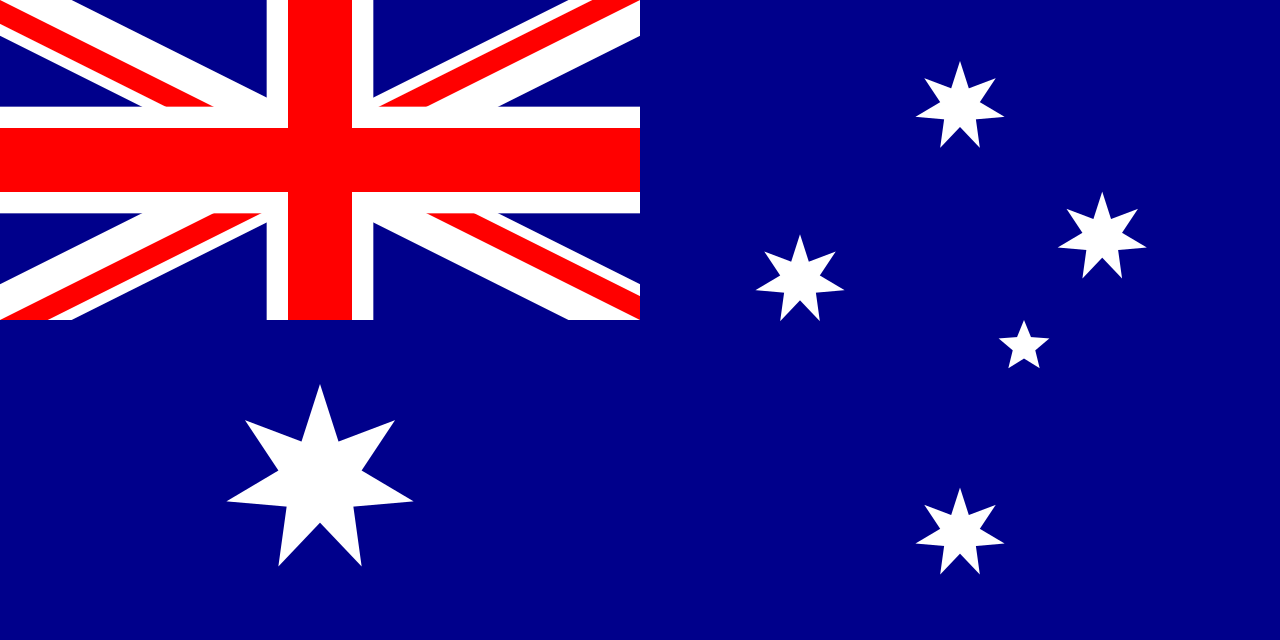
 AUS
AUSAustralia, a vast island continent in Oceania, spans 7,692,024 km² and is home to a population of about 27.5 million people, with Canberra serving as its capital. Renowned for its diverse landscapes from the Outback to stunning coastlines, it's a prosperous nation though current GDP data is unavailable. This multicultural federation boasts unique wildlife like kangaroos and koalas, blending urban vibrancy in cities like Sydney and Melbourne with rich Indigenous heritage.
 AUT
AUTAustria, a landlocked country in Central Europe, covers 83,871 km² and is home to approximately 9.2 million people, with Vienna serving as its vibrant capital and cultural hub. Renowned for its majestic Alps, classical music legacy (think Mozart and Strauss), and high quality of life, it boasts a strong economy focused on services, manufacturing, and tourism—though specific GDP figures are unavailable here. From skiing in the Tyrol to exploring imperial palaces, Austria blends natural beauty with historical charm, making it a top European destination.
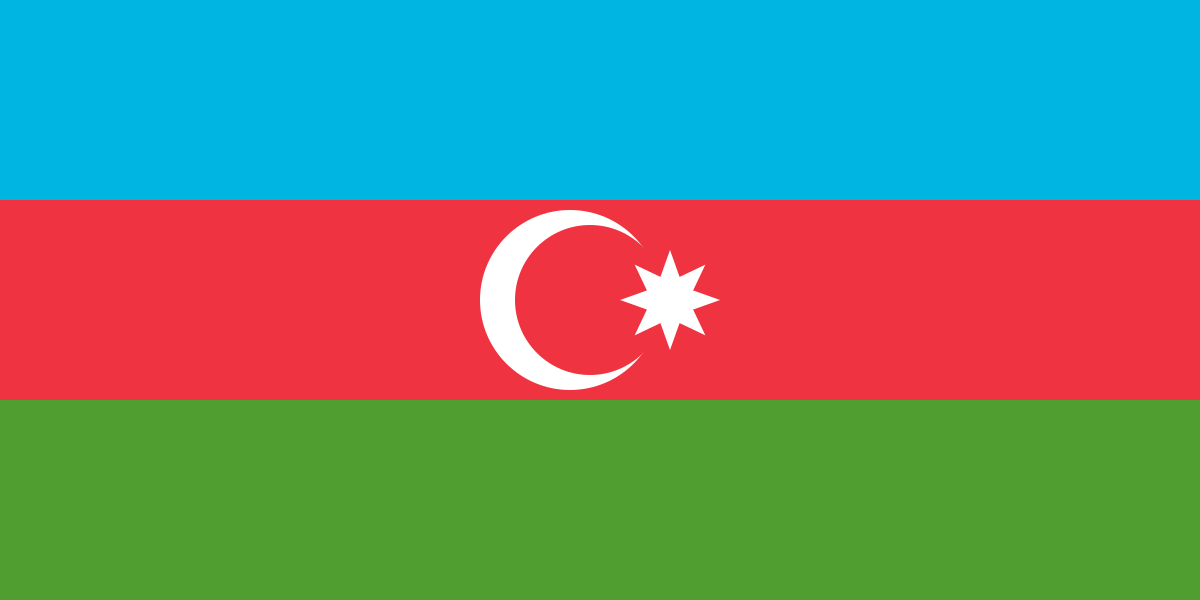 AZE
AZEAzerbaijan, nestled in Asia with its vibrant capital Baku, spans 86,600 km² and is home to a population of 10,241,722 people. Known for its strategic location at the crossroads of Europe and Asia, the country thrives on oil-rich resources, though current GDP data is unavailable. From ancient fire temples to modern skyscrapers, Azerbaijan blends rich history with Caspian Sea allure, making it a fascinating blend of cultures.
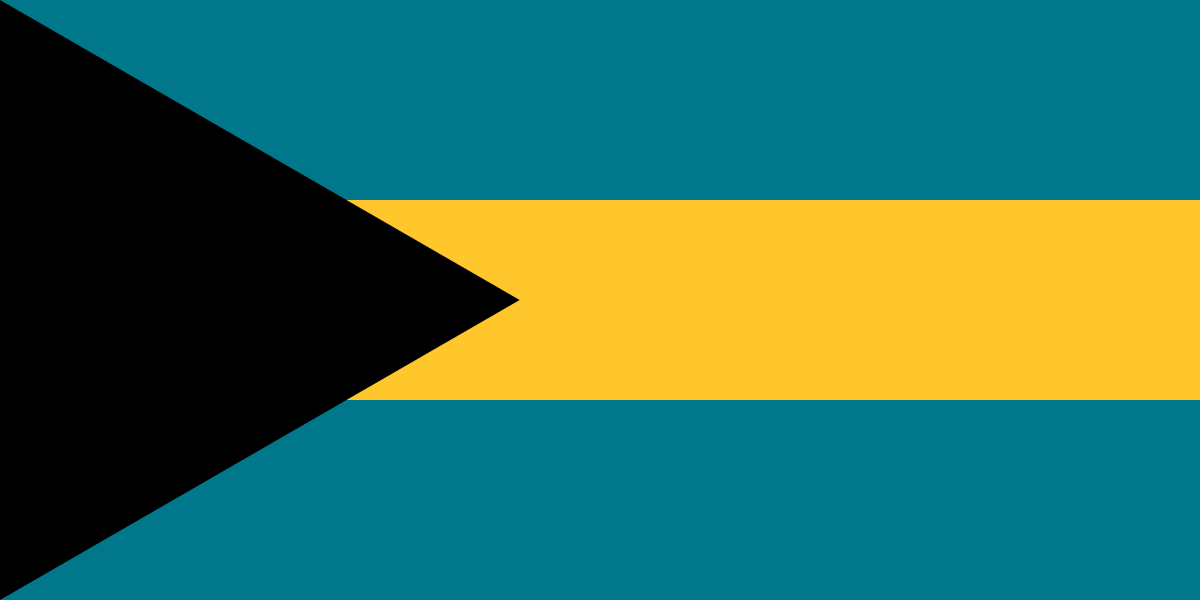 BHS
BHSThe Bahamas, an archipelago nation in the Americas, boasts a population of around 398,165 spread across 13,943 km² of tropical islands, with Nassau as its bustling capital. Known for its stunning beaches and vibrant tourism-driven economy, the country offers a mix of British colonial history and Caribbean culture. While GDP data is unavailable here, it's a popular haven for offshore finance and cruise ship visitors.
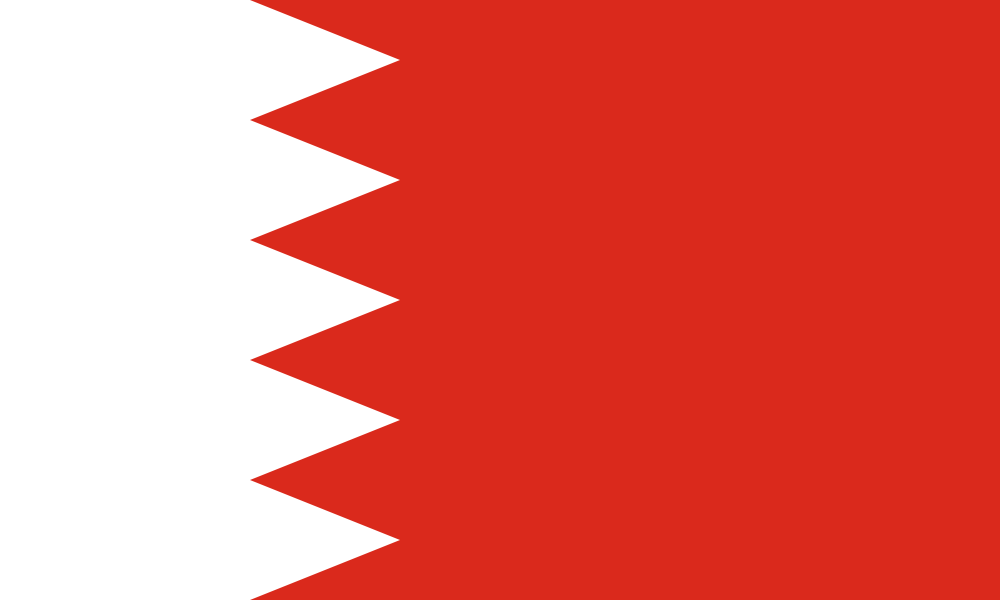 BHR
BHRBahrain, a compact island kingdom in Asia, boasts a population of around 1.6 million across its 765 km² of land, with Manama serving as its bustling capital. Renowned for its oil-rich economy and role as a global financial hub, the country blends modern skyscrapers with ancient heritage sites like the Bahrain Fort. While GDP data is unavailable here, Bahrain's strategic Persian Gulf location drives its prosperity through trade and tourism.
 BGD
BGDBangladesh, located in South Asia, is a densely populated nation with over 169 million people crammed into an area of 147,570 km², making it one of the world's most crowded countries. Its capital, Dhaka, serves as the bustling economic and cultural hub, driving growth in textiles, agriculture, and remittances despite challenges like flooding and climate vulnerability. With a GDP figure not available here, the country continues to emerge as a key player in global garment manufacturing and poverty reduction efforts.
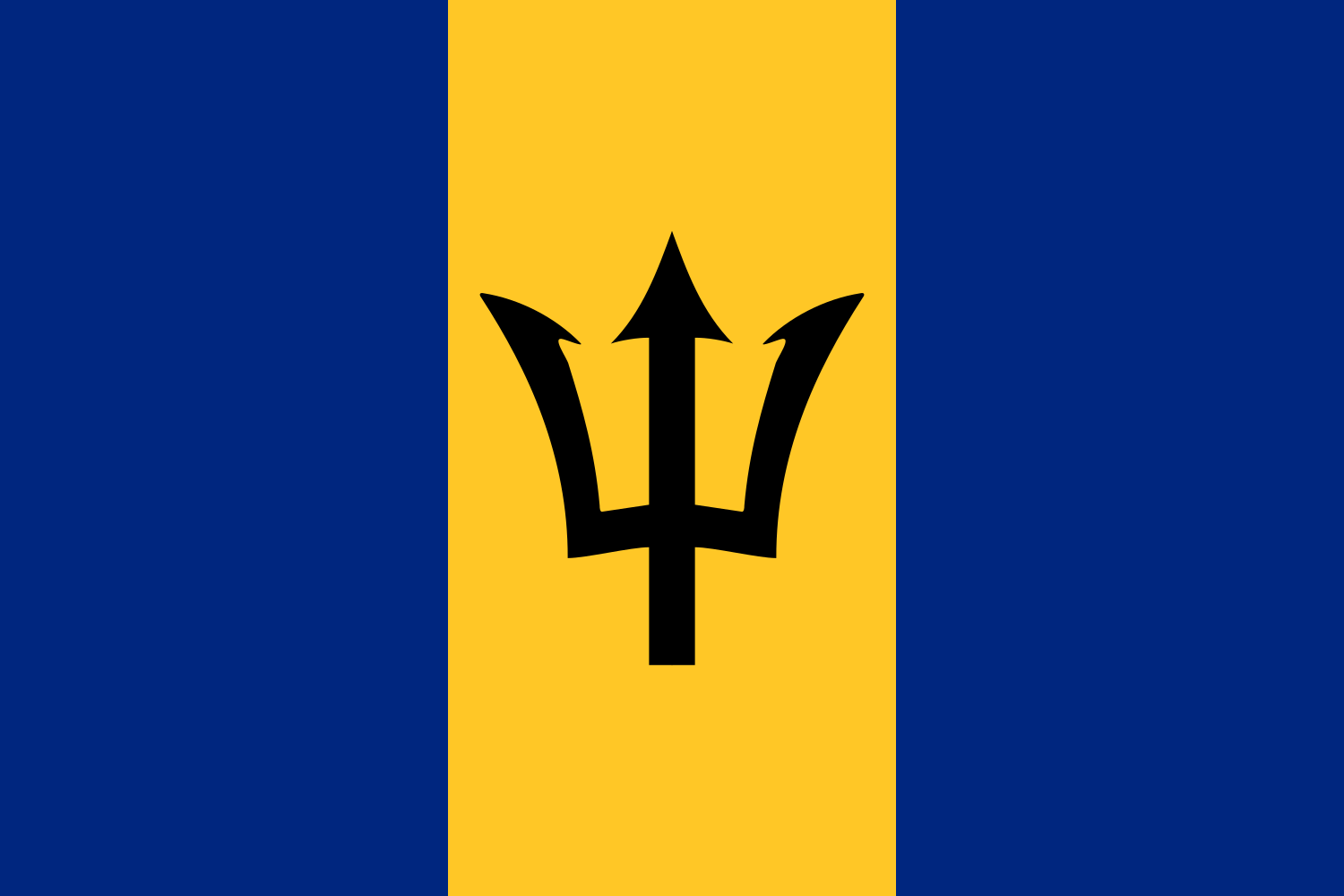 BRB
BRBBarbados is a vibrant island nation in the Americas' Caribbean region, boasting a population of about 267,800 across its compact 430 km² area, with Bridgetown as its bustling capital. Known for its stunning beaches, coral reefs, and rich cultural heritage blending African, British, and indigenous influences, it's a popular tourism hub. While GDP data is unavailable here, the economy thrives on services, offshore finance, and agriculture like sugar cane.
 BLR
BLRBelarus, a landlocked nation in Eastern Europe, boasts a population of around 9.1 million people and covers an area of 207,600 square kilometers, making it roughly the size of Kansas. Its capital, Minsk, serves as the bustling political and cultural hub, blending Soviet-era architecture with modern developments. While GDP data is currently unavailable, the country is known for its strong industrial base, including machinery and agriculture, amid its strategic position bordering Russia and the EU.
 BEL
BELBelgium, a compact European nation spanning 30,528 km², boasts a population of about 11.8 million and serves as a key hub for the European Union with its capital, Brussels, hosting major EU institutions. Famous for its medieval cities, world-class chocolates, and diverse linguistic regions (Dutch, French, and German-speaking), it's a cultural crossroads blending Flemish and Walloon influences. With a rich history of art and architecture, Belgium punches above its weight in global affairs and cuisine.
 BLZ
BLZBelize, a small Central American nation in the Americas region, boasts a population of around 417,634 across its 22,966 km² territory, with Belmopan serving as its capital. Known for its stunning Caribbean coastline and the world's second-largest barrier reef, it blends English-speaking culture with Mayan heritage and lush rainforests. While GDP data is unavailable here, the economy thrives on tourism, agriculture, and offshore services, making it a hidden gem for eco-adventurers.
 BEN
BENBenin, a West African nation with a population of about 13.2 million, spans 112,622 km² and is known for its vibrant cultural heritage, including being the birthplace of voodoo. Its capital is Porto-Novo, though Cotonou serves as the economic hub, and the country boasts a diverse economy centered on agriculture, cotton exports, and emerging tourism. With GDP data unavailable here, Benin continues to focus on sustainable development amid challenges like poverty and climate change.
 BMU
BMUBermuda, a British Overseas Territory in the North Atlantic Ocean, is a small archipelago in the Americas region with Hamilton as its capital and a total area of just 54 km², renowned for its pink sand beaches and vibrant coral reefs. Home to a population of about 64,055, it boasts one of the world's highest GDP per capita (around $118,000, though exact figures vary), driven by international finance, insurance, and tourism. Despite its tiny size, Bermuda's subtropical climate and tax haven status make it a global hotspot for business and luxury getaways.
 BTN
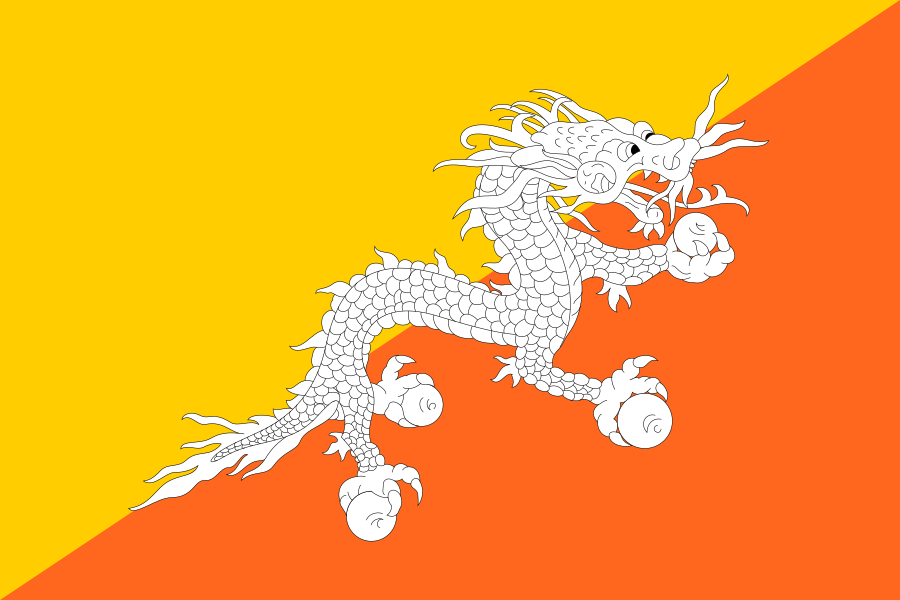
BTNBhutan, a landlocked Himalayan kingdom in South Asia, is renowned for prioritizing Gross National Happiness over GDP, fostering a unique blend of environmental conservation and cultural preservation. With a population of about 784,043 spread across 38,394 km², its capital Thimphu serves as the cultural and political hub, surrounded by stunning mountain landscapes and ancient monasteries. Though GDP data is unavailable here, the nation thrives on hydropower exports and sustainable tourism, maintaining one of the world's lowest carbon footprints.
 BOL
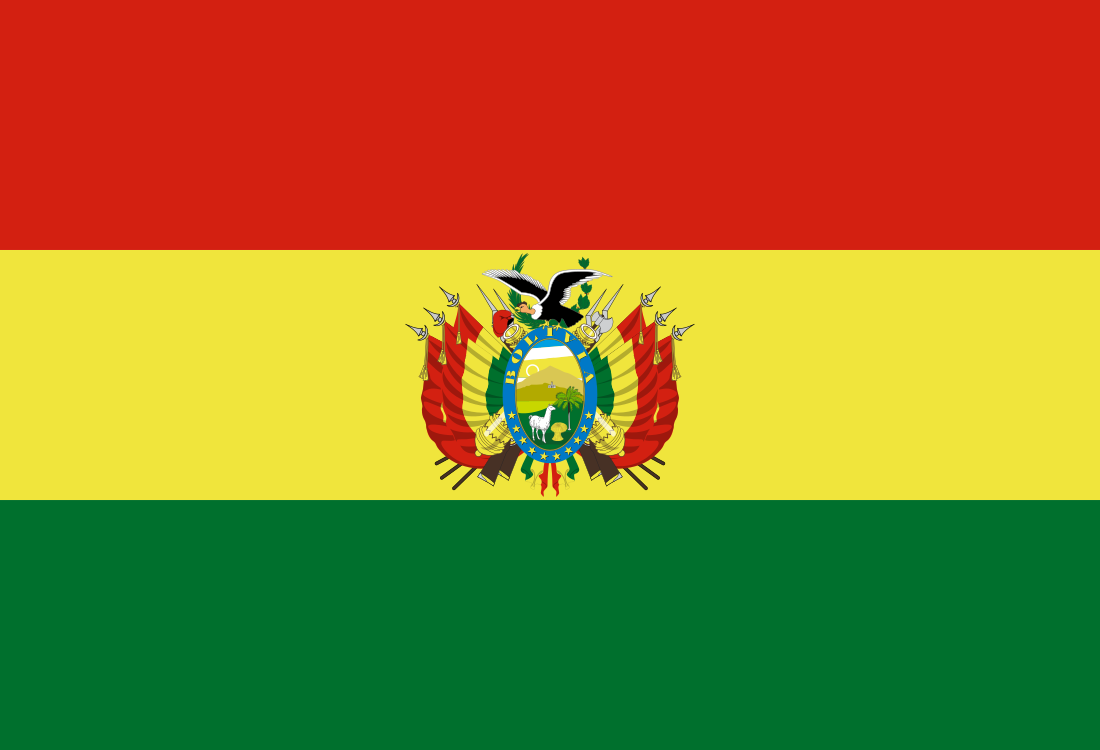
BOLBolivia, a landlocked nation in the heart of South America's Andes region, boasts a diverse population of about 11.4 million people spread across its vast 1,098,581 km² territory. With Sucre as its constitutional capital, the country is renowned for its rich indigenous cultures, stunning landscapes like the Salar de Uyuni salt flats, and a history marked by ancient civilizations such as the Tiwanaku. Economically, it relies on mining, natural gas, and agriculture, though detailed GDP figures are not available here.
 BIH
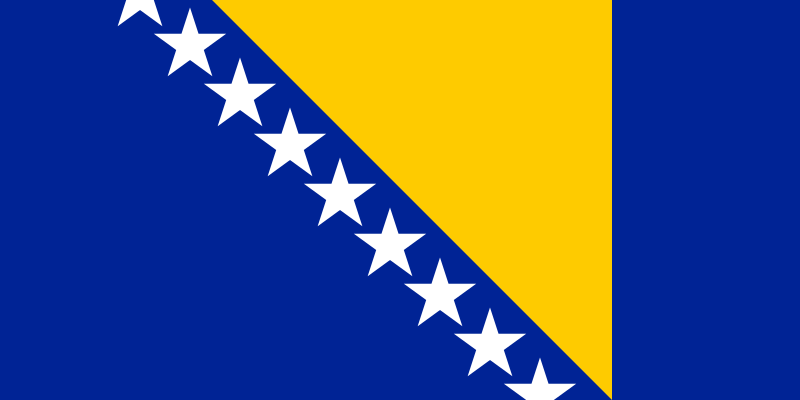
BIHBosnia and Herzegovina, a Southeastern European nation with a population of about 3.4 million, spans 51,209 km² and features Sarajevo as its vibrant capital, blending Ottoman, Austro-Hungarian, and modern influences. Emerging from the 1990s Yugoslav wars, it boasts stunning natural beauty like the Dinaric Alps and Neretva River, alongside a diverse ethnic mix of Bosniaks, Serbs, and Croats. While GDP data is unavailable here, the economy relies on manufacturing, tourism, and remittances, with ongoing challenges in political stability and EU integration aspirations.
 BWA
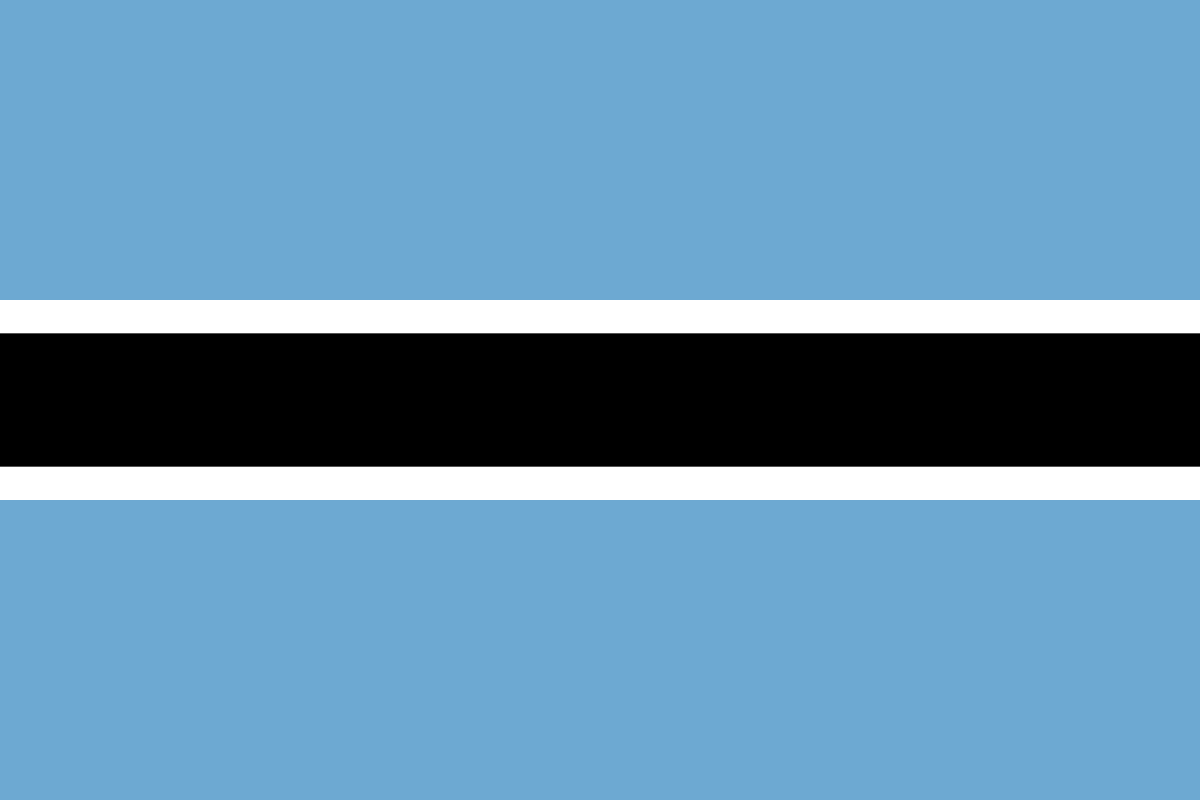
BWABotswana, a landlocked nation in Southern Africa, boasts a population of about 2.36 million people across its vast 582,000 km² expanse, with Gaborone serving as its bustling capital. Renowned for its stable democracy and diamond-rich economy, it has achieved impressive growth despite challenges like water scarcity and HIV/AIDS prevalence. While GDP data isn't specified here, the country focuses on eco-tourism and conservation, highlighted by the stunning Okavango Delta.
 BVT
BVTBouvet Island, an uninhabited subantarctic dependency of Norway, is one of the most remote places on Earth, located in the South Atlantic Ocean near Antarctica. Spanning just 49 km² of volcanic terrain covered in glaciers, it has no permanent population, capital, or GDP, serving primarily as a nature reserve for scientific research. Despite its isolation, it's a haven for seabirds and seals, drawing occasional expeditions for meteorological and geological studies.
 BRA
BRABrazil, the largest country in South America and part of the Americas region, spans an impressive 8,515,767 km² and boasts Brasília as its vibrant capital. With a population of over 213 million, it's a cultural powerhouse known for its diverse landscapes from the Amazon rainforest to bustling cities like Rio de Janeiro. While GDP data is unavailable here, Brazil thrives on agriculture, mining, and tourism, making it a key player in global trade.
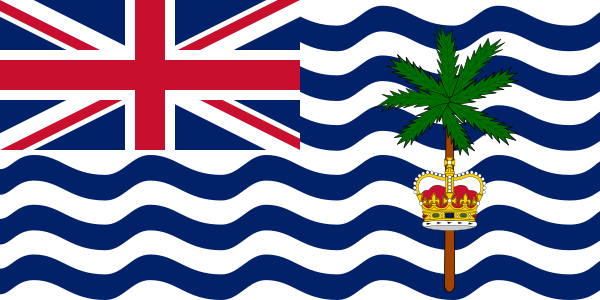 IOT
IOTThe British Indian Ocean Territory (BIOT) is a remote British overseas territory comprising the Chagos Archipelago in the Indian Ocean, with a total land area of just 60 km² and Diego Garcia serving as its administrative capital and primary hub. Classified under the Africa region, it hosts a major US-UK military base on Diego Garcia, but has no permanent civilian population or recorded GDP, making it one of the world's most isolated and strategically vital outposts. Despite its tiny size, BIOT remains embroiled in international disputes over sovereignty and the rights of displaced Chagossian islanders.
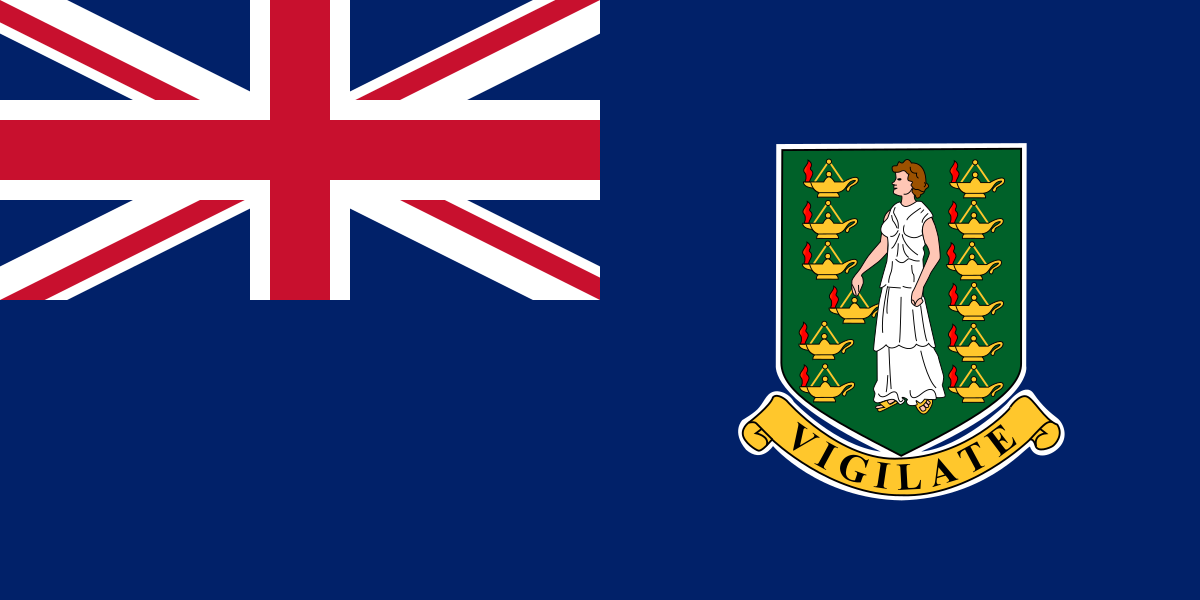 VGB
VGBThe British Virgin Islands (BVI), a British Overseas Territory in the Americas, boasts a small population of 39,471 spread across 151 km² of stunning Caribbean islands, with Road Town as its capital. Renowned for pristine beaches, yachting havens, and a thriving offshore financial sector, the BVI's GDP data is not available, reflecting its status as a tax haven and tourism hotspot. This archipelago offers a blend of luxury escapes and natural beauty, attracting visitors to its coral reefs and sailing adventures.
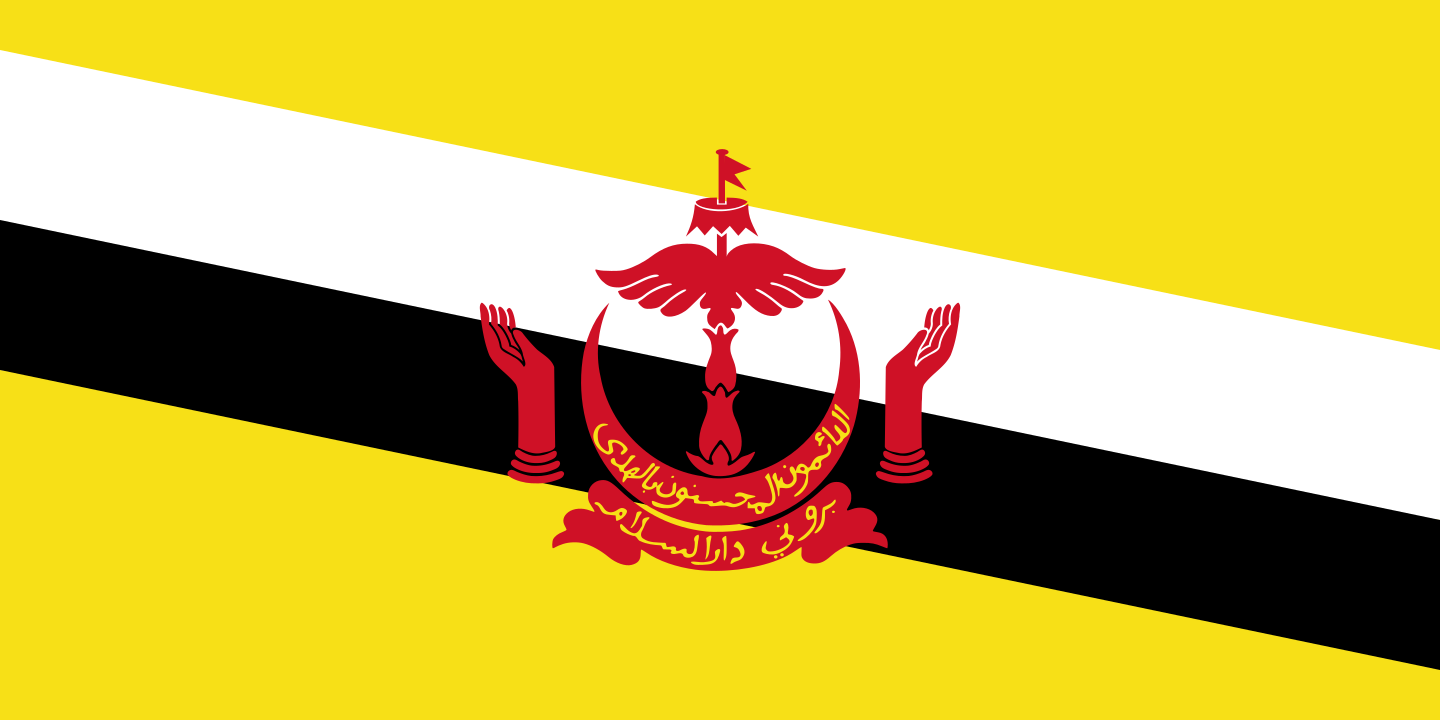 BRN
BRNBrunei, a small sovereign state in Southeast Asia, boasts a population of about 455,500 and covers an area of 5,765 km², with Bandar Seri Begawan as its vibrant capital. Known for its oil-rich economy, the nation thrives on petroleum exports, though exact GDP figures are not available here. This absolute monarchy blends Islamic traditions with modern wealth, offering a unique glimpse into a prosperous yet compact Asian gem.
 BGR
BGRBulgaria, a southeastern European nation with a population of about 6.4 million, spans 110,879 km² and boasts Sofia as its vibrant capital city, blending ancient history with modern flair. While GDP data is unavailable here, the country is renowned for its diverse landscapes—from the Black Sea coast to the Balkan Mountains—and rich cultural heritage, including Thracian ruins and Orthodox monasteries. As an EU member since 2007, Bulgaria offers a mix of affordable living, rose oil production, and emerging tech sectors, making it an intriguing spot for history buffs and adventurers alike.
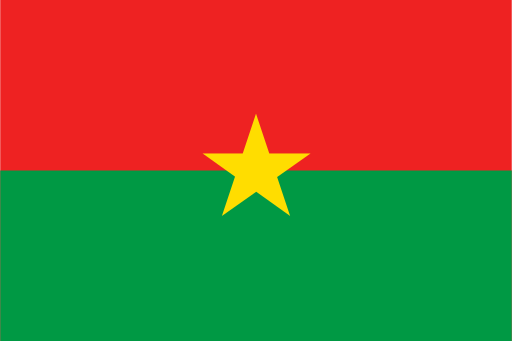 BFA
BFABurkina Faso, a landlocked West African nation with a population of around 24 million, spans 272,967 km² and is centered around its bustling capital, Ouagadougou. Known for its gold mining and cotton exports, the country grapples with economic hurdles (GDP data unavailable) amid political instability and jihadist threats. Despite challenges, it boasts a rich cultural tapestry influenced by diverse ethnic groups like the Mossi.
 BDI
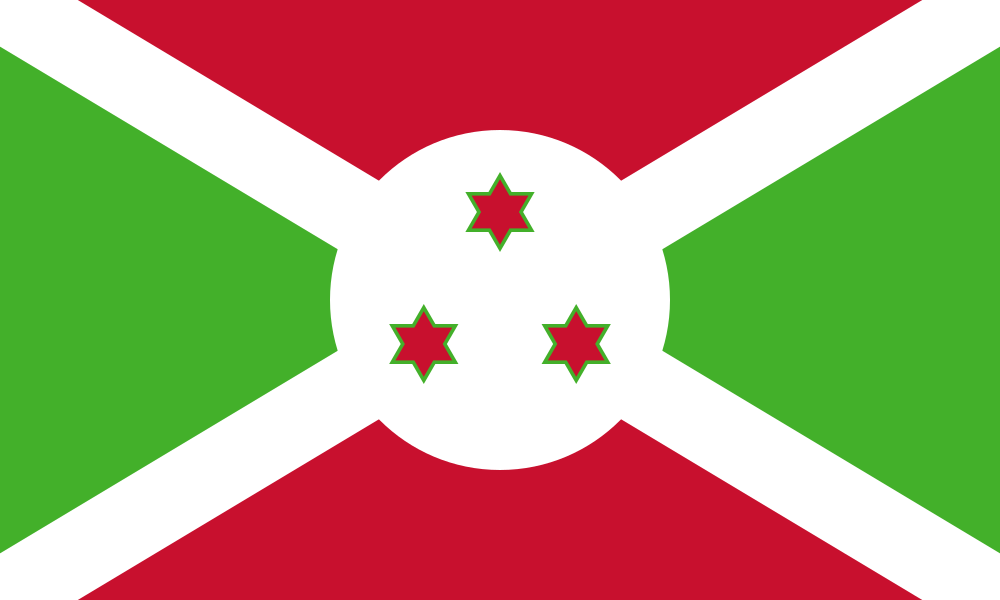
BDIBurundi, a landlocked nation in East Africa, spans 27,834 km² and is home to about 12.3 million people, making it one of the continent's most densely populated countries. Its capital, Gitega, serves as the political hub, while the economy remains one of the world's least developed, heavily reliant on agriculture like coffee and tea exports amid ongoing challenges from poverty and political instability. Despite its struggles, Burundi boasts stunning landscapes, including Lake Tanganyika, and a resilient culture rooted in drumming traditions and community spirit.
 KHM
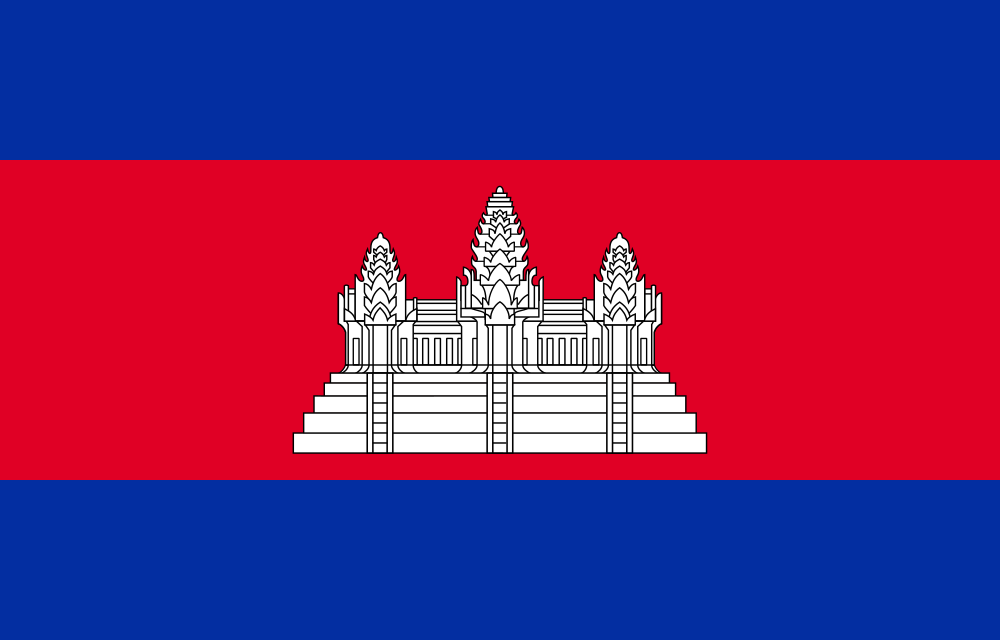
KHMCambodia, a Southeast Asian nation with a population of about 17.6 million, spans 181,035 km² and boasts the bustling capital of Phnom Penh. Known for its rich history, including the ancient Angkor Wat temple complex, the country blends vibrant culture with tropical landscapes along the Mekong River. While GDP data is unavailable here, Cambodia's economy thrives on agriculture, textiles, and tourism.
 CMR
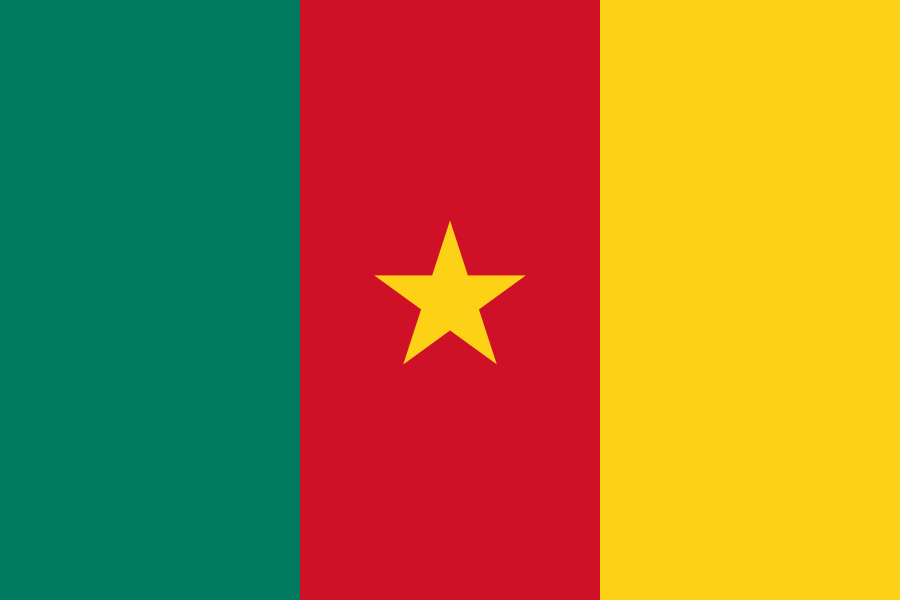
CMRCameroon, a Central African nation often called "Africa in miniature" for its diverse landscapes and cultures, spans 475,442 km² and is home to over 29 million people. Its capital, Yaoundé, serves as the political hub in this bilingual country (French and English), which boasts a mix of rainforests, mountains, and coastlines. With a growing economy driven by oil, agriculture, and timber, Cameroon faces challenges like political tensions but remains a vibrant gateway to Africa's biodiversity.
 CAN
CANCanada, the second-largest country by land area at 9,984,670 km², spans the Americas region and boasts a population of over 41 million people. Its capital, Ottawa, serves as the political hub of this vast, bilingual nation known for its stunning natural landscapes, from the Rocky Mountains to the Arctic tundra. With a strong emphasis on multiculturalism and outdoor adventures, Canada offers a high quality of life amid its diverse provinces and territories.
 CPV
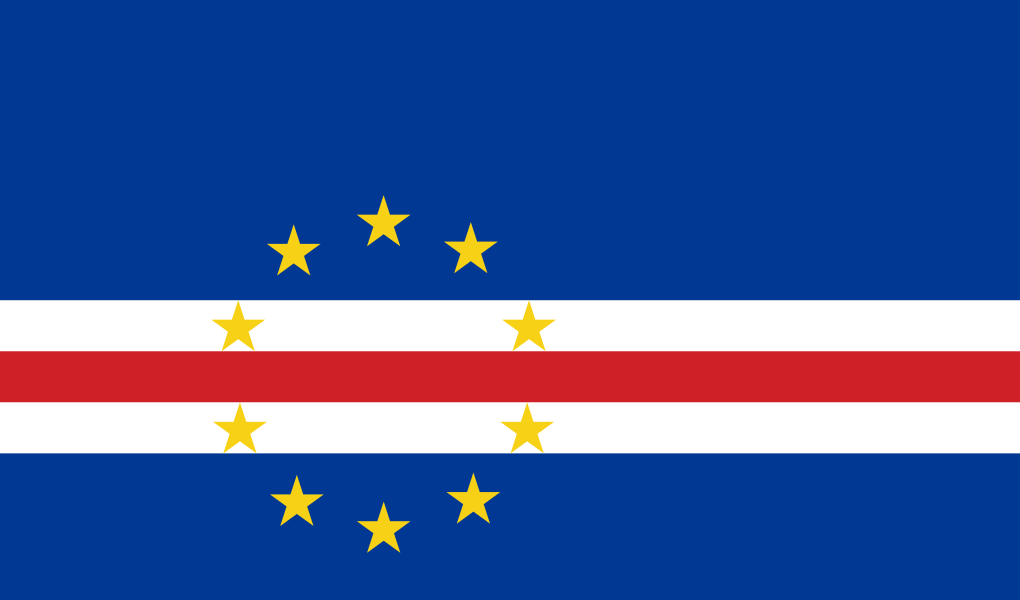
CPVCape Verde, officially Cabo Verde, is an archipelago nation in the Atlantic Ocean off West Africa's coast, with a population of around 491,233 spread across 4,033 km² of volcanic islands. Its capital, Praia, serves as the economic and cultural hub on Santiago Island. Known for its Creole heritage, stunning beaches, and morna music, this African country thrives on tourism and fisheries despite limited natural resources.
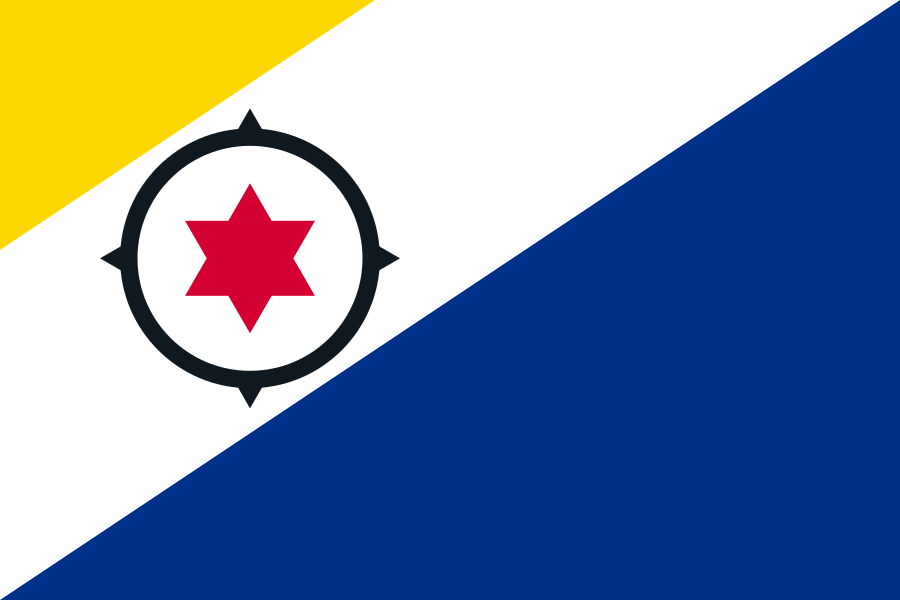 BES
BESThe Caribbean Netherlands, comprising the islands of Bonaire, Sint Eustatius, and Saba, is a special municipality of the Kingdom of the Netherlands located in the Americas, with a total area of 328 km² and a population of about 31,980. Kralendijk serves as the capital of Bonaire, the largest island, while GDP data is not available, reflecting its status as a non-sovereign territory reliant on tourism, diving, and Dutch governance. Known for its stunning coral reefs and eco-tourism, it offers a unique blend of Caribbean vibes and European administration, making it a hidden gem for adventure seekers.
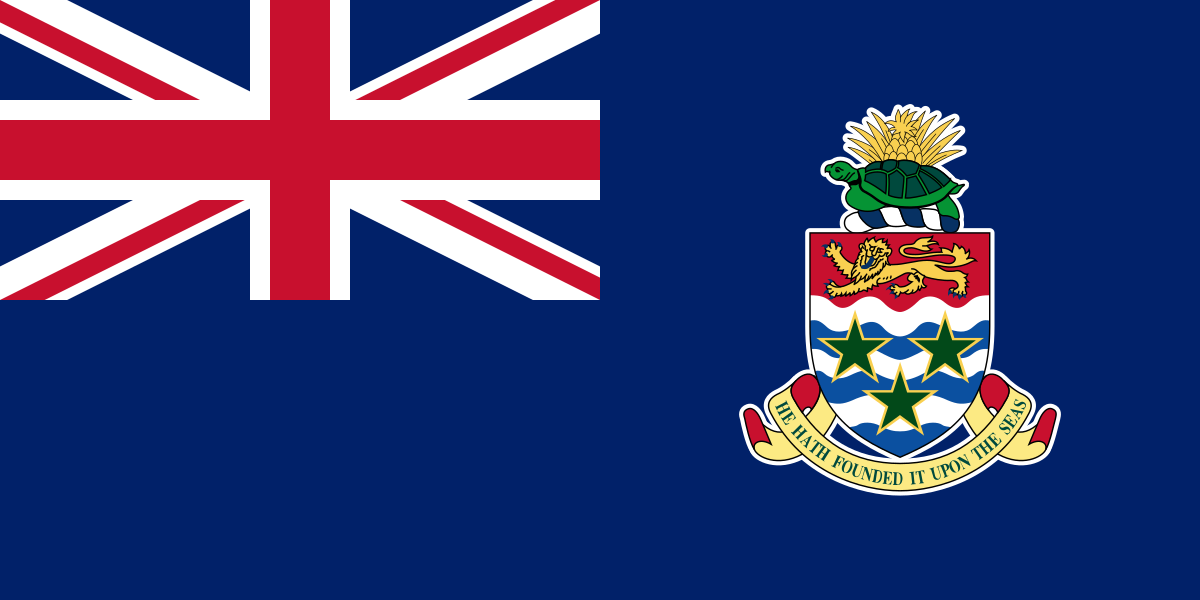 CYM
CYMThe Cayman Islands, a British Overseas Territory in the Caribbean region of the Americas, boasts a population of about 84,738 across its compact 264 km² area, with George Town serving as its bustling capital. Renowned as a global offshore financial hub, it attracts international business and tourism with its pristine beaches, coral reefs, and tax-friendly policies, though official GDP figures are not available. This tropical paradise blends luxury living with a vibrant marine ecosystem, making it a hotspot for divers, bankers, and sun-seekers alike.
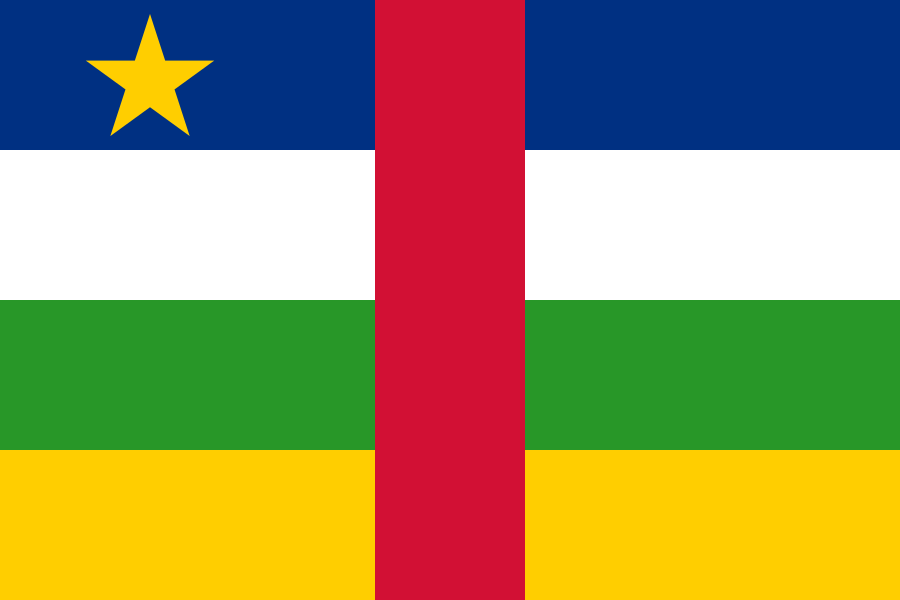 CAF
CAFThe Central African Republic (CAR) is a landlocked nation in Central Africa with a population of about 6.5 million people spread across 622,984 km², making it one of the continent's most sparsely populated countries. Its capital, Bangui, serves as the economic and political hub, though the country faces ongoing challenges like political instability and humanitarian crises despite rich natural resources such as diamonds and timber. With GDP data unavailable, CAR remains one of the world's poorest nations, heavily reliant on agriculture and international aid.
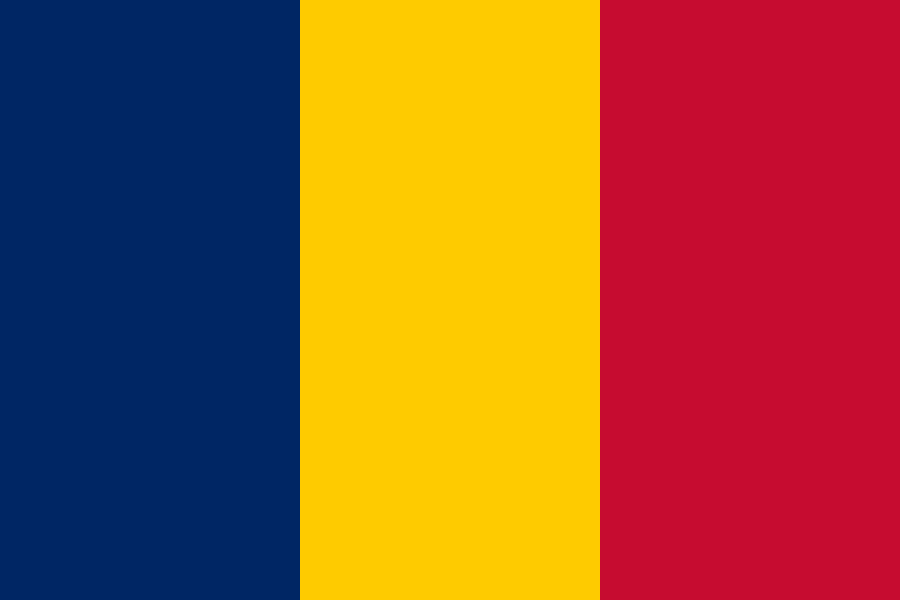 TCD
TCDChad, a landlocked nation in Central Africa, spans 1,284,000 km² and is home to a population of about 19.3 million, with N'Djamena as its bustling capital. Known for its diverse landscapes from the Sahara Desert in the north to the fertile Lake Chad basin, the country relies heavily on oil exports and agriculture amid ongoing challenges like political instability and poverty. While GDP data is unavailable here, Chad's economy is among Africa's most vulnerable, yet it boasts rich cultural heritage from over 200 ethnic groups.
 CHL
CHLChile, a long, narrow country in the Americas region of South America, spans 756,102 km² and is home to a population of 20,206,953 people. Its bustling capital, Santiago, serves as the political and economic hub, nestled amid the Andes Mountains and Pacific coast. While GDP data isn't specified here, Chile is renowned for its rich copper reserves, diverse geography from deserts to glaciers, and stable democracy.
 CHN
CHNChina, the world's most populous nation with over 1.4 billion people, spans a vast area of 9,706,961 km² in Asia, making it one of the largest countries by landmass. Its capital, Beijing, serves as the political and cultural heart, blending ancient history with modern innovation. While GDP data is unavailable here, China drives global trade and technology with its immense economic influence.
 CXR
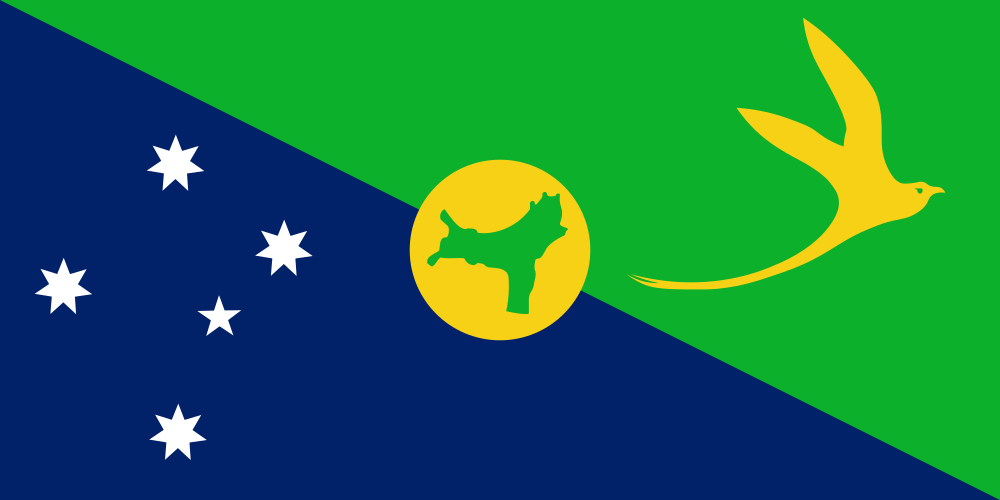
CXRChristmas Island, a small Australian external territory in Oceania, spans just 135 km² and is home to a population of about 1,692, with Flying Fish Cove serving as its capital. Famous for its annual red crab migration and phosphate mining history, the island's GDP data is not available, reflecting its remote, nature-focused economy. Despite its isolation in the Indian Ocean, it boasts unique biodiversity and serves as a key migration route for seabirds.
 CCK
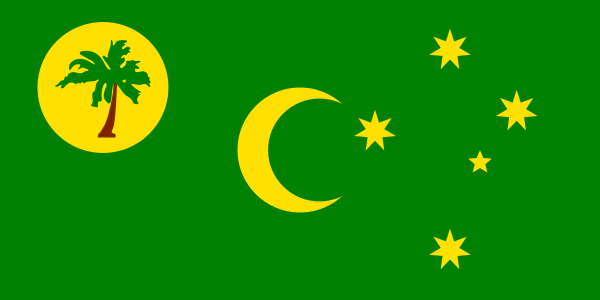
CCKThe Cocos (Keeling) Islands, a remote Australian external territory in Oceania, consist of 27 coral islands spanning just 14 km², with West Island serving as the capital and administrative hub. Home to a tiny population of around 593 people, the islands boast stunning lagoons and beaches, relying primarily on tourism, coconut production, and Australian government support for their economy (GDP data unavailable). This tropical paradise, located midway between Australia and Sri Lanka, offers a unique blend of Malay culture and pristine natural beauty.
 COL
COLColombia, a vibrant South American nation in the Americas region, boasts a population of over 53 million across its expansive 1,141,748 km² territory, with Bogotá serving as its bustling capital. Renowned for its biodiversity, including Amazon rainforests and Andean peaks, the country blends indigenous, Spanish, and African influences in its culture. (GDP data: N/A)
 COM
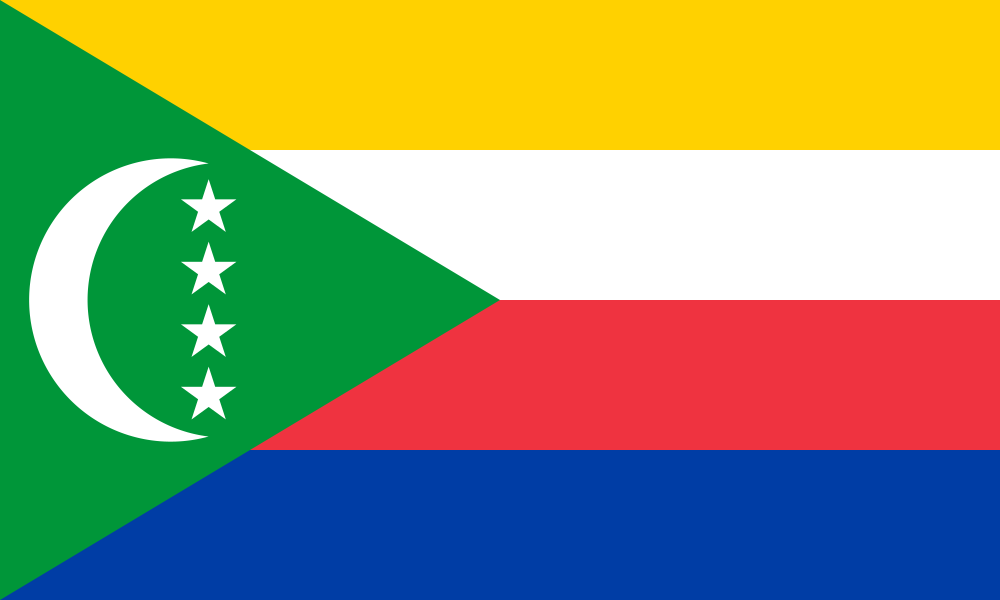
COMComoros is a small archipelago nation in the Indian Ocean off Africa's east coast, with a population of about 920,000 spread across 1,862 km² and its capital in Moroni. Known for its volcanic landscapes and diverse marine life, it boasts stunning beaches and a rich Swahili-Arab cultural heritage. Despite political challenges, the economy relies on agriculture like vanilla and cloves, though detailed GDP figures are unavailable.
 COK
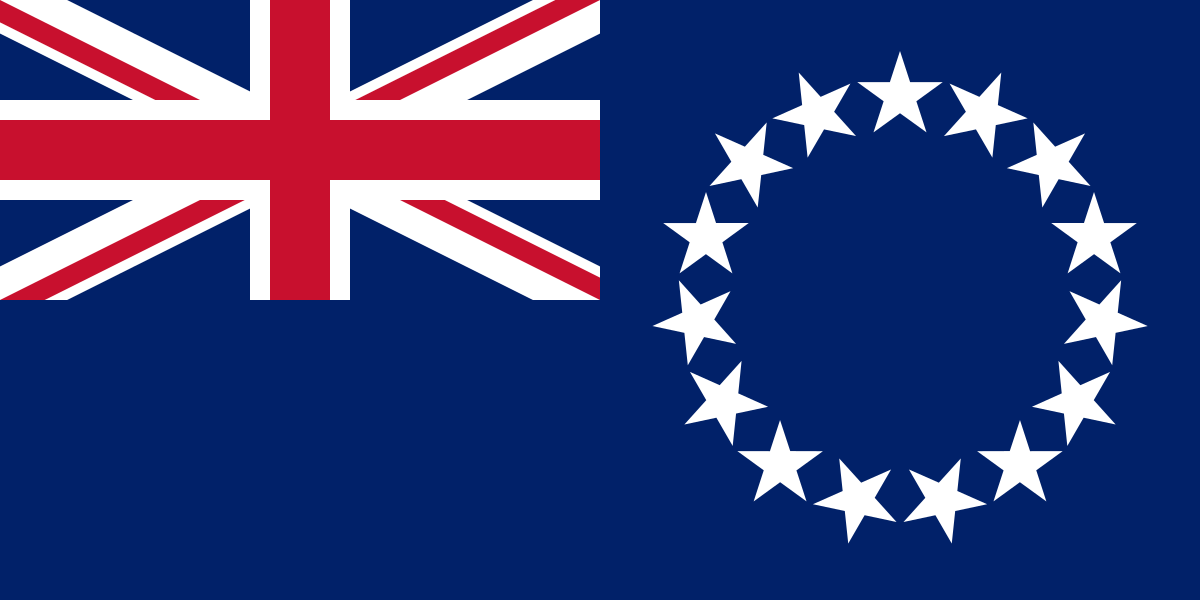
COKThe Cook Islands, a self-governing archipelago in free association with New Zealand, lies in the South Pacific region of Oceania and spans just 236 km² across 15 islands. Home to a population of 15,040, its vibrant capital Avarua on Rarotonga buzzes with Polynesian culture, stunning lagoons, and a tourism-driven economy (GDP data unavailable). This tropical paradise offers pristine beaches and marine reserves, making it a hidden gem for eco-adventurers.
 CRI
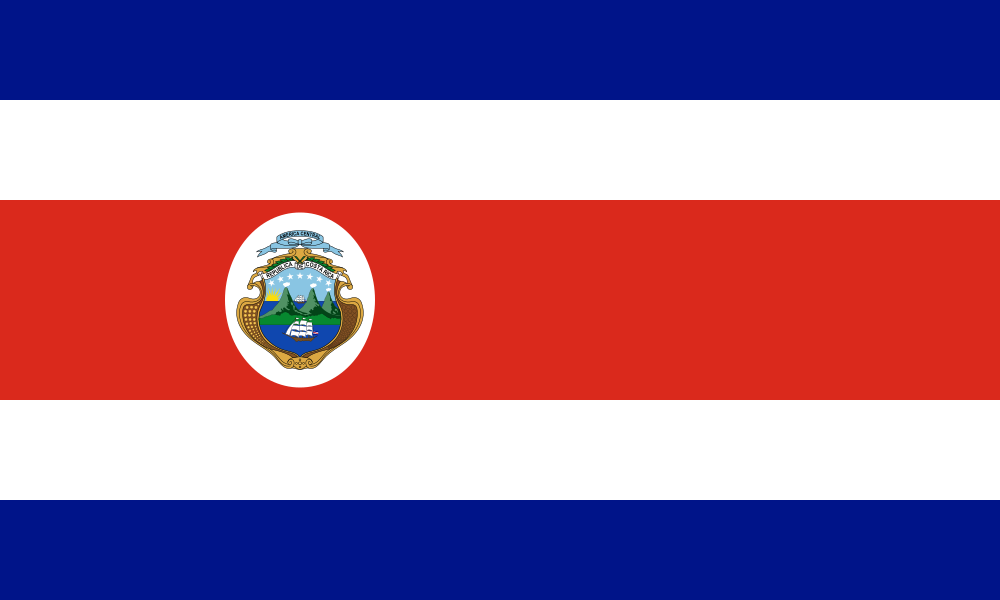
CRICosta Rica, a vibrant Central American nation in the Americas region, spans 51,100 km² and is home to about 5.3 million people, with San José as its bustling capital. Renowned for its lush rainforests, stunning beaches, and commitment to environmental conservation, it's a global leader in biodiversity and sustainable tourism. Despite lacking GDP data here, the country boasts a stable economy driven by ecotourism, agriculture, and tech exports, and famously maintains no standing army since 1948.
 HRV
HRVCroatia, a scenic European nation in the Balkans, boasts a population of about 3.9 million and covers 56,594 km², with Zagreb as its vibrant capital. Known for its stunning Adriatic coastline and historic sites like Dubrovnik, it's a popular tourist destination blending rich cultural heritage with natural beauty. While GDP data is unavailable here, the country thrives on tourism, shipbuilding, and EU membership since 2013.
 CUB
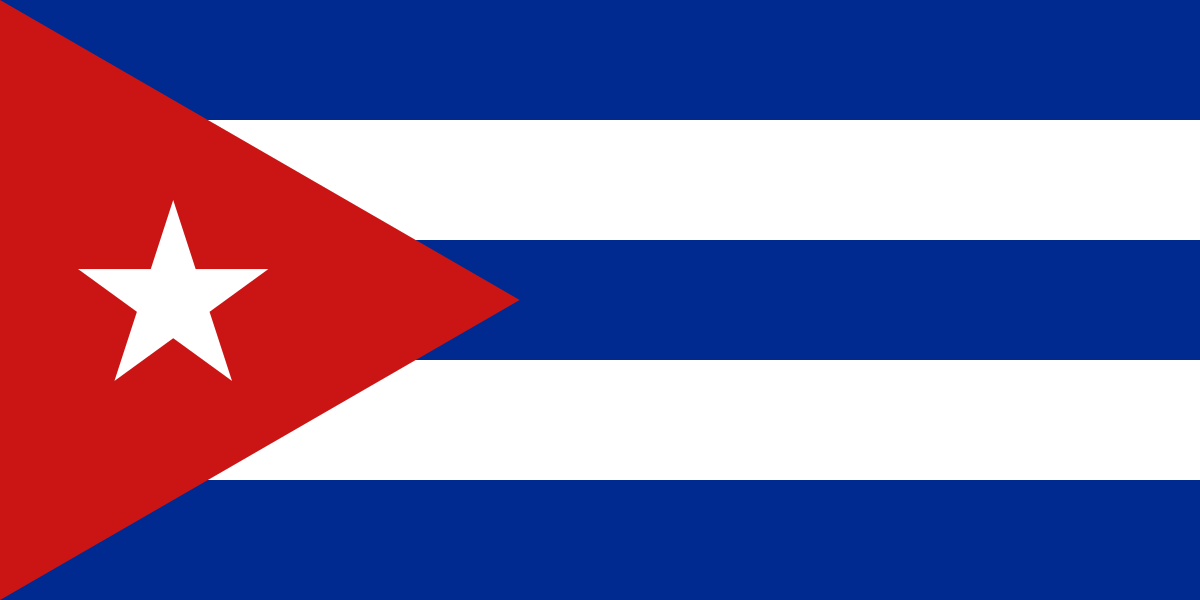
CUBCuba, a vibrant island nation in the Americas, boasts a population of about 9.7 million people spread across 109,884 km², with Havana serving as its bustling capital and cultural heart. Despite its GDP data being unavailable, the country is renowned for its rich history of revolution, world-class healthcare, and iconic exports like cigars and rum. From pristine beaches to colonial architecture, Cuba offers a unique blend of Caribbean charm and resilient spirit.
 CUW
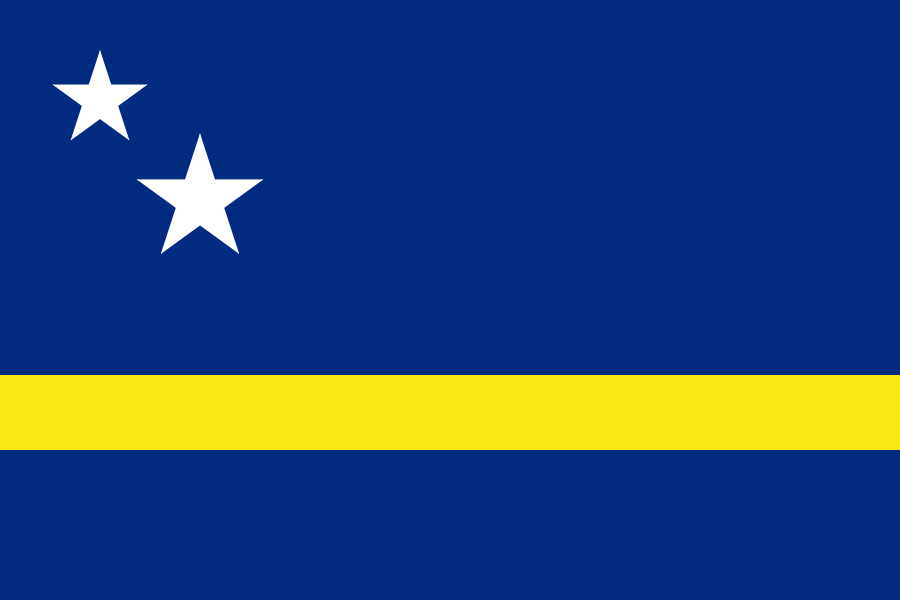
CUWCuraçao, a vibrant Caribbean island and constituent country of the Kingdom of the Netherlands, boasts a population of about 156,115 across its compact 444 km² area in the Americas region. Its colorful capital, Willemstad, is a UNESCO World Heritage site known for Dutch colonial architecture, stunning beaches, and a thriving tourism scene. With a diverse economy driven by oil refining, finance, and cruise ships, it's a cultural melting pot blending African, European, and Latin influences.
 CYP
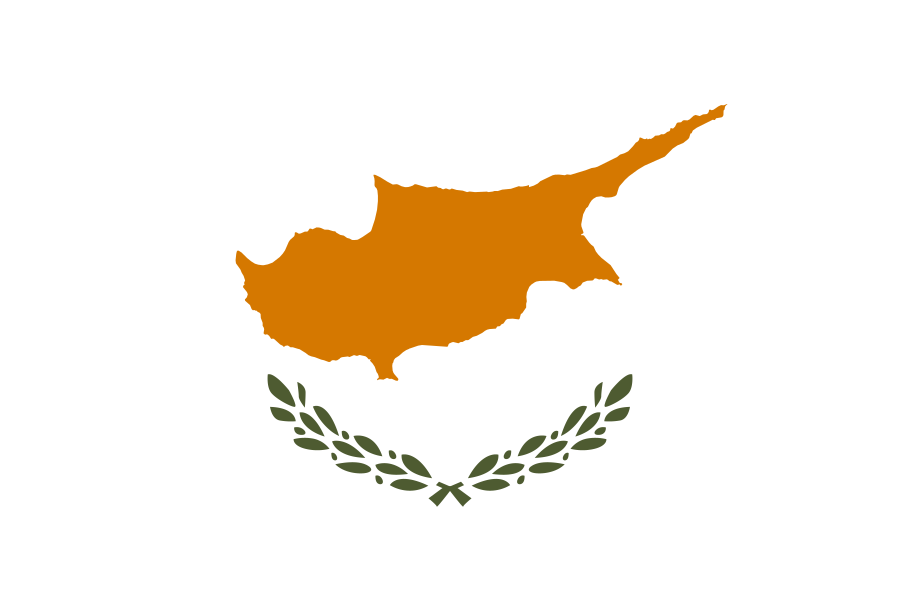
CYPCyprus, an island nation in Europe, boasts a population of about 1.44 million people spread across its 9,251 km² area, with Nicosia serving as its vibrant capital. Known for its strategic Mediterranean location, the country blends rich history with modern appeal, though GDP data is currently unavailable. From ancient ruins to sunny beaches, it's a cultural gem drawing global visitors.
 CZE
CZECzechia, a landlocked nation in Central Europe, boasts a population of about 10.9 million people spread across its 78,865 km² area, with Prague serving as its vibrant capital and cultural hub. Known for its rich history, medieval architecture, and beer-making heritage, the country transitioned from Czechoslovakia in 1993 and joined the EU in 2004. While GDP data is unavailable here, Czechia thrives on manufacturing, automotive exports, and tourism, blending old-world charm with modern innovation.
 DNK
DNKDenmark, a Scandinavian gem in Europe, boasts a population of about 6 million people spread across its 43,094 km² area, with Copenhagen serving as its vibrant capital city known for its canals and modern architecture. Renowned for its high quality of life, strong welfare system, and innovative design, Denmark is a constitutional monarchy that emphasizes sustainability and happiness—often topping global rankings for livability. While GDP data is unavailable here, the nation thrives on exports like pharmaceuticals, machinery, and renewable energy, blending rich Viking history with cutting-edge green initiatives.
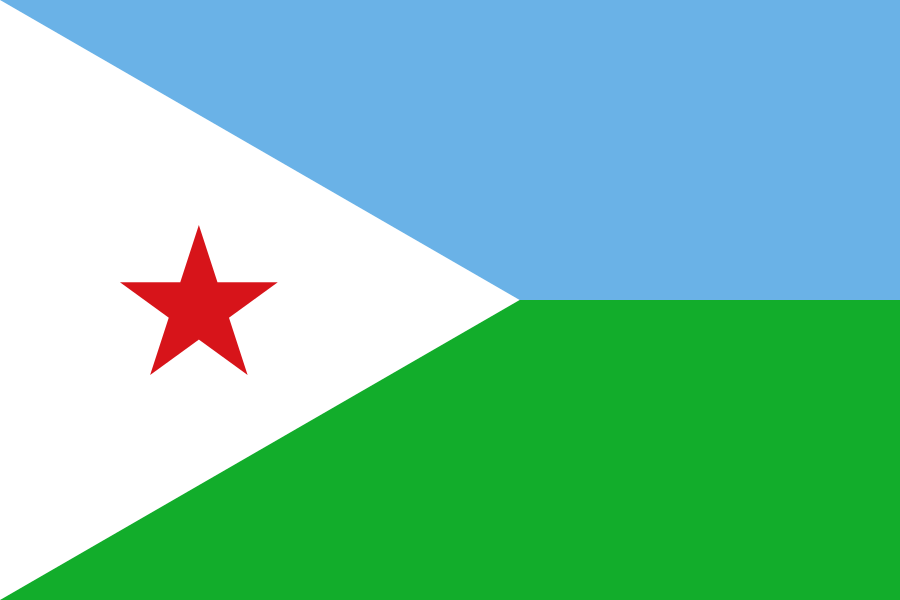 DJI
DJIDjibouti, a compact nation in the Horn of Africa spanning 23,200 km², is home to around 1.07 million people and serves as a strategic gateway between the Red Sea and the Gulf of Aden. Its capital, also called Djibouti, is a bustling port city that drives the economy through trade and foreign military bases, though detailed GDP figures are unavailable here. Despite its arid landscape, the country plays a key role in regional stability and international shipping routes.
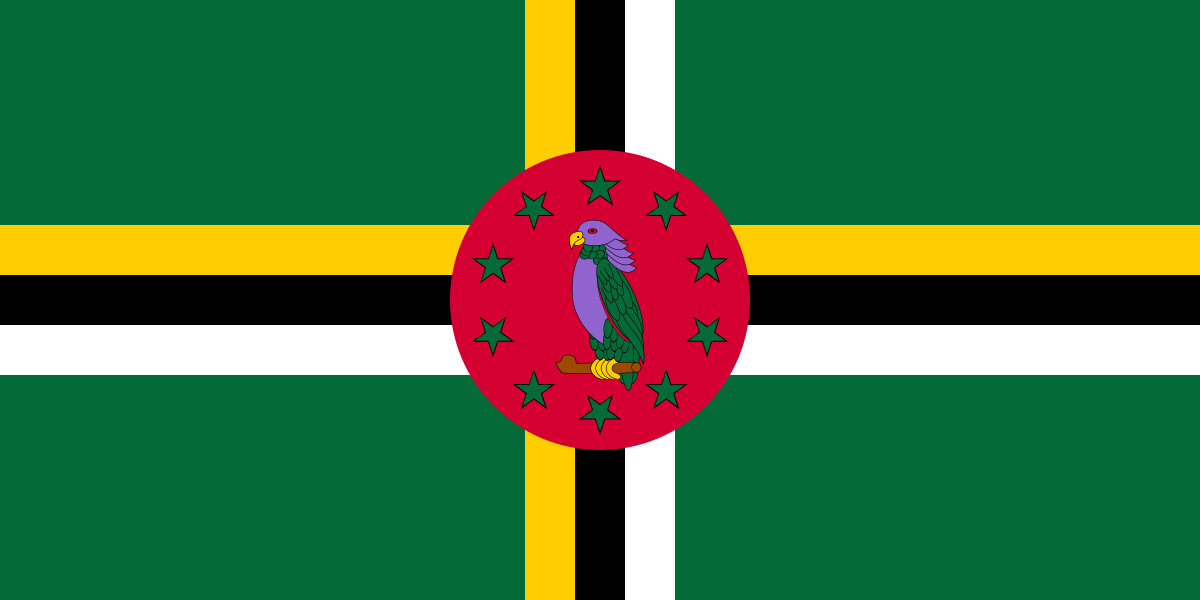 DMA
DMADominica, a lush volcanic island in the Caribbean region of the Americas, boasts a small population of about 67,408 across its 751 km² area, with Roseau as its vibrant capital. Known as the "Nature Isle" for its rainforests, hot springs, and black-sand beaches, it's a haven for eco-tourism and boasts the world's second-largest boiling lake. Despite its size, the nation emphasizes sustainable development and resilience against natural disasters like hurricanes.
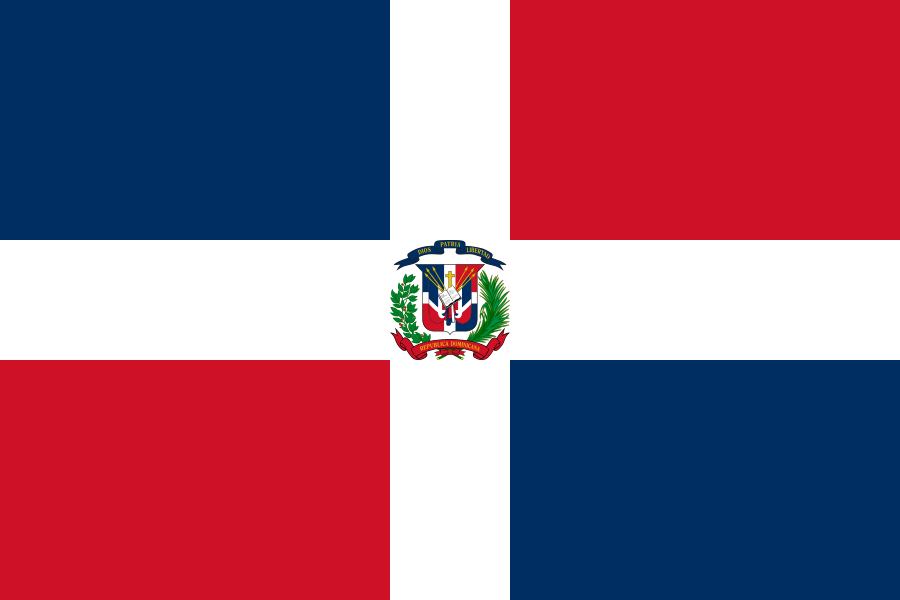 DOM
DOMThe Dominican Republic, located in the Americas on the island of Hispaniola, boasts a population of about 10.8 million across its 48,671 km² area, with Santo Domingo as its vibrant capital. Known for its stunning Caribbean beaches, rich history, and love of baseball, it's a popular tourist destination blending colonial charm with modern resorts. While GDP data is unavailable here, the nation thrives on tourism, agriculture, and remittances, making it a dynamic player in the region.
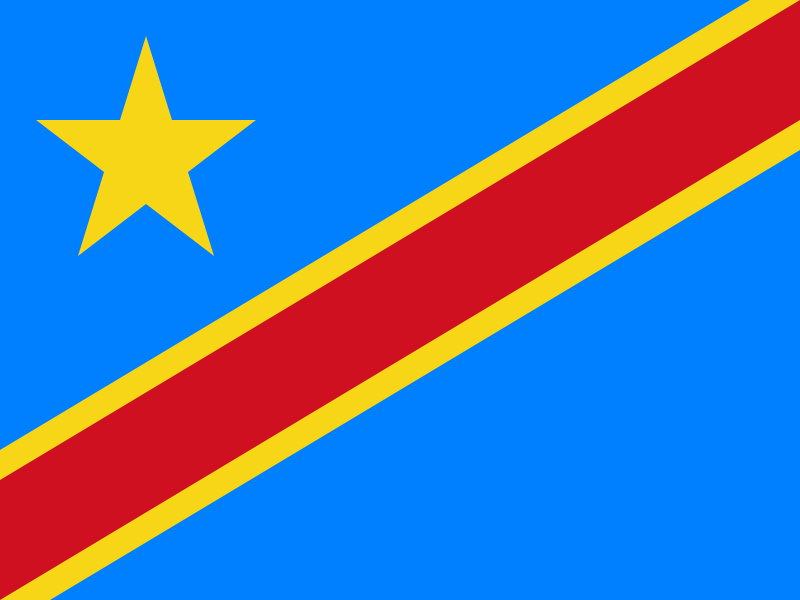 COD
CODThe Democratic Republic of the Congo (DRC), located in Central Africa, spans 2,344,858 km², making it the second-largest country on the continent by area, with a population of over 112 million people and Kinshasa as its bustling capital. Rich in natural resources like cobalt, copper, and diamonds, the DRC faces ongoing challenges including political instability and conflict, yet it boasts immense biodiversity in the Congo Basin rainforest. Despite economic potential, detailed GDP figures are unavailable, reflecting data gaps in this vast nation.
 ECU
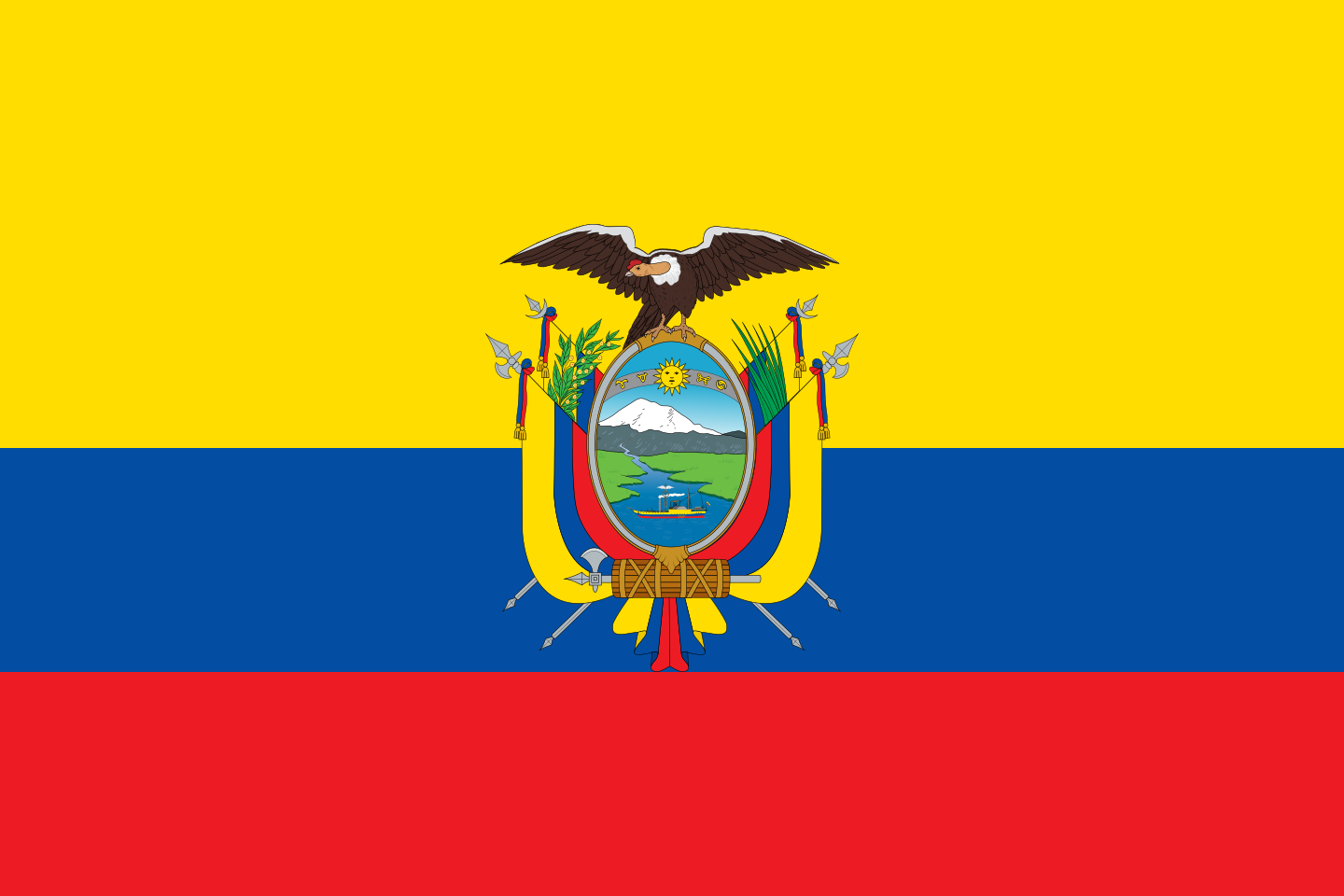
ECUEcuador, nestled in the Andes of South America within the Americas region, boasts a population of about 18 million people across its 276,841 km² territory, with Quito serving as its high-altitude capital. Known for straddling the equator—hence its name—and featuring diverse ecosystems from Amazon rainforests to the iconic Galápagos Islands, the country thrives on oil exports, agriculture, and tourism. While GDP data is unavailable here, Ecuador's economy is emerging, supported by its biodiversity and cultural heritage.
 EGY
EGYEgypt, a North African nation with a population of over 107 million, spans 1,002,450 km² and boasts Cairo as its vibrant capital, a hub of history and culture. As the cradle of ancient civilization, it's renowned for iconic landmarks like the pyramids and the Nile River, blending millennia-old heritage with modern urban life. While GDP data is unavailable here, Egypt's economy thrives on tourism, agriculture, and Suez Canal trade.
 SLV
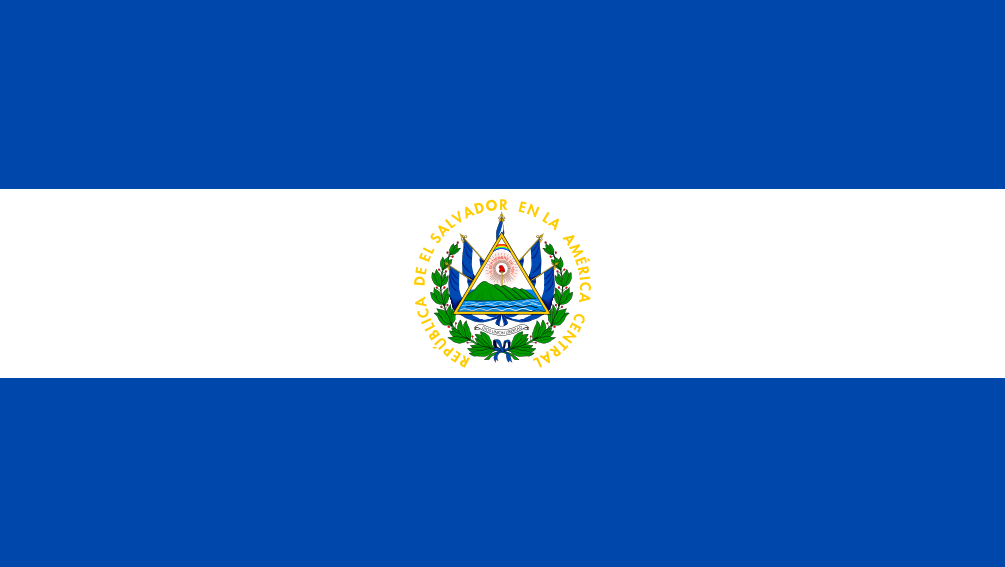
SLVEl Salvador, the smallest and most densely populated country in Central America, spans 21,041 km² in the Americas region and is home to about 6 million people, with San Salvador as its bustling capital. Known for its volcanic landscapes, Pacific beaches, and vibrant pupusa cuisine, it has embraced innovation by adopting Bitcoin as legal tender in 2021. While GDP data is unavailable here, the nation grapples with economic challenges amid efforts to boost tourism and remittances from abroad.
 GNQ
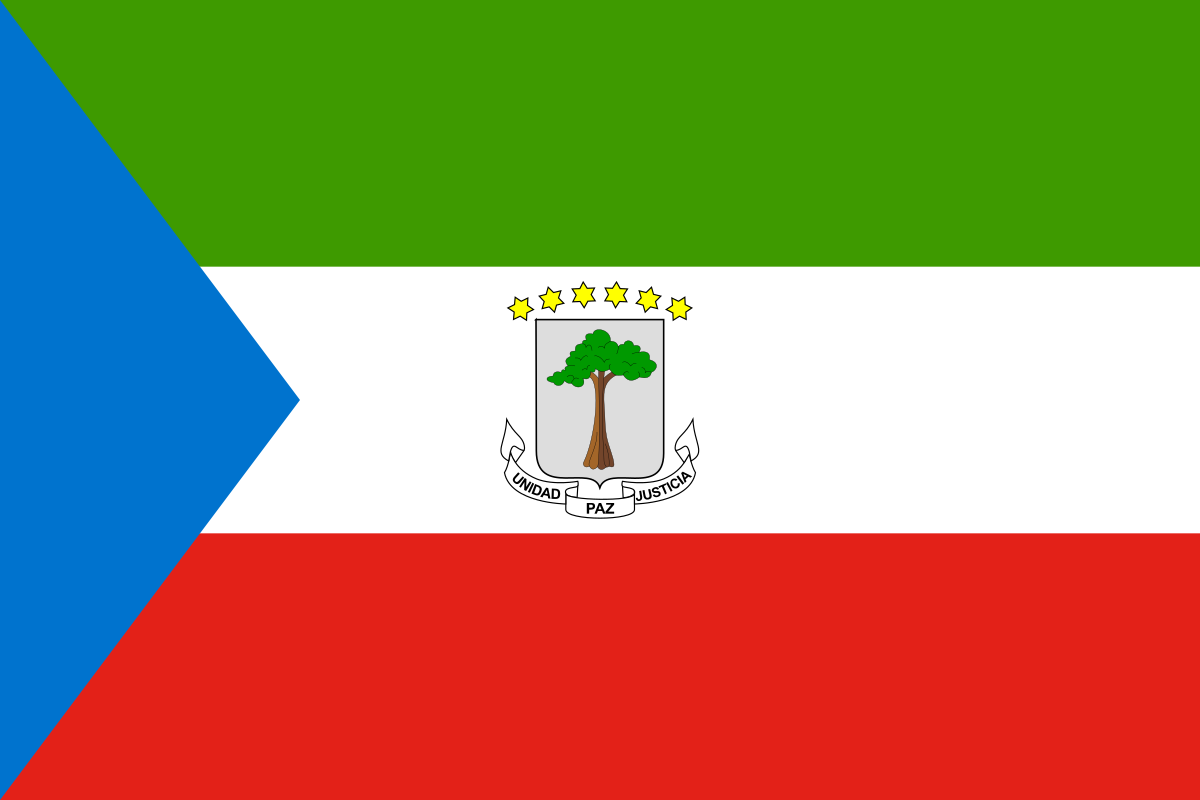
GNQEquatorial Guinea, a small nation in Central Africa with an area of 28,051 km², boasts a population of about 1.67 million and is known for its oil wealth and biodiversity-rich rainforests. Its capital, Malabo, sits on Bioko Island, while the mainland features volcanic landscapes and a mix of Spanish colonial influences from its history. Despite its resources, the country faces challenges like income inequality, making it a fascinating yet complex spot on the African map.
 ERI
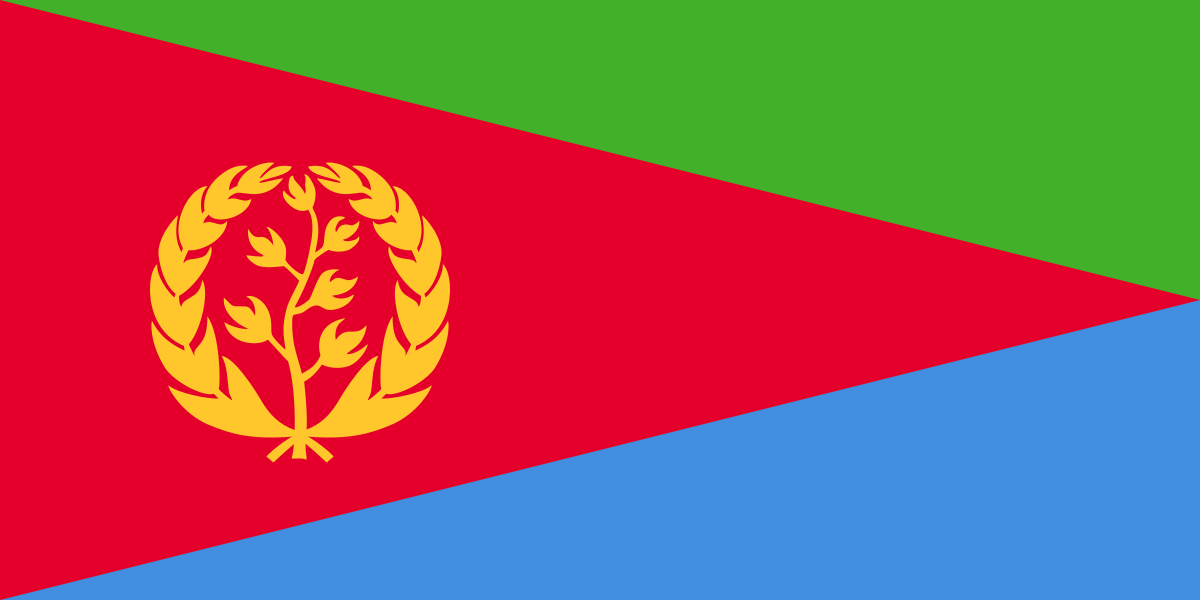
ERIEritrea, a coastal nation in the Horn of Africa, spans 117,600 km² and is home to around 3.6 million people, with Asmara serving as its historic capital known for Italian colonial architecture. Gaining independence from Ethiopia in 1993 after a long struggle, it boasts diverse landscapes from Red Sea beaches to arid highlands. While GDP figures are unavailable, the country relies on agriculture, mining, and remittances amid ongoing economic challenges.
 EST
ESTEstonia, a small European nation in the Baltic region, boasts a population of about 1.37 million people spread across its 45,227 km² area, with Tallinn serving as its vibrant capital city. Known for its tech-savvy economy and stunning medieval architecture, the country has emerged as a digital powerhouse in Northern Europe. While GDP data is unavailable here, Estonia's innovative e-governance and natural beauty make it a hidden gem for visitors and investors alike.
 SWZ
SWZEswatini, a small landlocked kingdom in Southern Africa with an area of 17,364 km², is home to about 1.2 million people and boasts a rich cultural heritage centered around its absolute monarchy. The capital, Mbabane, serves as the administrative hub, while the country is known for its stunning landscapes, including mountains and game reserves that attract eco-tourism. With a GDP figure unavailable in this data, Eswatini's economy relies on agriculture, manufacturing, and mining, though it faces challenges like high HIV rates and poverty.
 ETH
ETHEthiopia, a landlocked nation in East Africa with a population of over 111 million, spans 1,104,300 km² and boasts Addis Ababa as its vibrant capital. As one of Africa's most populous countries, it features diverse landscapes from highlands to deserts, though its GDP data is currently unavailable. Home to ancient history and cultural richness, Ethiopia remains a key player in regional politics and development.
 FLK
FLKThe Falkland Islands, a remote British Overseas Territory in the South Atlantic Ocean classified under the Americas region, span 12,173 km² and are home to a small population of just 3,662 people, with Stanley as its capital. Renowned for its rugged landscapes, thriving penguin colonies, and sheep farming economy, the islands lack a reported GDP figure but sustain a high standard of living through fishing, tourism, and oil exploration. The archipelago gained global attention during the 1982 Falklands War with Argentina, which claims sovereignty over the territory.
 FRO
FROThe Faroe Islands, an autonomous archipelago in Europe under Danish sovereignty, boasts a small population of around 54,885 residents and covers a compact area of 1,393 km². Its capital, Tórshavn, serves as the cultural and economic hub, with the economy heavily reliant on fishing and aquaculture—though specific GDP figures are unavailable. This remote Nordic gem is famed for its dramatic cliffs, puffin colonies, and resilient community thriving in the North Atlantic.
 FJI
FJIFiji, an archipelago nation in Oceania's South Pacific, spans 18,272 km² across over 300 islands and boasts a population of about 900,869, with Suva as its vibrant capital. Known for its stunning coral reefs, tropical beaches, and diverse culture blending indigenous Fijian, Indian, and European influences, it's a major tourism hub. While GDP data is unavailable here, the economy thrives on sugar exports, fisheries, and eco-adventures, making it a paradise for divers and rugby enthusiasts.
 FIN
FINFinland, a Nordic country in Europe with a population of about 5.65 million, spans 338,455 km² and boasts Helsinki as its vibrant capital, known for its design and tech scenes. Renowned for its high quality of life, vast forests, and thousands of lakes, it's a leader in education and innovation, though GDP data is currently unavailable. This sparsely populated nation excels in sustainability and happiness rankings, blending natural beauty with modern welfare systems.
 FRA
FRAFrance, a prominent European nation with a population of about 66 million, spans 543,908 km² and boasts Paris as its iconic capital, renowned for art, cuisine, and history. While GDP data is unavailable here, the country thrives on diverse industries like tourism, fashion, and aerospace, blending rich cultural heritage with modern innovation.
 GUF
GUFFrench Guiana, an overseas department of France located in South America, serves as the European Union's only territory on the continent and boasts a diverse population of 292,354 spread across 83,534 km² of lush rainforests and coastal plains. Its capital, Cayenne, is a vibrant hub blending French, Creole, and indigenous cultures, with the economy driven by space industry, mining, and agriculture, though GDP data is not separately reported due to its status as part of France. Home to the Guiana Space Centre, it's a key player in global satellite launches while preserving vast biodiversity hotspots like the Amazonian Park.
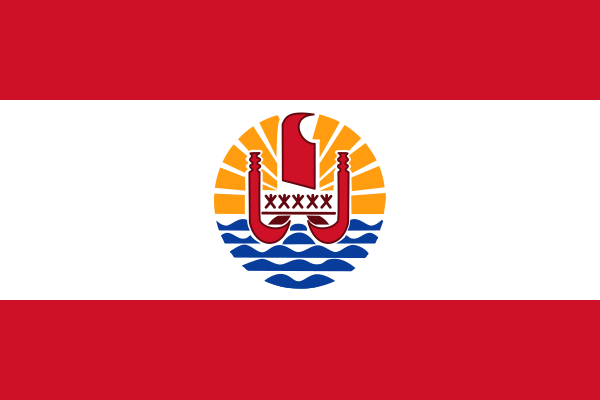 PYF
PYFFrench Polynesia, an overseas collectivity of France in the South Pacific Ocean, spans over 118 islands and atolls across Oceania, covering 4,167 km² of land with a population of about 279,500. Its capital, Papeetē on Tahiti, serves as the economic and cultural hub, renowned for black-sand beaches, vibrant coral reefs, and Polynesian heritage. While GDP data is not available, the economy thrives on tourism, pearl farming, and fishing, drawing visitors to its idyllic tropical paradise.
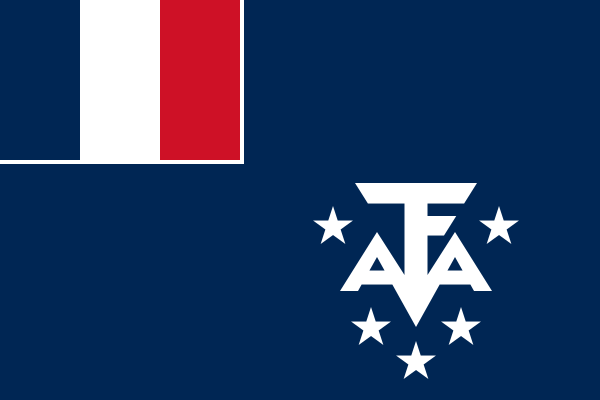 ATF
ATFThe French Southern and Antarctic Lands (TAAF) is a remote overseas territory of France, comprising scattered islands in the southern Indian Ocean and a vast Antarctic claim, with a total area of 7,747 km² and no permanent population—only about 400 rotating scientists and staff. Its "capital" is the research base at Port-aux-Français on the Kerguelen Islands, serving as an administrative hub for scientific expeditions focused on marine biology, climate research, and wildlife conservation. With no GDP data available due to its uninhabited, non-commercial nature, TAAF stands as a pristine wilderness, home to penguins, seals, and unique ecosystems, but accessible only by ship for extreme adventurers.
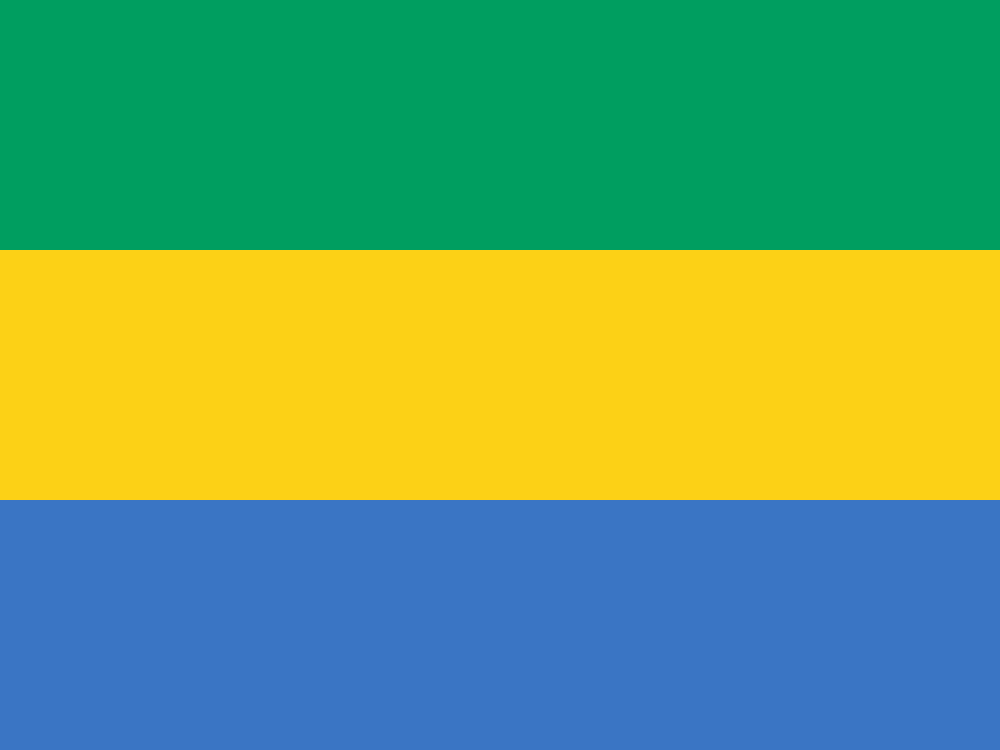 GAB
GABGabon, a Central African nation with a population of about 2.5 million, spans 267,668 km² of lush rainforests and coastline, making it one of the continent's most biodiverse spots. Its capital, Libreville, serves as the economic hub, though GDP data is currently unavailable amid its oil-dependent economy. Despite its natural wealth, Gabon faces challenges like income inequality and conservation efforts to protect its unique wildlife.
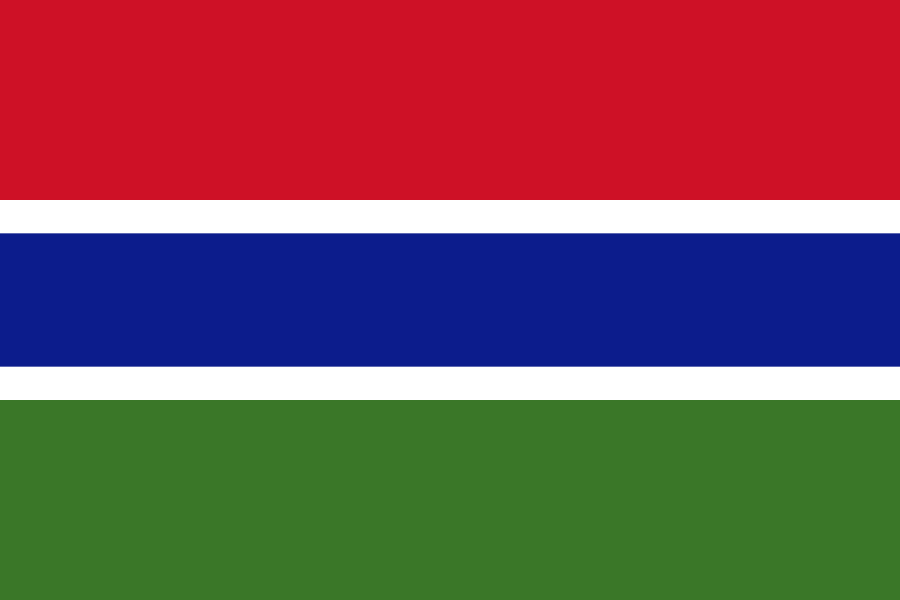 GMB
GMBThe Gambia, a small West African nation almost entirely surrounded by Senegal, spans just 10,689 km² along the Gambia River, making it one of Africa's tiniest countries by land area. With a population of about 2.4 million and its capital in the coastal city of Banjul, it boasts a diverse economy driven by agriculture, tourism, and fishing, though GDP data is not available here. Known for its vibrant culture and beaches, it's a hidden gem for eco-tourism despite challenges like poverty and climate vulnerability.
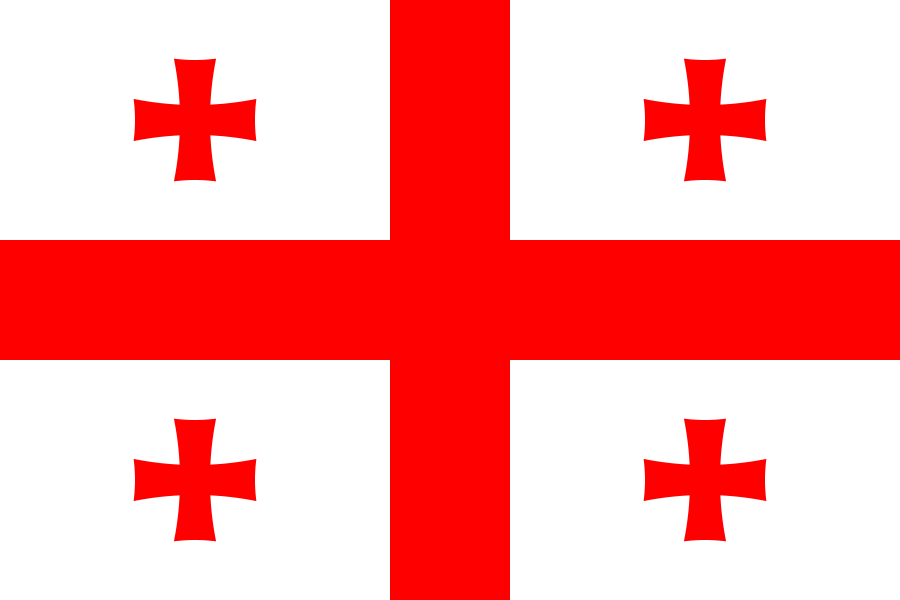 GEO
GEOGeorgia, a nation in Western Asia at the crossroads of Europe, boasts a population of around 4 million and spans 69,700 km², with Tbilisi as its vibrant capital. Famous for its ancient wine-making traditions and rugged Caucasus Mountains, it blends rich history with stunning natural beauty. While GDP data is unavailable here, the country thrives on tourism, agriculture, and emerging tech sectors.
 DEU
DEUGermany, a powerhouse in Europe with a population of 83,491,249, spans 357,114 km² and boasts Berlin as its vibrant capital. Known for its engineering prowess and rich history, it's a leader in innovation and culture. (GDP data not available.)
 GHA
GHAGhana, a vibrant West African nation with a population of about 33.7 million, boasts a diverse economy driven by gold, cocoa, and oil, though its GDP data is currently unavailable in this snapshot. Spanning 238,533 km², it's home to the bustling capital Accra and is renowned for its rich cultural heritage, including historic sites like Cape Coast Castle and a thriving music scene. As a stable democracy in the region, Ghana continues to attract tourists with its beautiful beaches and national parks.
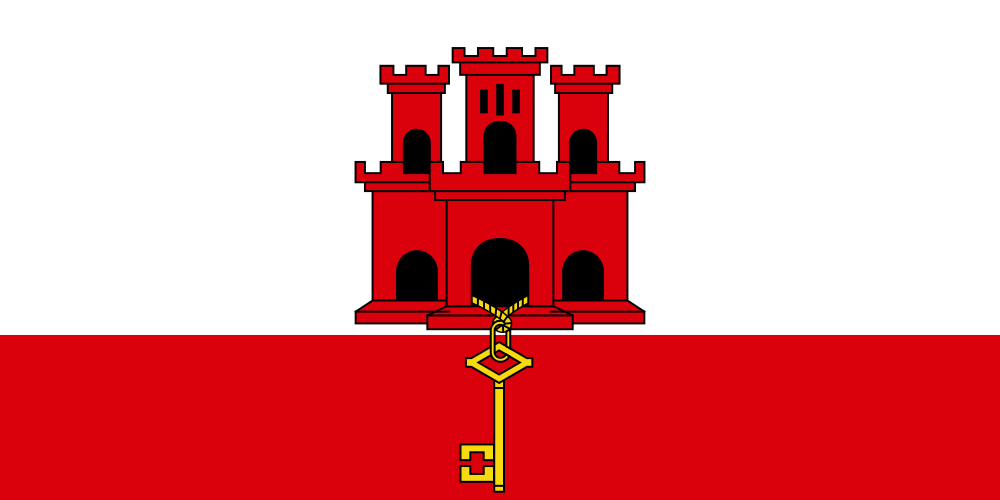 GIB
GIBGibraltar, a tiny British Overseas Territory in Europe at the southern tip of Spain, spans just 6 km² and is home to about 38,000 people, with its capital also named Gibraltar. Famous for the iconic Rock of Gibraltar and its strategic Strait location, it boasts a diverse economy driven by tourism, financial services, and online gaming, though GDP data is not readily available. This multicultural enclave blends British and Mediterranean influences, hosting a mix of cultures and a population of wild Barbary macaques.
 GRC
GRCGreece, a European nation with a population of about 10.4 million, spans 131,990 km² and boasts Athens as its historic capital, renowned for ancient landmarks like the Acropolis. While its GDP data is currently unavailable, the country thrives on tourism, shipping, and agriculture, drawing millions to its stunning islands and Mediterranean coastline. As the cradle of Western civilization, Greece offers a rich tapestry of philosophy, mythology, and democratic roots that continue to influence the world.
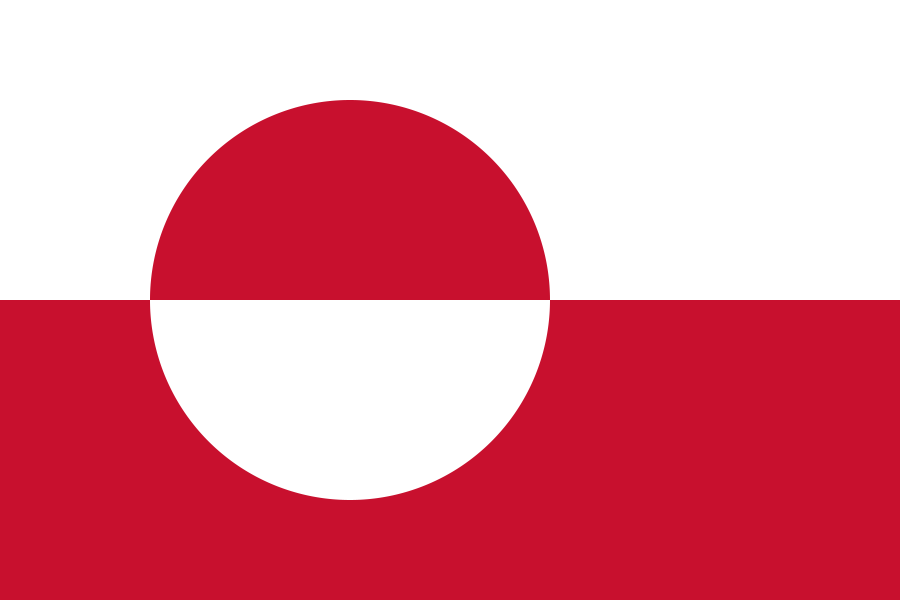 GRL
GRLGreenland, the world's largest island and an autonomous territory within the Kingdom of Denmark, spans a massive 2,166,086 km² in the Americas region, with over 80% covered by ice sheet. Its capital, Nuuk, serves as the hub for a sparse population of just 56,542, who rely on fishing, mining, and tourism amid a harsh Arctic climate. With GDP data unavailable, the economy focuses on sustainable resources, making it a unique frontier for climate research and adventure seekers.
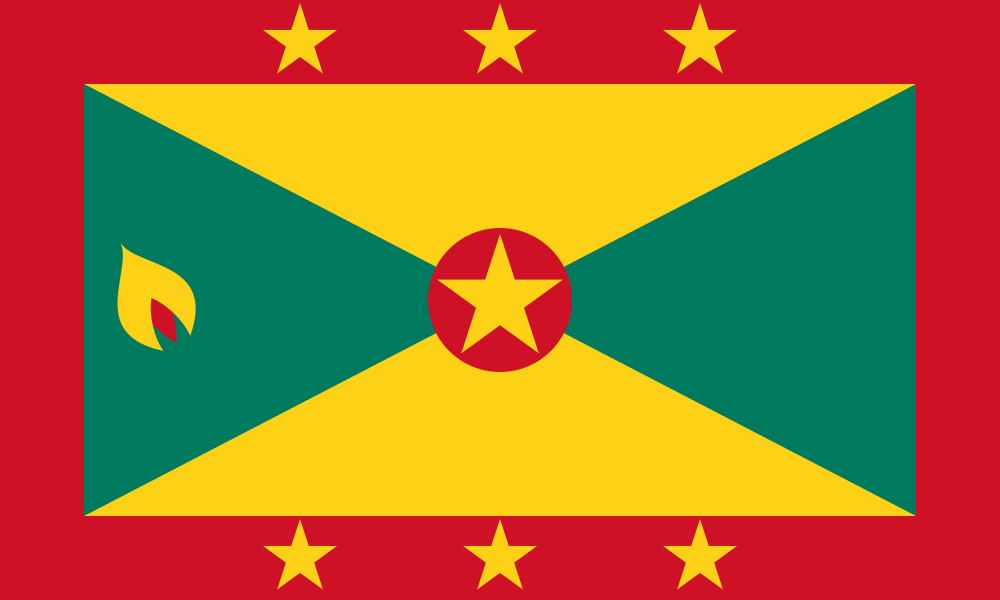 GRD
GRDGrenada, a small island nation in the Caribbean region of the Americas, boasts a population of about 109,021 and covers just 344 km², making it one of the tiniest countries by land area. Its capital, St. George's, serves as a vibrant hub for tourism and spice exports, earning Grenada the nickname "Isle of Spice" for its nutmeg and mace production. With GDP data unavailable here, the economy thrives on agriculture, tourism, and offshore banking, blending stunning beaches with a resilient post-colonial history.
 GLP
GLPGuadeloupe is a French overseas department in the Caribbean, part of the Americas region, known for its volcanic landscapes, beaches, and Creole culture. With a population of about 378,561 spread across 1,628 km², its capital is Basse-Terre, and the economy relies heavily on tourism, agriculture (like bananas and sugar), and services. This archipelago offers a vibrant mix of French and Caribbean influences, making it a popular spot for eco-adventures and rum distilleries.
 GUM
GUMGuam is an unincorporated U.S. territory in Oceania, known for its strategic Pacific location and Chamorro indigenous culture, with a population of about 153,836 spread across its compact 549 km² area. Its capital, Hagåtña, serves as the administrative hub, though GDP data is not available, reflecting its economy driven by tourism, military presence, and federal funding. This tropical island paradise blends American influences with Micronesian heritage, offering stunning beaches and WWII history.
 GTM
GTMGuatemala, a vibrant Central American nation in the Americas region, spans 108,889 km² and is home to a population of 18,079,810, with Guatemala City as its bustling capital. Renowned for its rich Mayan heritage, volcanic landscapes, and diverse ecosystems, it's a hub for coffee production and ecotourism. While GDP data is unavailable here, the economy thrives on agriculture, textiles, and remittances, blending ancient traditions with modern challenges.
 GGY
GGYGuernsey, a small British Crown Dependency in Europe, boasts a population of 64,781 across its modest 78 km² area, with St. Peter Port serving as its charming capital. Though GDP data is unavailable, the island thrives on finance, tourism, and agriculture, blending historic sites like medieval castles with stunning coastal scenery. This self-governing haven offers a peaceful, tax-friendly lifestyle just off the Normandy coast.
 GIN
GINGuinea, a West African nation with a population of about 14.4 million, spans 245,857 km² and boasts diverse landscapes from coastal plains to mountainous interiors. Its capital, Conakry, serves as the economic hub, though GDP data is currently unavailable, reflecting ongoing development challenges amid rich mineral resources like bauxite. Despite political instability, Guinea's vibrant culture and biodiversity make it a fascinating spot on the continent.
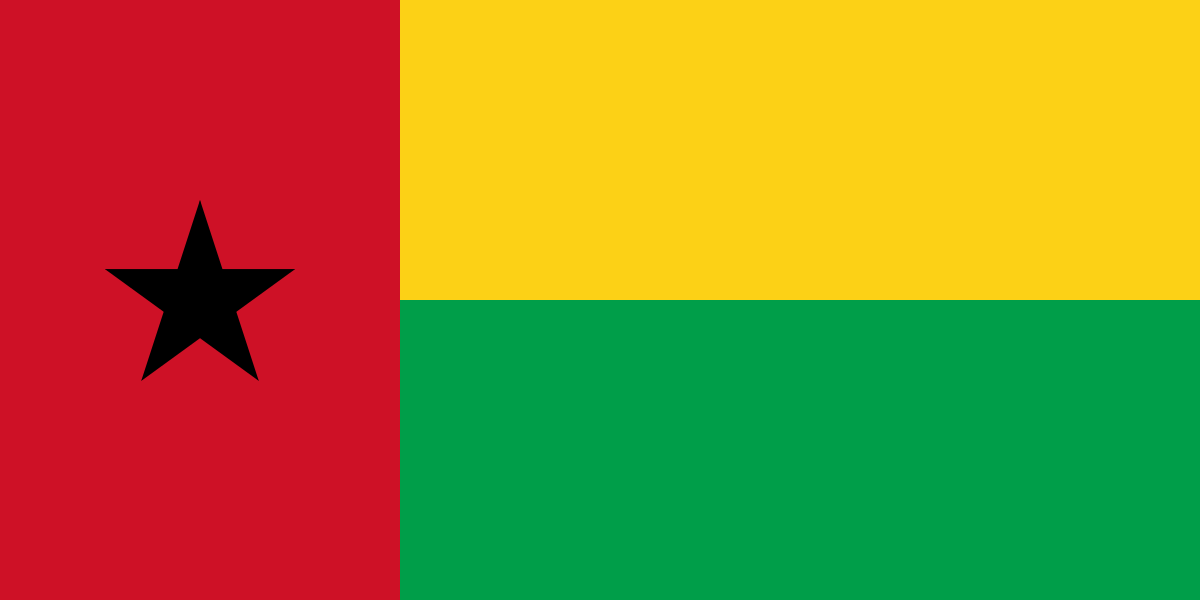 GNB
GNBGuinea-Bissau, a small West African nation with a population of about 1.78 million, covers 36,125 km² and boasts the vibrant capital of Bissau, where colonial Portuguese influences blend with local culture. Despite its rich biodiversity, including mangrove forests and Bijagós Archipelago beaches, the country faces economic challenges with GDP data currently unavailable, relying heavily on agriculture like cashew nuts for exports. This former Portuguese colony, independent since 1974, continues to navigate political instability while offering untapped potential in ecotourism and natural resources.
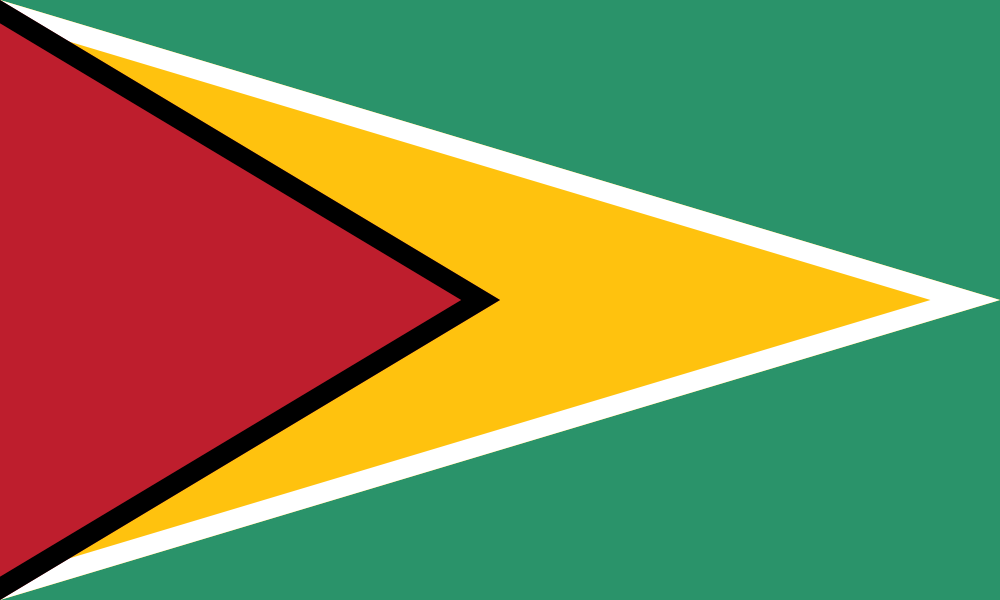 GUY
GUYGuyana, a South American nation in the Americas region, covers 214,969 km² with a population of around 773,000 and its capital in Georgetown. Known for its lush rainforests, diverse ecosystems, and English-speaking culture as a former British colony, it boasts rich biodiversity and natural resources like bauxite and gold. While GDP data isn't available here, the economy relies on agriculture, mining, and emerging oil production.
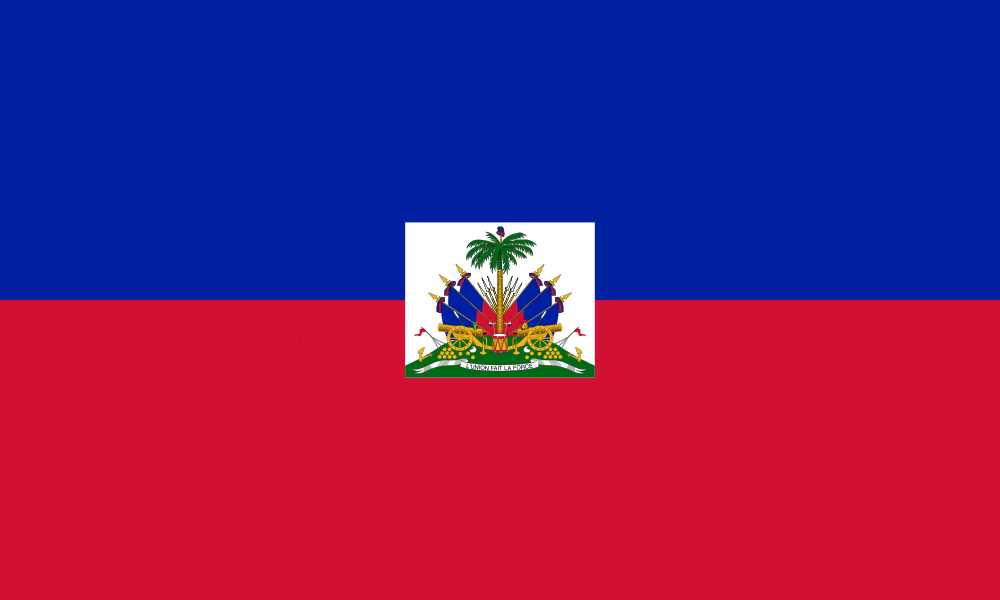 HTI
HTIHaiti, located in the Caribbean region of the Americas and sharing the island of Hispaniola with the Dominican Republic, has a population of about 11.9 million people spread across 27,750 km². Its capital, Port-au-Prince, serves as the bustling economic and cultural hub, though the nation faces ongoing challenges like political instability and natural disasters. Despite economic hurdles (with GDP data currently unavailable), Haiti boasts a rich history as the world's first black-led republic, born from a successful slave revolution in 1804.
 HMD
HMDHeard Island and McDonald Islands are a remote, uninhabited Australian external territory in the southern Indian Ocean, part of the Antarctic region, covering 412 km² of rugged volcanic terrain dominated by the active Big Ben volcano. With no permanent population, capital, or GDP, the islands serve primarily as a UNESCO World Heritage site, renowned for their pristine subantarctic ecosystem, including vast colonies of penguins, seals, and seabirds. Scientific research and conservation efforts focus on their unique biodiversity and glaciated landscapes, making them a key spot for studying climate change impacts.
 HND
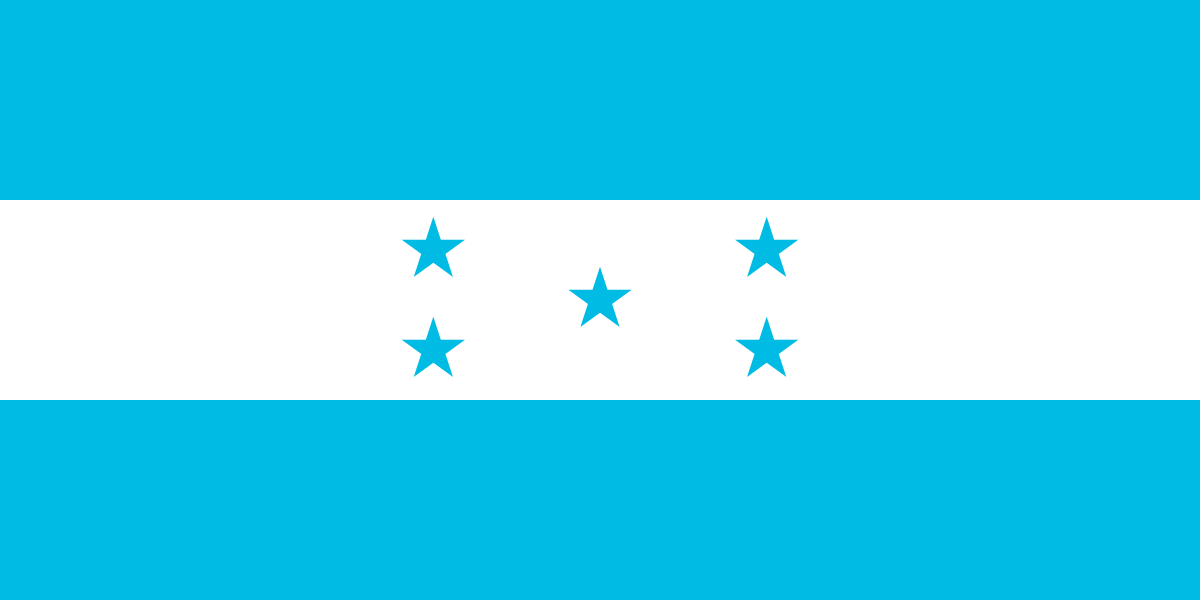
HNDHonduras, a Central American nation in the Americas region with a population of about 9.9 million, spans 112,492 km² and boasts diverse landscapes from Caribbean beaches to ancient Mayan ruins like Copán. Its capital, Tegucigalpa, serves as the bustling political and economic hub, though the country faces challenges like poverty and natural disasters amid its rich biodiversity and coffee exports. With GDP data unavailable here, Honduras remains a vibrant mix of indigenous cultures, colonial history, and ecotourism potential.
 HKG
HKGHong Kong, a bustling Special Administrative Region of China in Asia, boasts a population of about 7.5 million crammed into just 1,104 km², making it one of the world's most densely populated areas with Victoria as its historic central hub. Known for its towering skyscrapers and vibrant harbor, it serves as a global financial powerhouse, though exact GDP figures are not available here. Despite its small size, Hong Kong blends Eastern and Western influences, offering a unique mix of Cantonese culture, British colonial legacy, and modern innovation.
 HUN
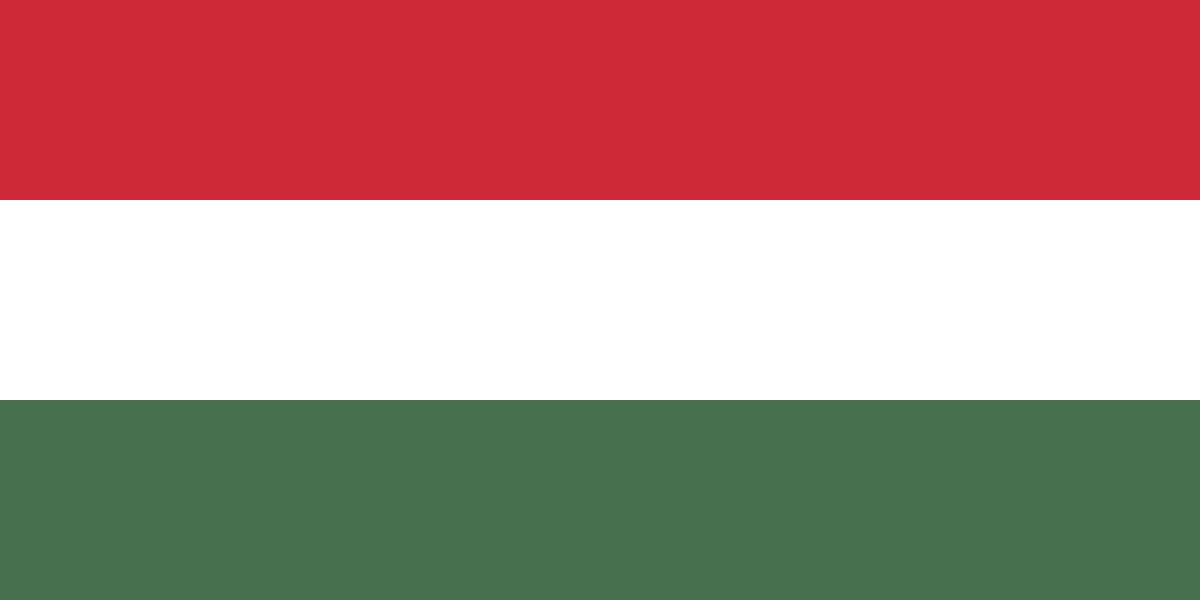
HUNHungary, a landlocked nation in Central Europe, boasts a population of approximately 9.5 million people spread across 93,028 km², with Budapest serving as its vibrant capital and cultural hub. Known for its rich history, thermal spas, and paprika-infused cuisine, the country blends medieval architecture with modern innovation, though detailed GDP figures are currently unavailable. From the Danube River bisecting its landscape to its role in the European Union, Hungary offers a mix of tradition and resilience in the heart of the continent.
 ISL
ISLIceland, a Nordic island nation in Europe with a population of about 392,000, spans 103,000 km² and boasts Reykjavik as its vibrant capital, blending modern culture with stunning natural landscapes. Renowned for its geothermal energy, volcanoes, and glaciers, it's a leader in renewable resources and offers a high quality of life amid dramatic scenery. Despite its small size, Iceland punches above its weight in global affairs, from environmental policies to creative industries like music and literature.
 IND
INDIndia, Asia's sprawling giant with a capital in New Delhi, spans 3,287,263 km² and houses a staggering population of 1,417,492,000, making it the world's most populous nation. Renowned for its ancient history, diverse cultures, and booming tech sector, the country drives rapid economic growth, though current GDP data is unavailable. From the Himalayas to bustling metropolises like Mumbai, India blends tradition with innovation on a massive scale.
 IDN
IDNIndonesia, the world's largest archipelago nation in Southeast Asia, spans over 1.9 million square kilometers and is home to a diverse population of about 284 million people, making it the fourth-most populous country globally. Its bustling capital, Jakarta, serves as the economic and cultural hub, driving growth in industries like manufacturing, agriculture, and tourism amid stunning landscapes of volcanoes, rainforests, and beaches. While GDP data is unavailable here, Indonesia boasts a rapidly emerging economy as a G20 member, blending rich biodiversity with vibrant multicultural traditions.
 IRN
IRNIran, a vast Middle Eastern nation in Asia spanning 1,648,195 km², boasts a population of over 85 million and is centered around its bustling capital, Tehran. Known for its rich history as the cradle of ancient civilizations like the Persian Empire, it features diverse landscapes from deserts to mountains. While GDP data is unavailable here, Iran's economy relies heavily on oil exports, natural resources, and a growing tech sector amidst geopolitical complexities.
 IRQ
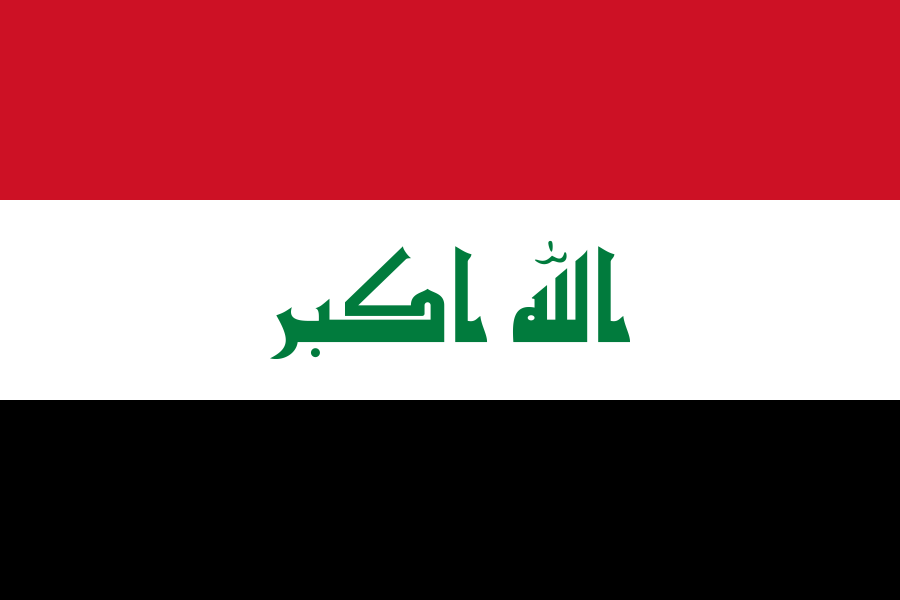
IRQIraq, a Middle Eastern nation in Asia with Baghdad as its capital, spans 438,317 km² and is home to over 46 million people, boasting a rich history as the cradle of ancient civilizations like Mesopotamia. Despite its vast oil reserves driving the economy (though recent GDP figures are unavailable), the country faces ongoing challenges from political instability and reconstruction efforts post-conflicts. Known for iconic sites like the Tigris and Euphrates rivers, Iraq blends diverse cultures, including Arab, Kurdish, and Assyrian influences, amid a resilient push toward modernization.
 IRL
IRLIreland, a vibrant island nation in Europe, boasts a population of approximately 5.46 million across its 70,273 km² of lush landscapes and coastal beauty. The capital, Dublin, serves as a cultural and economic hub, blending historic charm with modern innovation. While GDP data is unavailable here, Ireland is renowned for its tech sector, literature, and welcoming spirit.
 IMN
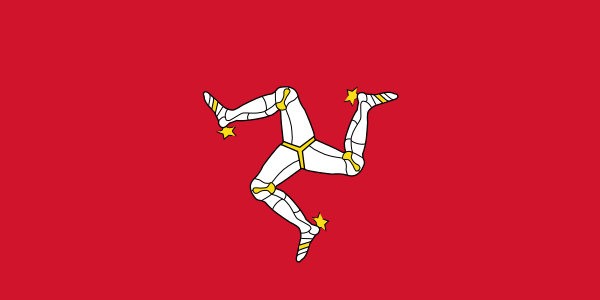
IMNThe Isle of Man is a self-governing British Crown Dependency in the Irish Sea, part of Europe but not in the UK or EU, boasting a population of 84,530 across its compact 572 km² area. Its capital, Douglas, serves as the hub for a thriving economy focused on finance, tourism, and the famous TT motorcycle races, though official GDP figures are unavailable. This picturesque island blends Celtic heritage with modern appeal, drawing visitors for its rugged landscapes and tax-friendly status.
 ISR
ISRIsrael, located in Western Asia with a population of about 10.1 million, boasts Jerusalem as its capital and spans a compact area of 21,937 km², blending ancient history with modern innovation. As a hub for technology and startups, it features diverse landscapes from Mediterranean beaches to the Negev Desert, though GDP data is unavailable here. Despite regional tensions, Israel thrives on a mix of Jewish, Arab, and other ethnic communities, driving its vibrant cultural and economic scene.
 ITA
ITAItaly, a boot-shaped nation in southern Europe, is home to 58.9 million people across 301,336 km², with Rome as its historic capital. Renowned for its ancient Roman heritage, Renaissance art, and culinary delights like pasta and pizza, it blends Alpine mountains, rolling hills, and stunning Mediterranean coastlines. Though GDP data isn't specified here, Italy thrives as a cultural and economic powerhouse in the EU.
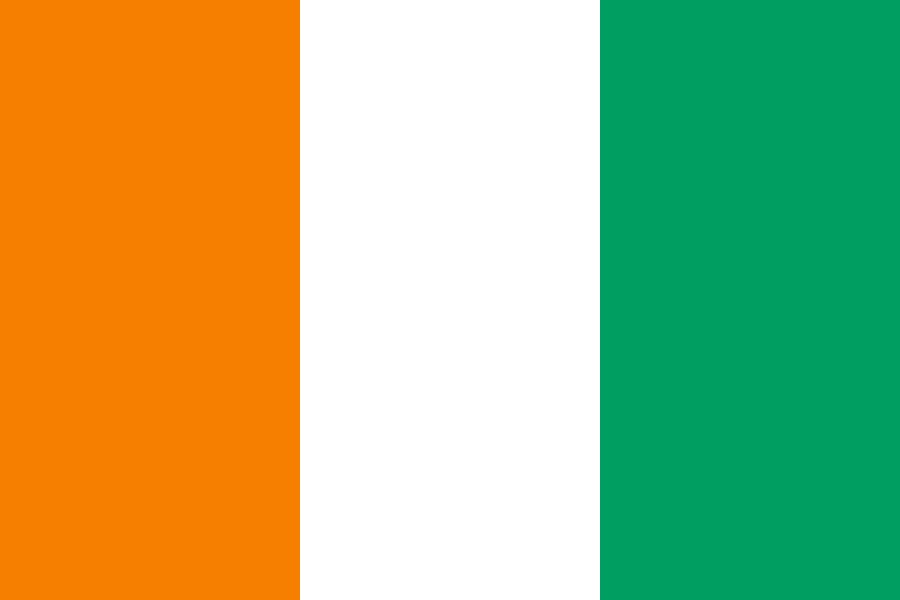 CIV
CIVIvory Coast, officially Côte d'Ivoire, is a vibrant West African nation with a population of about 31.7 million people spread across its 322,463 km² area, known for its diverse landscapes from coastal beaches to rainforests. The capital, Yamoussoukro, serves as the political hub, while Abidjan remains the economic powerhouse, driving the country's status as the world's top cocoa exporter. With a rich cultural tapestry blending French colonial influences and indigenous traditions, it's a key player in regional trade and boasts a growing economy fueled by agriculture and natural resources.
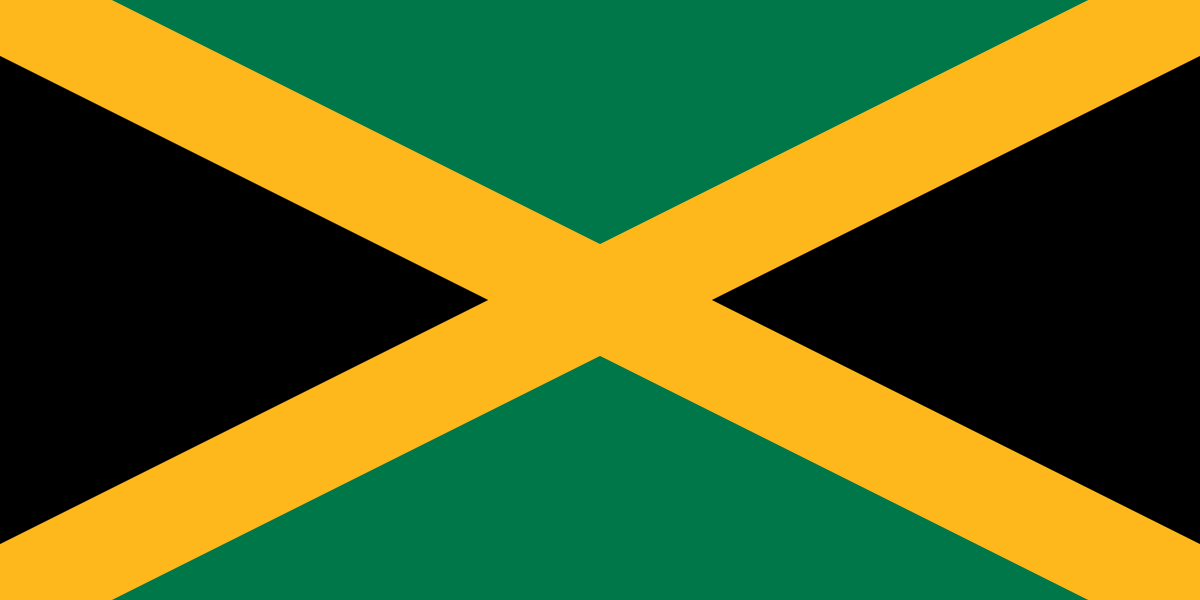 JAM
JAMJamaica, a vibrant island nation in the Americas, boasts a population of around 2.8 million across its 10,991 km² of lush terrain, with Kingston serving as its bustling capital. Renowned for its reggae music heritage, stunning beaches, and world-class athletes, the country thrives on tourism and agriculture despite economic challenges (GDP data not available). From Bob Marley to Usain Bolt, Jamaica punches above its weight in global culture and sports.
 JPN
JPNJapan, an island nation in Asia with Tokyo as its vibrant capital, covers an area of 377,930 km² and boasts a population of 123,210,000 people. Renowned for its technological innovation and rich cultural heritage, it blends ancient traditions like samurai history with modern marvels such as bullet trains. (GDP data not available.)
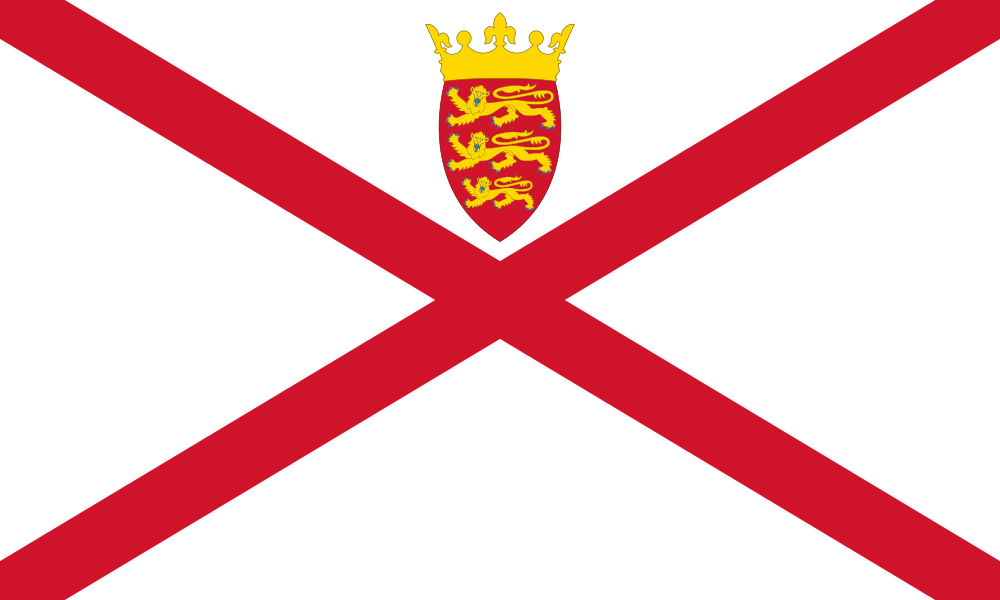 JEY
JEYJersey, a self-governing British Crown Dependency in the English Channel, boasts a population of around 103,267 across its compact 116 km² area, making it one of Europe's smallest territories. With Saint Helier as its vibrant capital, the island thrives on finance, tourism, and agriculture, though GDP figures are not publicly detailed. Known for its stunning beaches and tax haven status, Jersey blends Norman heritage with modern offshore banking appeal.
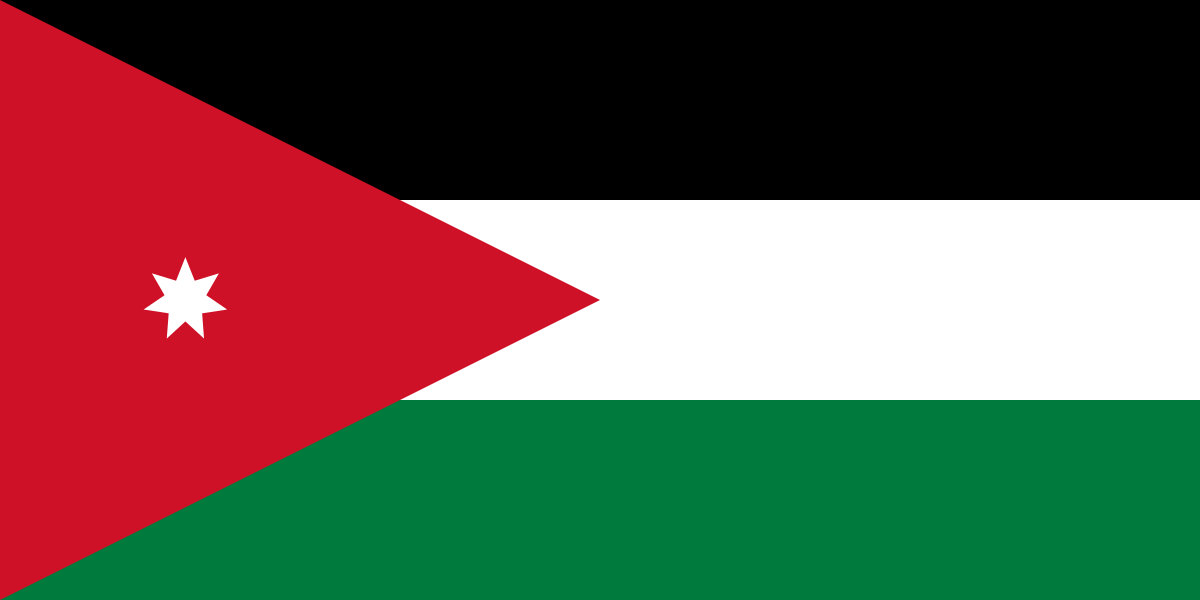 JOR
JORJordan, officially the Hashemite Kingdom of Jordan, is a Middle Eastern country in Asia with a population of about 11.7 million, bordered by Saudi Arabia, Iraq, Syria, Israel, and the West Bank; its capital is the ancient city of Amman. Spanning 89,342 km², it features diverse landscapes from the Dead Sea to the deserts of Wadi Rum, and is renowned for archaeological wonders like Petra, a UNESCO World Heritage site. While GDP data is unavailable here, Jordan's economy relies on tourism, phosphates, and remittances, making it a stable hub in a volatile region.
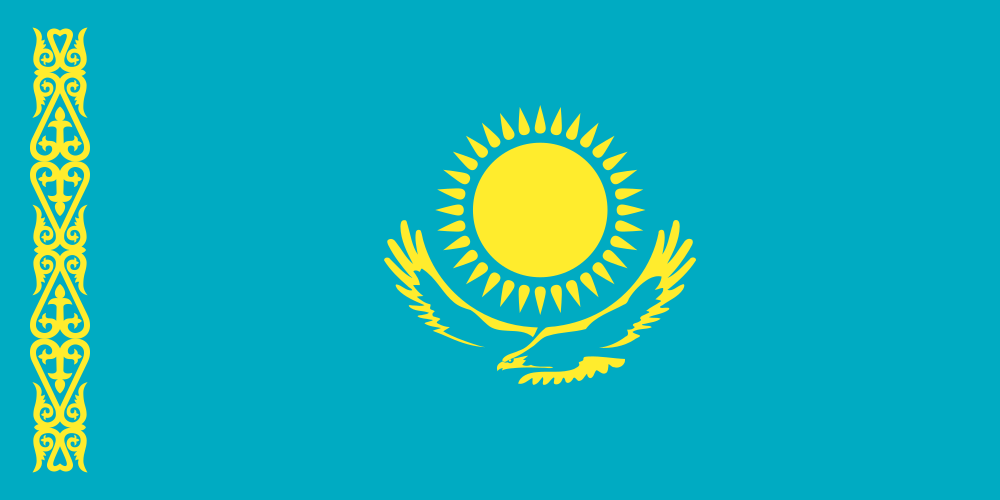 KAZ
KAZKazakhstan, the world's largest landlocked country, spans 2,724,900 km² in Central Asia with a population of about 20.4 million people and its capital in Astana. It's renowned for vast steppes, rich natural resources like oil and minerals, and a diverse cultural heritage blending nomadic traditions with modern development. While GDP data is currently unavailable, the nation has transitioned from a Soviet republic to a key player in regional energy markets.
 KEN
KENKenya, an East African nation with a population of over 53 million, spans 580,367 km² and boasts Nairobi as its bustling capital, a hub for tech innovation dubbed the "Silicon Savannah." Renowned for its stunning wildlife reserves like the Maasai Mara and diverse ethnic groups, the country drives economic growth through agriculture, tourism, and emerging industries, though GDP data is unavailable here. From vibrant coastal beaches to Mount Kenya's peaks, it's a cultural melting pot blending Swahili influences with modern urban energy.
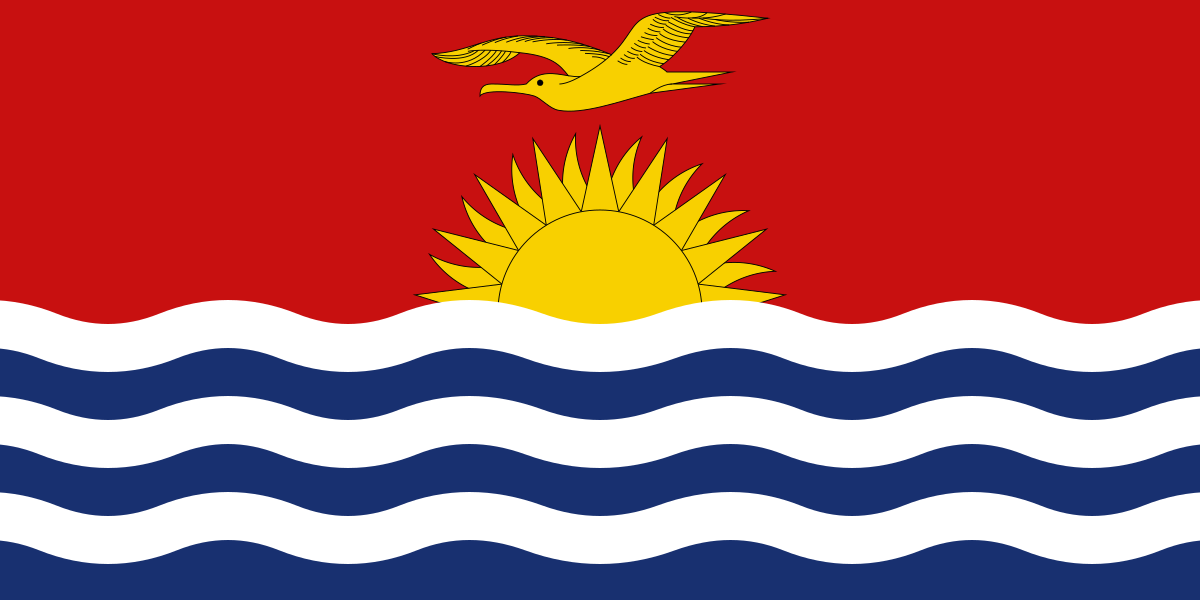 KIR
KIRKiribati, a remote island nation in Oceania, spans just 811 km² across 33 atolls and islands in the Pacific Ocean, home to a population of around 120,740. Its capital, South Tarawa, serves as the bustling hub for this low-lying archipelago, where climate change poses a major threat to its existence. With GDP data unavailable, Kiribati relies on fishing, copra exports, and international aid to sustain its vibrant, community-driven economy.
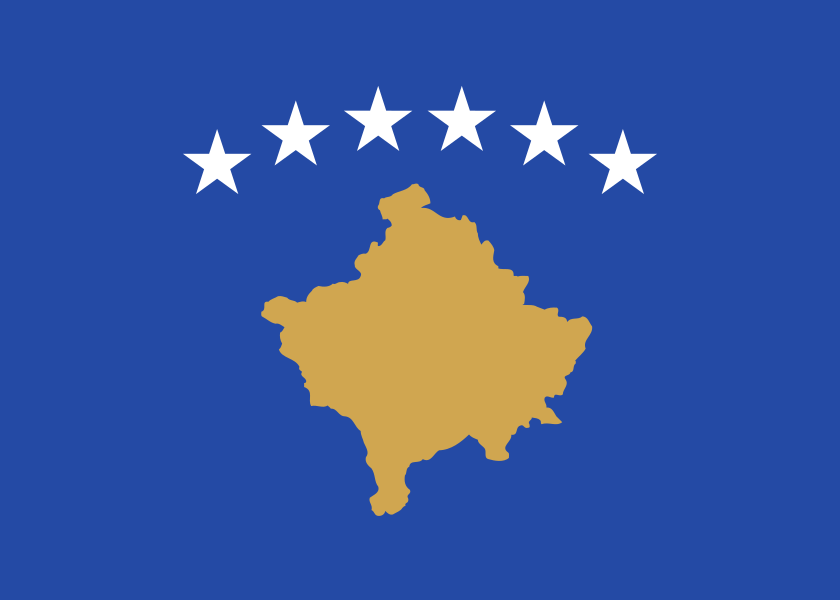 UNK
UNKKosovo, a landlocked country in southeastern Europe, gained independence from Serbia in 2008 and is recognized by over 100 UN member states, though its status remains disputed. With a population of about 1.6 million, it spans 10,908 km² and has Pristina as its vibrant capital, blending Ottoman heritage with modern Balkan culture. While GDP data is unavailable here, the nation is known for its youthful demographics, rich mineral resources, and ongoing efforts toward EU integration.
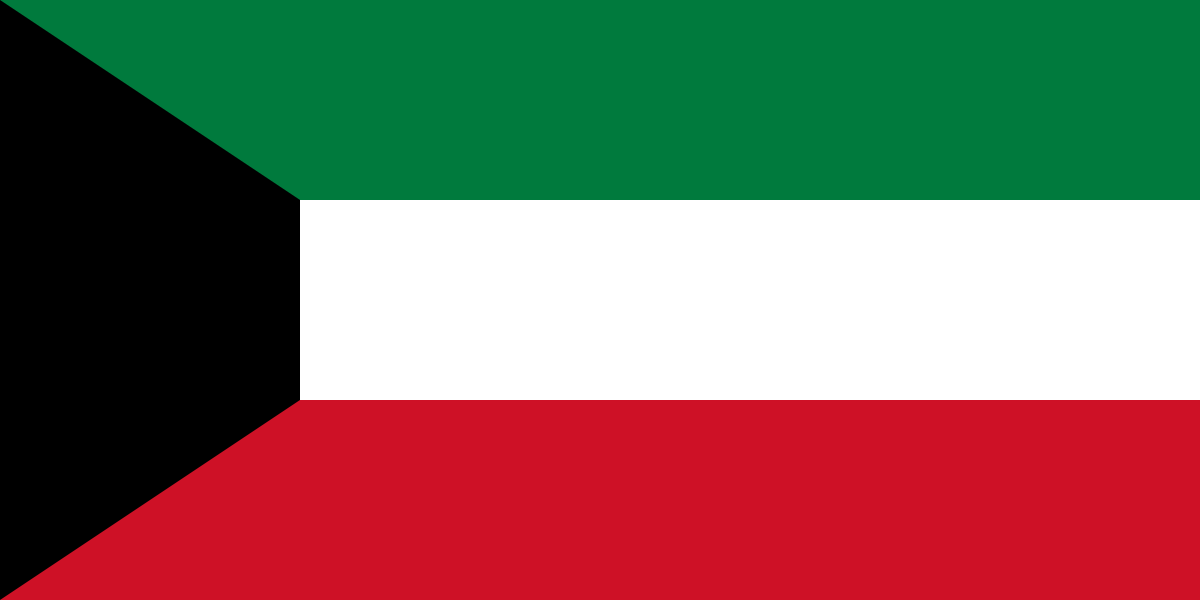 KWT
KWTKuwait, a small but oil-rich nation in Asia's Persian Gulf region, covers 17,818 km² with a population of around 4.9 million and its bustling capital in Kuwait City. Despite its modest size, it's a global energy powerhouse, boasting vast petroleum reserves that fuel its economy (though recent GDP figures are unavailable). The country blends modern skyscrapers with traditional Arabian culture, making it a key player in Middle Eastern geopolitics.
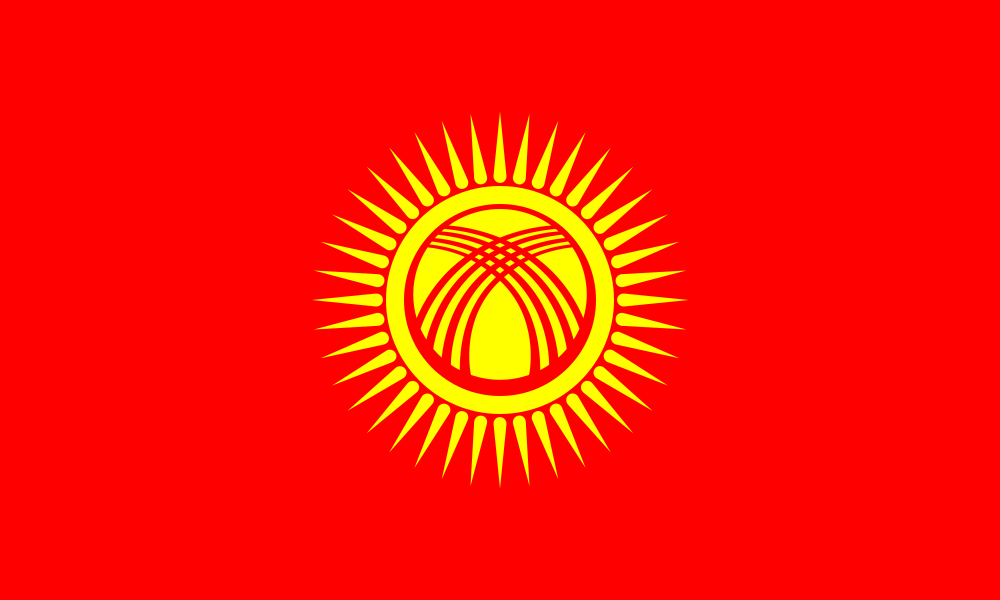 KGZ
KGZKyrgyzstan, a landlocked nation in Central Asia with an area of 199,951 km², boasts a population of about 7.3 million people and features Bishkek as its vibrant capital city. Known for its stunning mountainous landscapes, including the Tian Shan range, it blends nomadic traditions with modern influences in a region rich in history. While GDP data is unavailable here, the country thrives on agriculture, mining, and growing tourism.
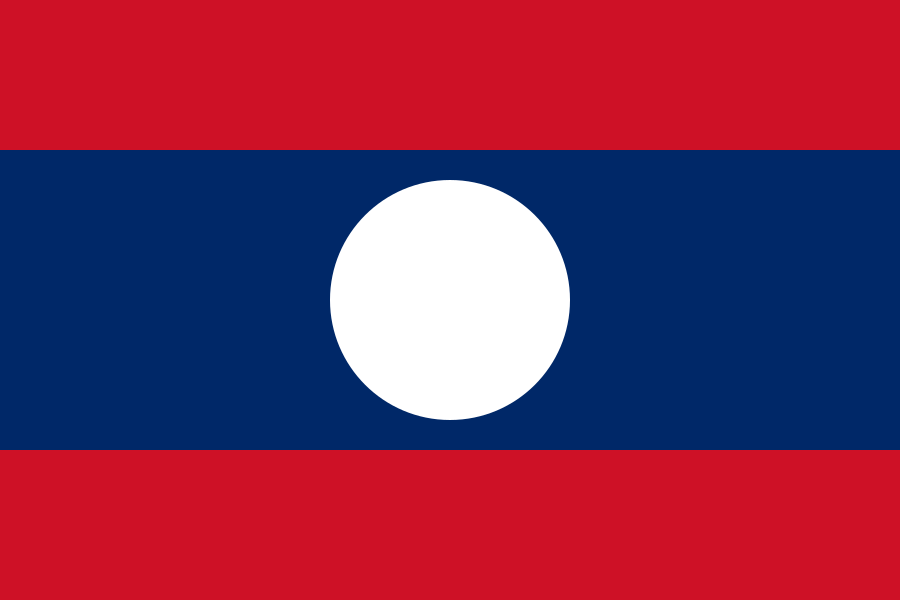 LAO
LAOLaos, a landlocked nation in Asia with a population of about 7.6 million, spans 236,800 km² and features Vientiane as its bustling capital. Known for its mountainous terrain and the Mekong River, it's a culturally rich country blending French colonial influences with ancient Buddhist traditions. While GDP data is unavailable here, Laos relies on agriculture, hydropower, and tourism for economic growth.
 LVA
LVALatvia, a Baltic nation in Northern Europe, boasts a population of about 1.83 million and covers an area of 64,559 km², with Riga as its vibrant capital city blending medieval charm and modern architecture. As a member of the EU and NATO, it features a diverse landscape of forests, beaches, and lakes, supporting a high-tech economy focused on IT, manufacturing, and renewable energy. Known for its rich cultural heritage, including folk songs and Art Nouveau buildings, Latvia offers a high quality of life with strong emphasis on education and environmental sustainability.
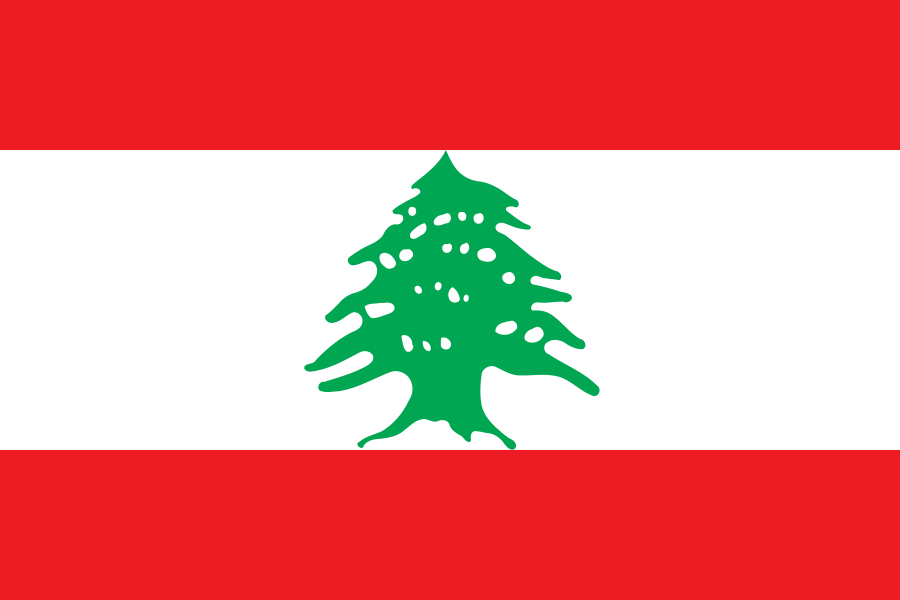 LBN
LBNLebanon, a small but diverse country in Western Asia, spans 10,452 km² along the Mediterranean coast and is home to around 5.5 million people, with Beirut serving as its bustling capital. Renowned for its ancient history, including UNESCO sites like Baalbek and Byblos, it's a cultural crossroads blending Arab, Phoenician, and European influences. Despite ongoing economic and political challenges (GDP data currently unavailable), Lebanon thrives on tourism, banking, and a vibrant food scene featuring dishes like tabbouleh and kibbeh.
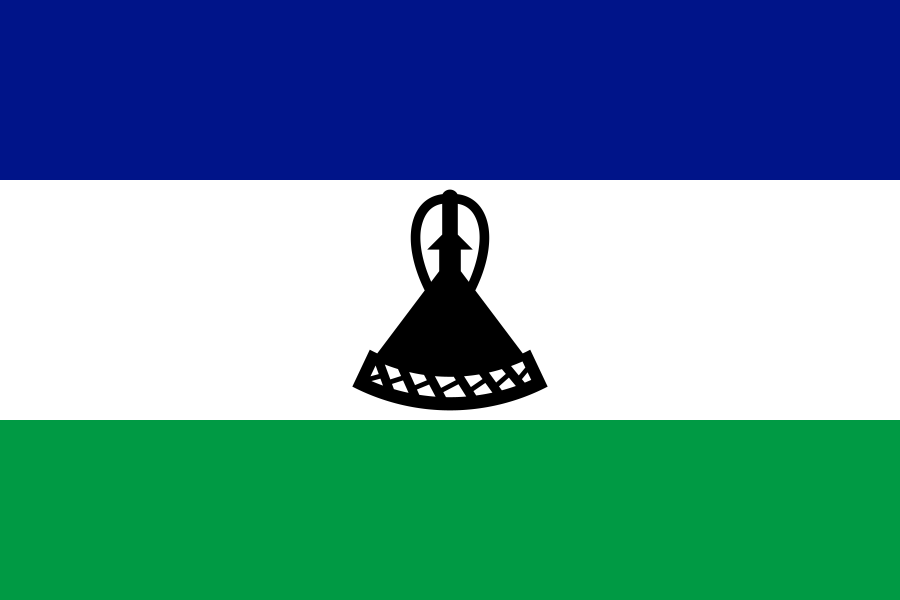 LSO
LSOLesotho, a landlocked kingdom in southern Africa completely surrounded by South Africa, has a population of around 2.1 million and spans 30,355 km², with Maseru as its bustling capital. Often called the "Kingdom in the Sky" due to its mountainous terrain—the only country entirely above 1,000 meters elevation—it features stunning highlands and a rich Basotho cultural heritage. While GDP data isn't available here, the economy centers on agriculture, textiles, and water exports to neighboring regions.
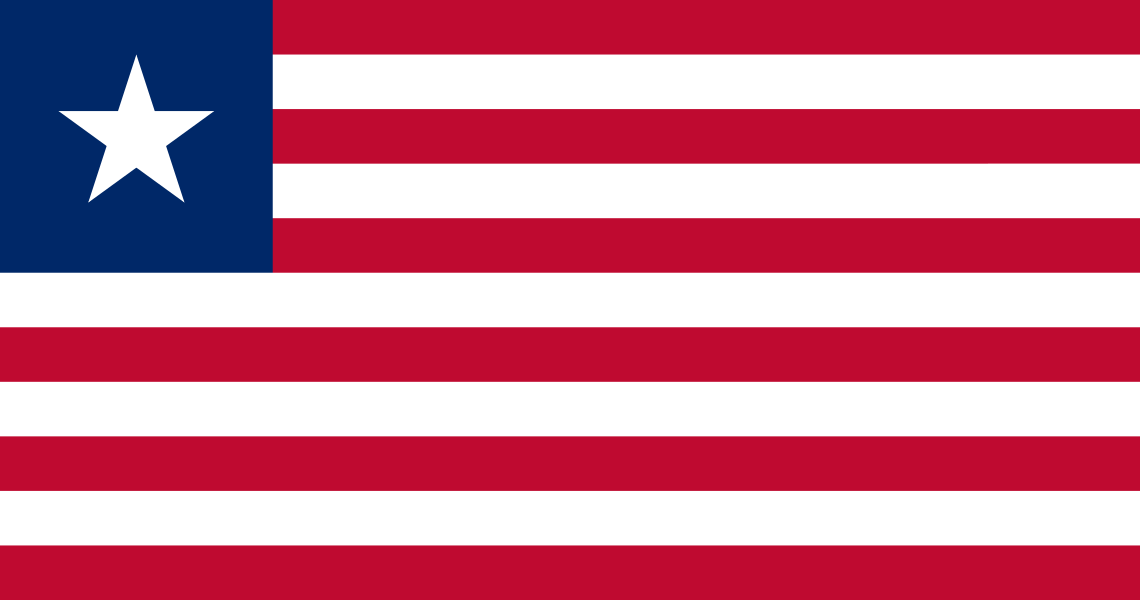 LBR
LBRLiberia, a West African nation with a population of about 5.2 million and an area of 111,369 km², was founded in the 19th century by freed American slaves and is Africa's oldest republic, with Monrovia as its bustling capital. Despite a turbulent history marked by civil wars, it boasts rich natural resources like rubber and iron ore, though its GDP data is currently unavailable, reflecting ongoing economic challenges in a developing economy. Today, Liberia is known for its vibrant culture, stunning beaches, and efforts toward stability and ecotourism.
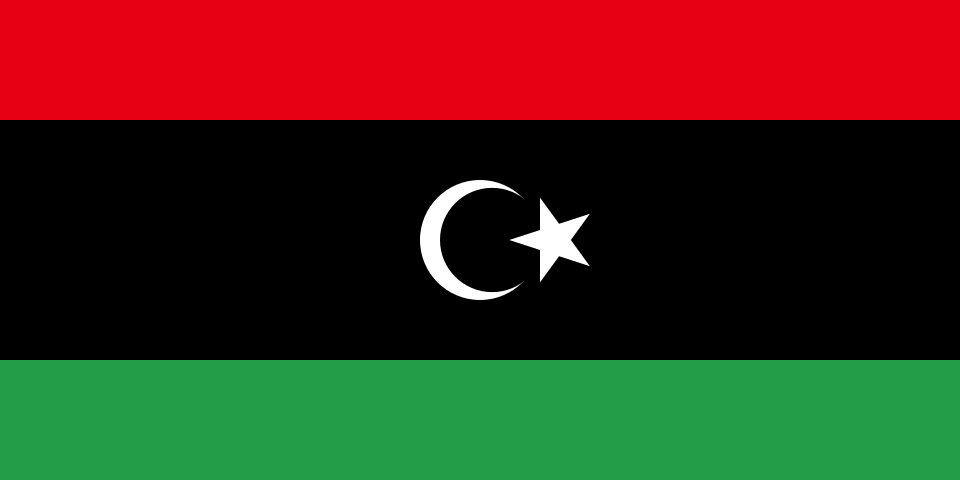 LBY
LBYLibya, a North African nation with a population of about 7.5 million, spans a vast 1.76 million square kilometers of mostly desert terrain, making it one of the continent's largest countries by area. Its capital, Tripoli, serves as the political and economic hub, though GDP data is currently unavailable amid ongoing instability. Rich in oil reserves, Libya has faced political turmoil since the 2011 revolution, but its strategic Mediterranean location continues to draw global interest.
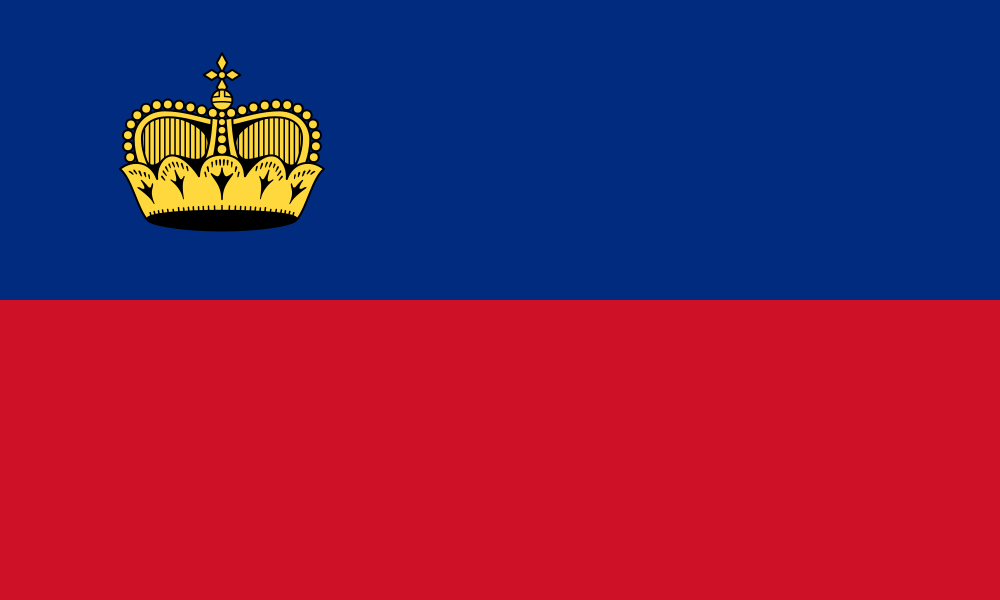 LIE
LIELiechtenstein is a tiny, landlocked principality in Central Europe, nestled between Switzerland and Austria, with a population of about 40,900 and an area of just 160 km². Its capital, Vaduz, serves as the hub for this German-speaking microstate, which boasts a high standard of living despite its small size (GDP data not available). Known for its picturesque Alps and stable monarchy, it's a haven for banking and low taxes, blending tradition with modern prosperity.
 LTU
LTULithuania, a Baltic nation in Europe with its capital in Vilnius, spans 65,300 km² and boasts a population of around 2.9 million people. Known for its stunning amber coastline, medieval castles, and vibrant cultural scene, it's a member of the EU and NATO, blending rich history with modern innovation. While GDP data isn't specified here, the country thrives on tech, manufacturing, and renewable energy, contributing to its growing economy.
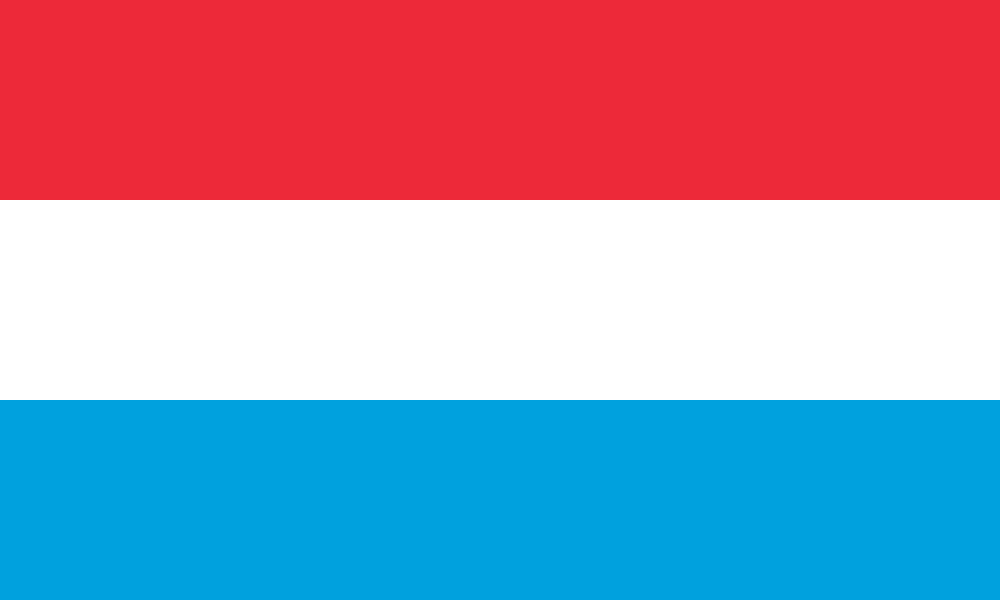 LUX
LUXLuxembourg, a small landlocked nation in Western Europe with a population of about 682,000 and an area of just 2,586 km², boasts one of the world's highest GDP per capita, driven by its thriving financial sector and status as a global banking hub. Its capital, also named Luxembourg, is a UNESCO-listed fortress city blending medieval history with modern EU institutions. Despite its size, the multilingual Grand Duchy punches above its weight in international finance and as a founding member of the European Union.
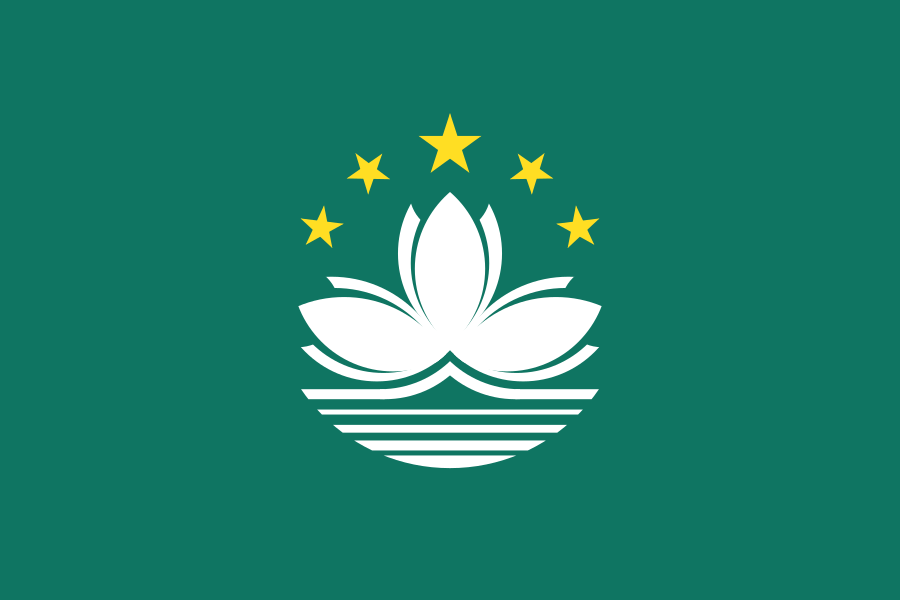 MAC
MACMacau, a Special Administrative Region of China in Asia, boasts a population of about 685,900 crammed into just 30 km², making it one of the world's most densely populated areas. Renowned for its vibrant casino industry and Portuguese colonial heritage, it blends Eastern and Western cultures with a skyline of glitzy resorts. While GDP data is unavailable here, Macau's economy thrives on tourism and gaming, drawing millions of visitors annually.
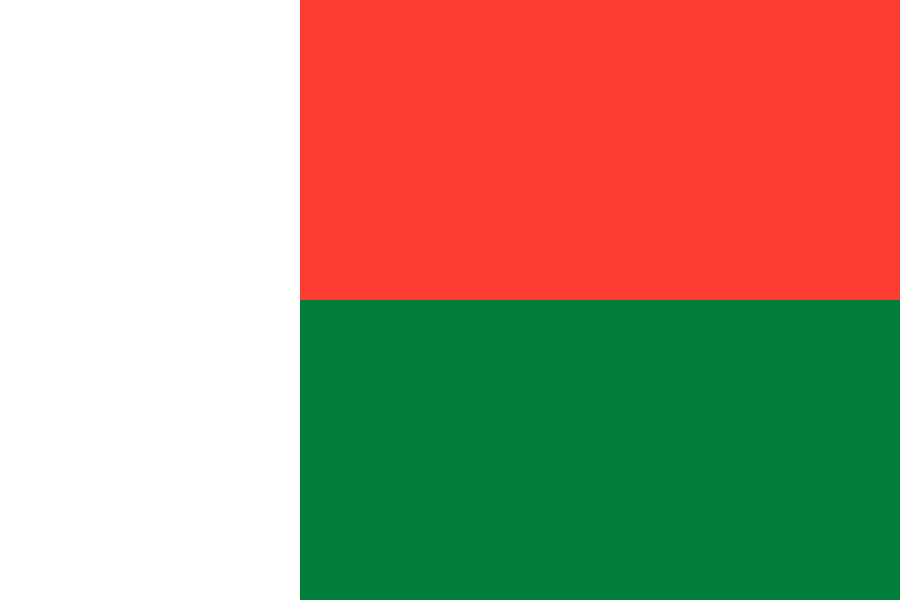 MDG
MDGMadagascar, an island nation in the Indian Ocean off Africa's southeast coast, boasts a population of about 31.7 million and covers 587,041 km², making it the world's fourth-largest island. Its capital, Antananarivo, serves as the economic and cultural hub in this African region, though GDP data is currently unavailable. Renowned for its unique biodiversity, including endemic species like lemurs, the country faces challenges like deforestation while offering stunning landscapes from rainforests to beaches.
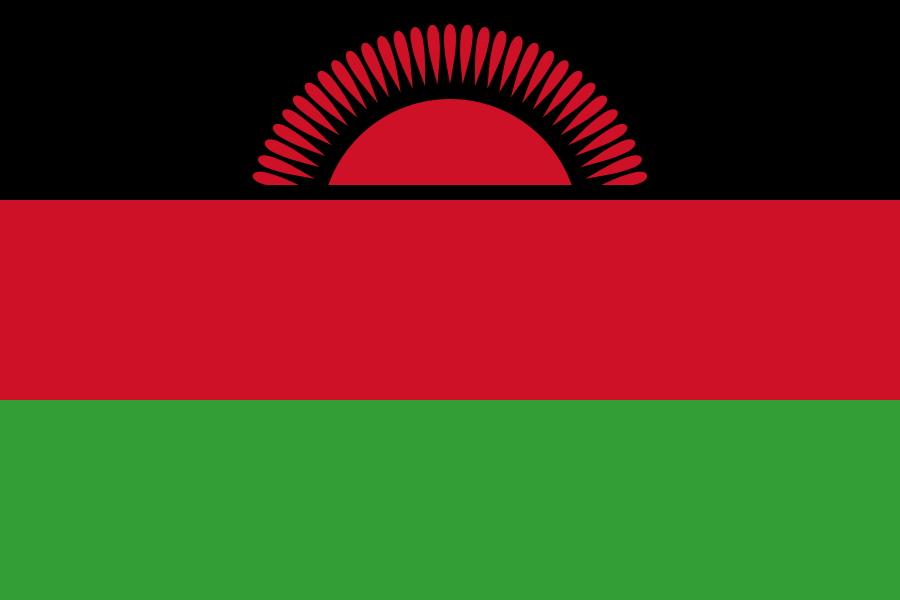 MWI
MWIMalawi, a landlocked nation in southeastern Africa, spans 118,484 km² and is home to approximately 20.7 million people, with Lilongwe serving as its bustling capital. Often called the "Warm Heart of Africa" for its friendly inhabitants, the country boasts stunning Lake Malawi, a UNESCO World Heritage site that dominates its landscape and supports diverse wildlife. While GDP data is unavailable here, Malawi's economy relies heavily on agriculture, including tobacco and tea exports, amid ongoing development challenges.
 MYS
MYSMalaysia, a vibrant Southeast Asian nation with a population of about 34 million, spans 330,803 km² across Peninsular Malaysia and East Malaysia on Borneo, boasting Kuala Lumpur as its bustling capital city. Renowned for its multicultural society blending Malay, Chinese, Indian, and indigenous influences, it features stunning biodiversity from rainforests to beaches, though GDP data is currently unavailable in this query. Economically dynamic with strengths in palm oil, electronics, and tourism, Malaysia is a gateway between the Indian and Pacific Oceans, blending modern skyscrapers like the Petronas Towers with ancient traditions.
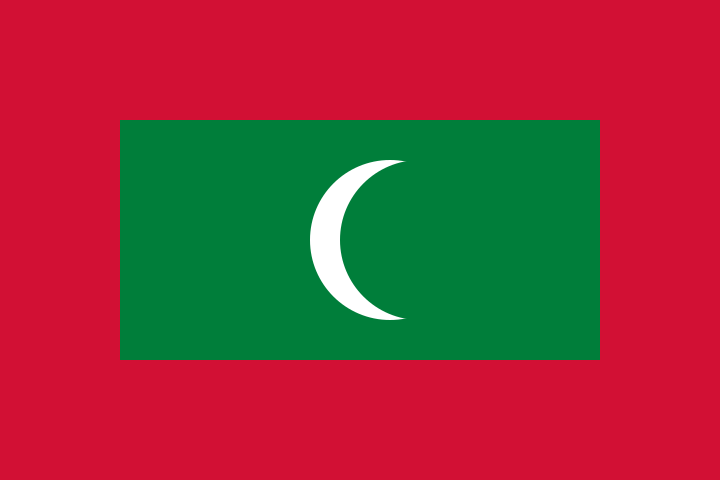 MDV
MDVThe Maldives, a tropical island nation in South Asia, spans just 300 km² across 26 atolls in the Indian Ocean, with a population of about 515,132 and its bustling capital in Malé. Renowned for its stunning coral reefs and luxury resorts, it relies heavily on tourism and fishing, though recent GDP figures are unavailable. This low-lying archipelago faces significant challenges from climate change and rising sea levels, making it a global symbol of environmental vulnerability.
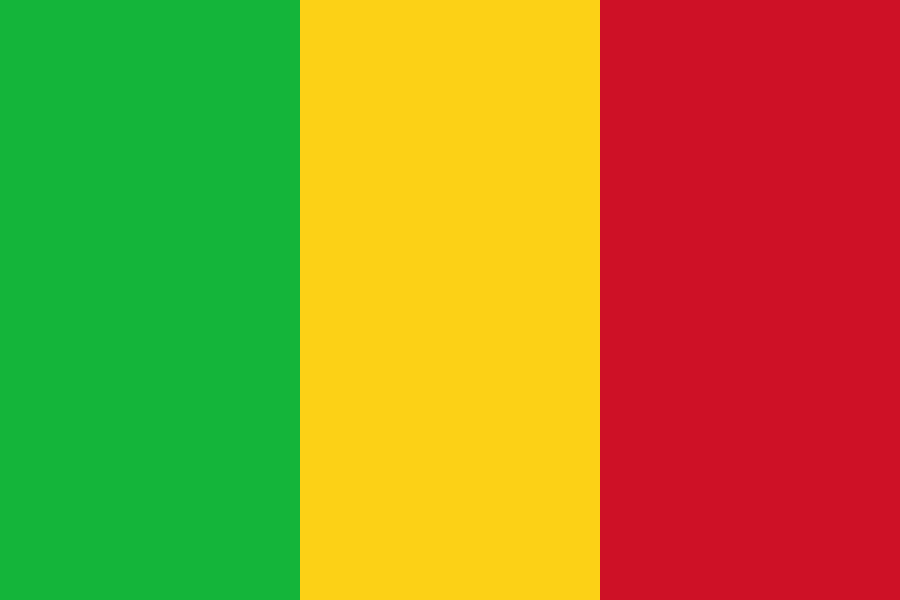 MLI
MLIMali, a landlocked West African nation with a population of around 22.4 million, spans 1,240,192 km² of diverse terrain from the Sahara Desert to the fertile Niger River basin, with Bamako serving as its bustling capital. Rich in history as the cradle of ancient empires like Ghana and Mali, the country boasts a vibrant cultural heritage blending Tuareg nomads, Dogon cliff villages, and iconic mud-brick mosques. Though GDP data is unavailable here, Mali grapples with economic hurdles amid ongoing efforts to boost agriculture, mining, and stability in the region.
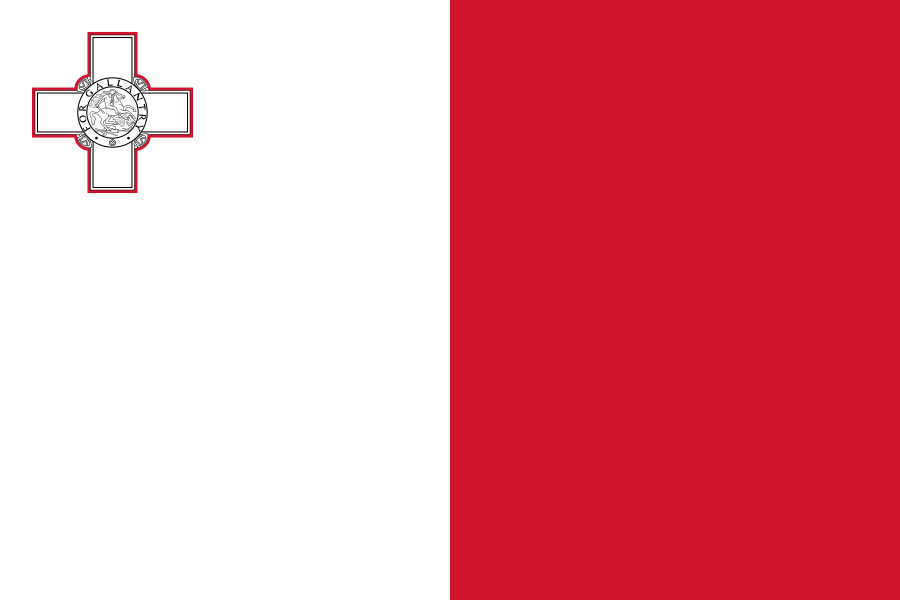 MLT
MLTMalta is a small island nation in the Mediterranean Sea, part of Europe, with a population of about 574,250 spread across just 316 km², making it one of the world's most densely populated countries. Its capital, Valletta, is a UNESCO World Heritage site renowned for its Baroque architecture and historic fortifications. While GDP data isn't available here, Malta thrives on tourism, financial services, and maritime trade, blending ancient history with modern EU membership for a vibrant cultural scene.
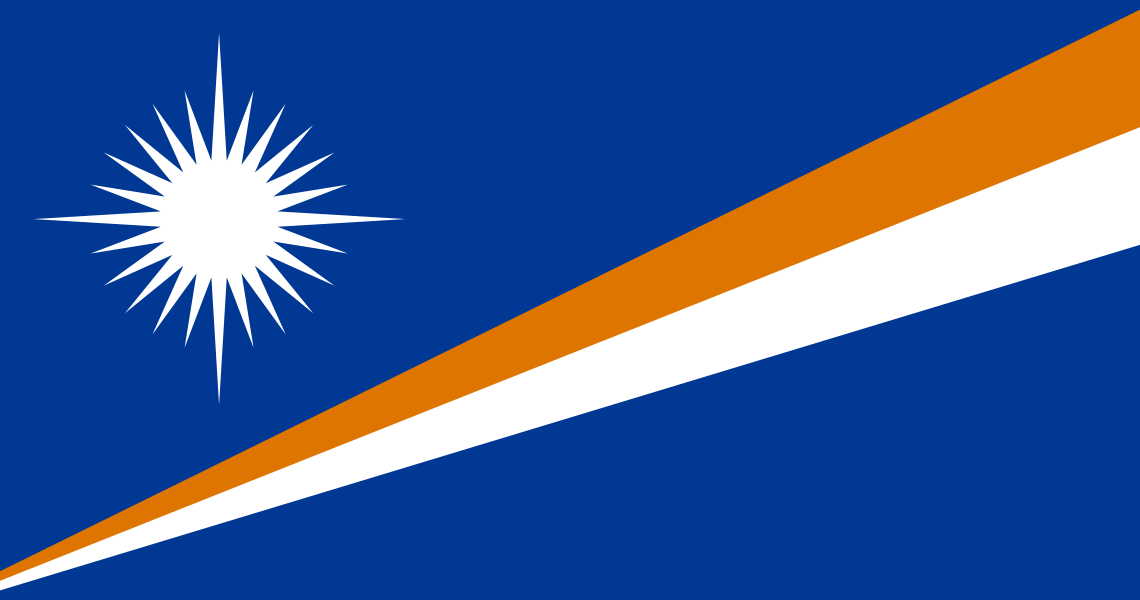 MHL
MHLThe Marshall Islands, a tiny island nation in Oceania spanning just 181 km², is home to around 42,418 people and consists of scattered atolls in the central Pacific Ocean. Its capital, Majuro, serves as the main hub for government and commerce, with the economy heavily reliant on U.S. aid, fishing, and copra production (though GDP figures are unavailable). Known for its stunning coral reefs and history of nuclear testing, it remains a sovereign state in free association with the United States.
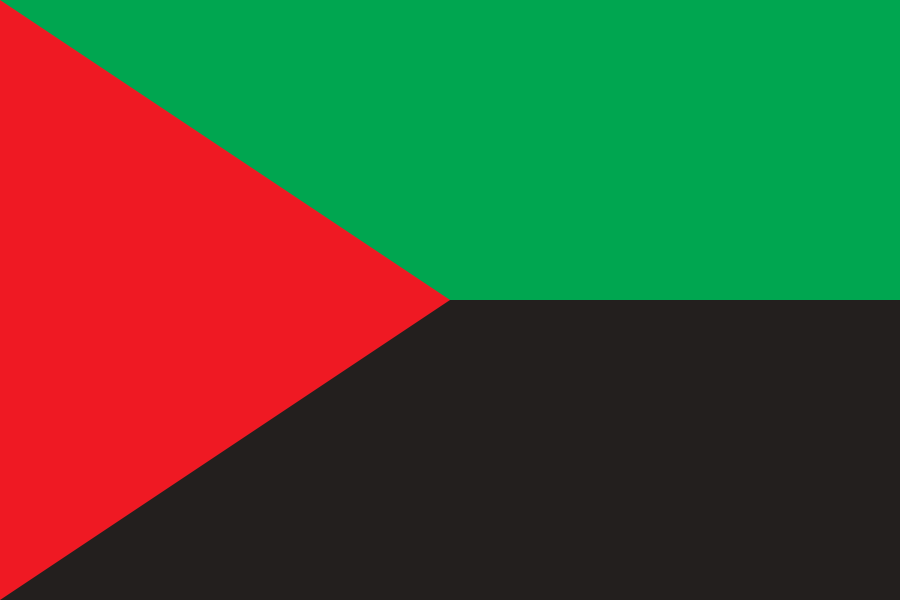 MTQ
MTQMartinique is a French overseas department in the Caribbean, classified in the Americas region, with a population of around 350,000 and a compact area of 1,128 km². Its capital, Fort-de-France, serves as the bustling hub for this volcanic island, renowned for its stunning beaches, rainforests, and rum distilleries. While GDP data is unavailable, the economy thrives on tourism, agriculture, and trade, blending French sophistication with vibrant Creole culture.
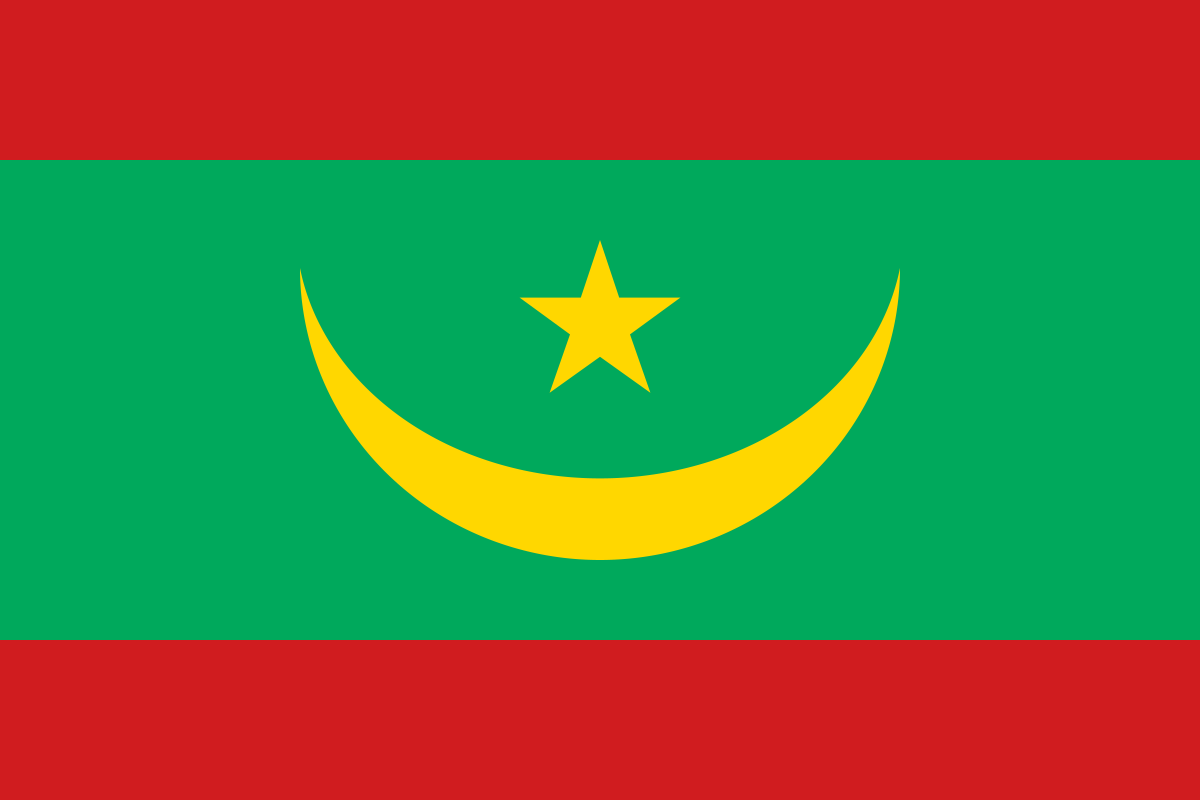 MRT
MRTMauritania, a vast West African nation dominated by the Sahara Desert, boasts an area of 1,030,700 km² and a population of around 4.9 million people, blending Arab-Berber and sub-Saharan cultures. Its capital, Nouakchott, serves as the economic hub, with the economy heavily reliant on mining, fishing, and agriculture, though GDP figures are not available here. Despite challenges like poverty and slavery legacies, it's a gateway to ancient caravan routes and stunning nomadic heritage.
 MUS
MUSMauritius is a picturesque island nation in the Indian Ocean, classified under the African region, with a population of around 1.24 million people across its compact 2,040 km² area. The bustling capital, Port Louis, is a melting pot of Creole, Indian, African, and European influences, driving the country's tourism and financial sectors. While GDP data isn't specified here, Mauritius is renowned for its stable democracy, stunning beaches, and biodiversity hotspots like the Black River Gorges National Park.
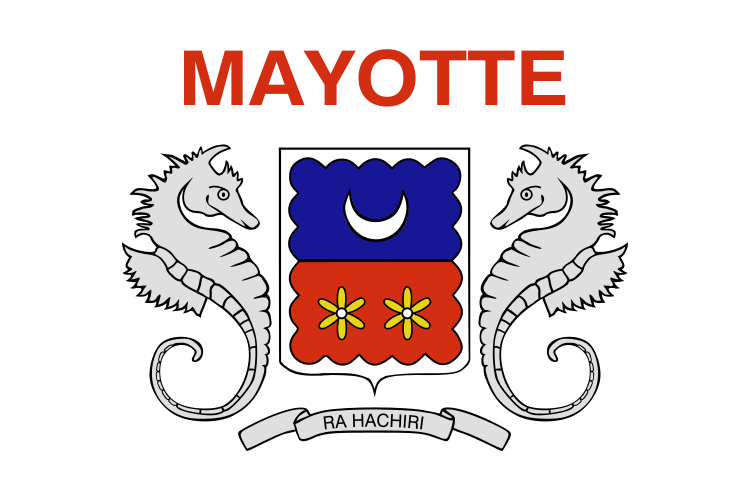 MYT
MYTMayotte, an overseas department of France located in the Indian Ocean off Africa's southeastern coast, is a volcanic archipelago known for its coral reefs and biodiversity, blending African, French, and Malagasy influences. With a population of about 320,901 spread across just 374 km², its capital is Mamoudzou, serving as the economic and administrative hub. Though GDP data is unavailable, the islands thrive on agriculture, fishing, and tourism, offering a unique tropical escape with stunning lagoons and diverse marine life.
 MEX
MEXMexico, a dynamic nation in the Americas, boasts a population of 130,575,786 spread across its vast 1,964,375 km² territory, blending ancient indigenous heritage with modern vibrancy. Its bustling capital, Mexico City, is a cultural powerhouse home to iconic sites like the Aztec ruins and world-class museums. From stunning beaches to rugged mountains, Mexico's diverse landscapes fuel a thriving tourism scene and rich biodiversity.
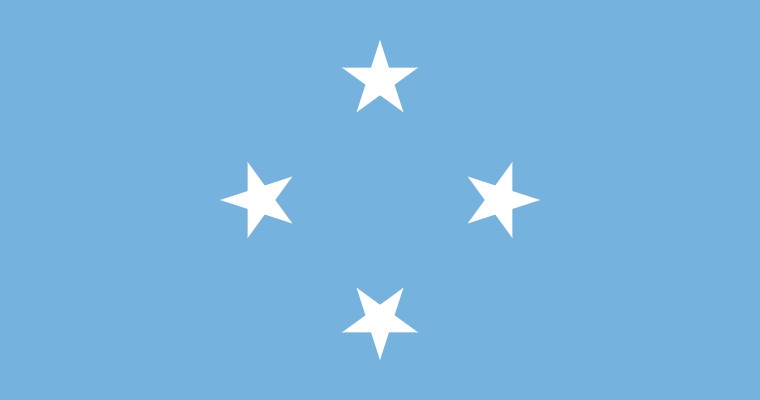 FSM
FSMMicronesia, officially the Federated States of Micronesia, is a small island nation in Oceania's western Pacific Ocean, comprising over 600 islands with a total land area of just 702 km² and a population of about 105,564. Its capital, Palikir, is located on the largest island of Pohnpei, and the country relies heavily on U.S. financial aid, with GDP data not readily available due to its compact economy focused on fishing, tourism, and agriculture. Known for its stunning coral reefs and diverse marine life, Micronesia offers a tropical paradise vibe amid challenges like climate change and limited resources.
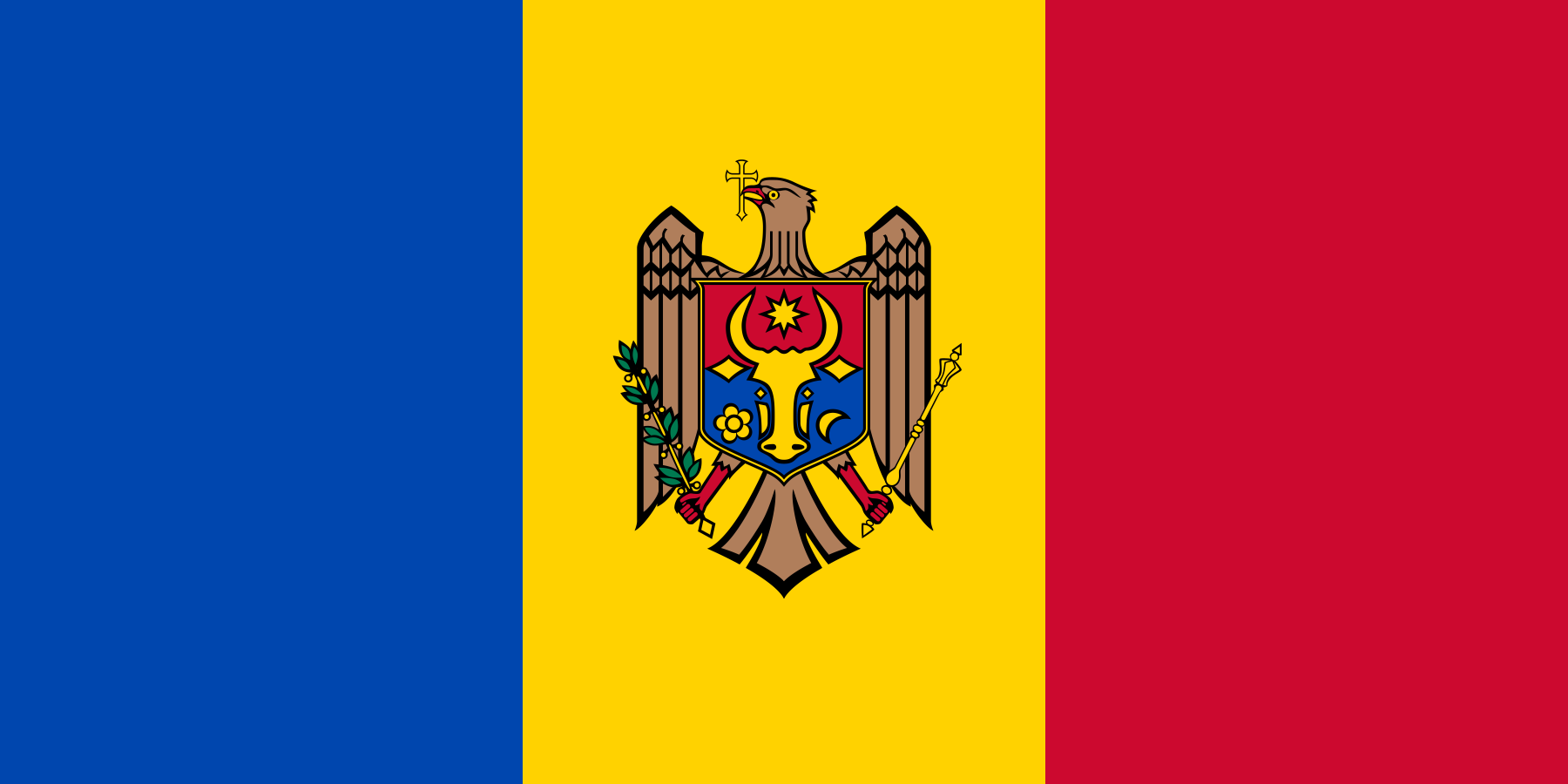 MDA
MDAMoldova, a landlocked nation in Eastern Europe with a population of about 2.75 million, covers 33,847 km² and boasts Chișinău as its vibrant capital. Renowned for its rich wine-making heritage and fertile farmlands, it navigates a complex geopolitical landscape between Romania and Ukraine. While GDP data is unavailable here, the country focuses on agriculture, manufacturing, and emerging tech sectors to drive its economy.
 MCO
MCOMonaco, a tiny sovereign city-state in Europe nestled on the French Riviera, boasts a population of just 38,423 across its mere 2.02 km² area, making it one of the world's smallest and most densely populated countries. With Monaco as its capital, it's renowned for its glamorous lifestyle, high-end casinos, and the iconic Formula 1 Grand Prix, though official GDP figures are not publicly available. This tax haven attracts the ultra-wealthy, blending Mediterranean charm with opulent living.
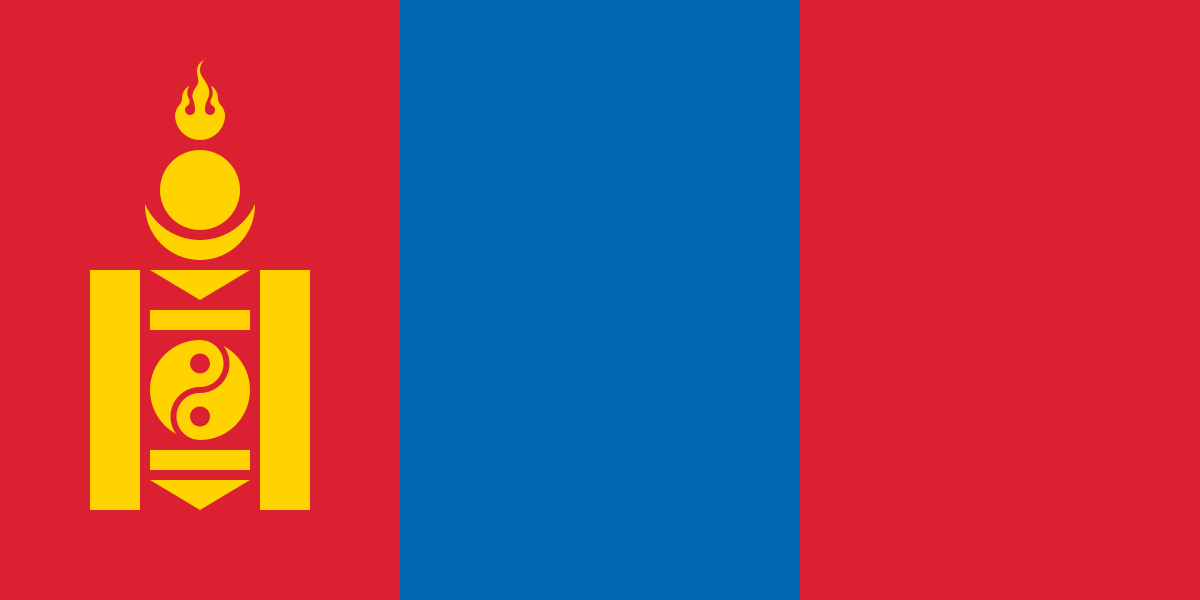 MNG
MNGMongolia, a vast landlocked nation in Asia spanning 1,564,110 km², is home to a population of about 3.5 million people, with Ulaanbaatar as its bustling capital. Renowned for its nomadic heritage and expansive steppes, the country blends ancient traditions with modern challenges, though detailed GDP figures are currently unavailable. Despite its sparse population density, Mongolia boasts rich mineral resources and a growing tourism sector drawing adventurers to its dramatic landscapes.
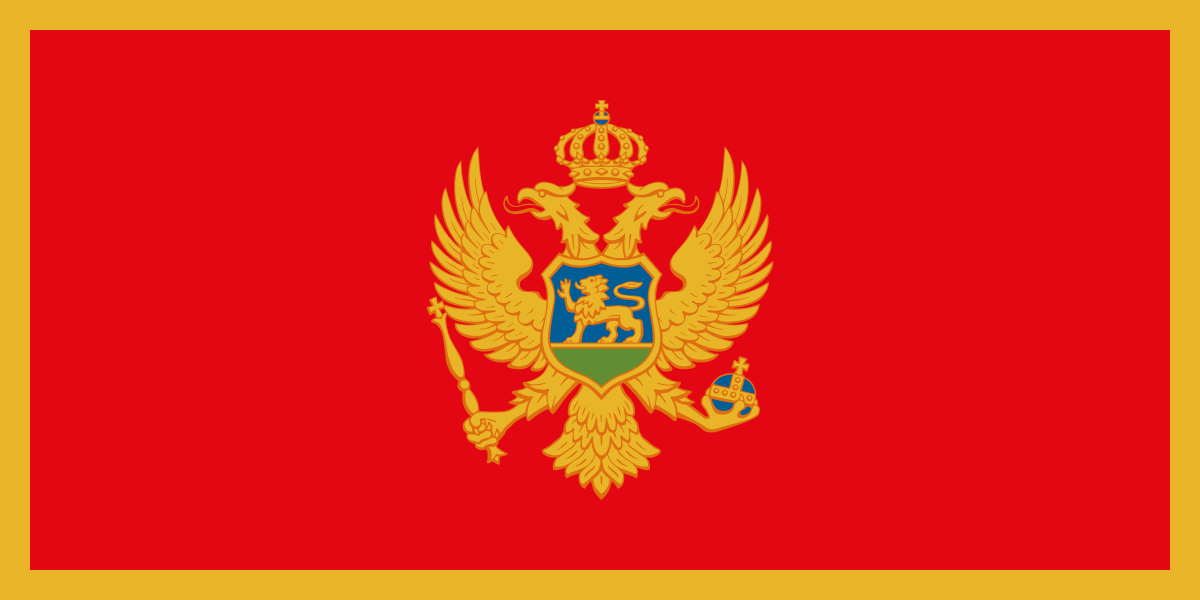 MNE
MNEMontenegro, a small Balkan nation in southeastern Europe, boasts a population of about 623,327 across its 13,812 km² territory, with Podgorica as its capital. Known for its stunning Adriatic coastline, rugged mountains, and medieval towns, it gained independence in 2006 and relies heavily on tourism and services for its economy (GDP data unavailable). This NATO member and EU candidate offers a blend of natural beauty and cultural heritage, making it a hidden gem for adventurers.
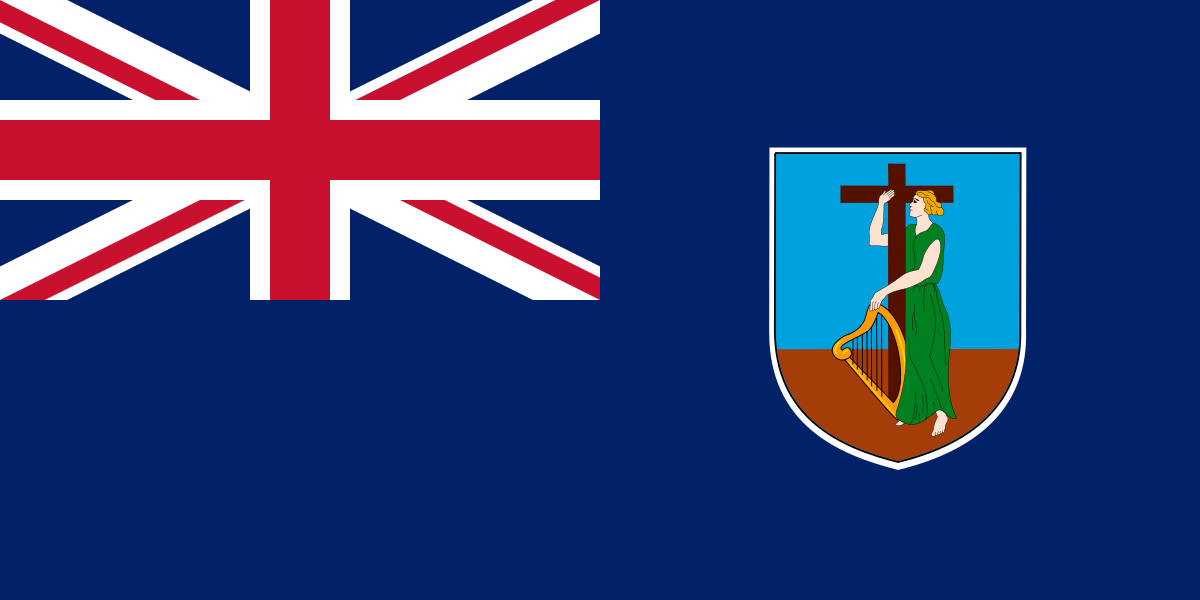 MSR
MSRMontserrat, a small British Overseas Territory in the Caribbean region of the Americas, spans just 102 km² and is home to a population of about 4,386 people. Its official capital, Plymouth, was largely abandoned after devastating eruptions from the Soufrière Hills volcano in the 1990s, with Brades serving as the de facto administrative center. With a GDP that's not readily available due to its tiny economy reliant on tourism and remittances, the island is famed for its volcanic landscapes, black-sand beaches, and resilient "Emerald Isle" spirit.
 MAR
MARMorocco, a North African nation with a population of about 36.8 million, spans 446,550 km² and boasts a rich blend of Arab, Berber, and European influences, with Rabat as its vibrant capital. Bordered by the Atlantic Ocean and Mediterranean Sea, it's a gateway between Africa and Europe, known for its bustling markets, historic medinas, and diverse landscapes from the Sahara Desert to the Atlas Mountains. While GDP data is unavailable here, the economy thrives on agriculture, tourism, and phosphates, making it a dynamic player in the region.
 MOZ
MOZMozambique, a vibrant Southeast African nation, spans 801,590 km² along the Indian Ocean coast, boasting a population of over 34 million and the bustling capital of Maputo. Rich in natural resources like coal and natural gas, it has transitioned from a turbulent post-colonial history to a growing economy focused on agriculture, mining, and tourism. Despite challenges like poverty and climate vulnerabilities, its stunning beaches, diverse wildlife, and cultural heritage make it a hidden gem in Africa.
 MMR
MMRMyanmar, a Southeast Asian nation formerly known as Burma, spans 676,578 km² and is home to over 51 million people, with Naypyidaw as its modern capital city. Rich in natural resources like jade and teak, it boasts diverse landscapes from the Irrawaddy River plains to the Himalayan foothills. Despite political challenges, its cultural heritage shines through ancient temples in Bagan and a blend of ethnic groups.
 NAM
NAMNamibia, a vast southern African nation spanning 825,615 km², boasts a population of about 3 million people and is renowned for its stunning landscapes, including the ancient Namib Desert and Etosha National Park teeming with wildlife. Its capital, Windhoek, serves as the economic and cultural hub, blending German colonial influences with modern African vibrancy, while the country's economy thrives on mining, tourism, and agriculture despite challenges like arid conditions. With a history of gaining independence in 1990, Namibia emphasizes conservation and has one of the world's highest rates of press freedom in Africa.
 NRU
NRUNauru is a minuscule island nation in Oceania, covering just 21 km² and home to around 11,680 people, making it one of the world's smallest countries by both area and population. Its de facto capital is Yaren, and the economy, with no available GDP figures, has long depended on phosphate mining, though reserves are dwindling. Despite its isolation, Nauru grapples with environmental issues and relies on foreign aid and offshore services for stability.
 NPL
NPLNepal, a landlocked South Asian nation nestled in the Himalayas, spans 147,181 km² and is home to the world's highest peak, Mount Everest, with Kathmandu as its vibrant capital. With a population of about 29.9 million, it boasts diverse ethnic groups and a rich cultural heritage influenced by Hinduism and Buddhism. Though GDP data is unavailable here, Nepal's economy relies on agriculture, tourism, and remittances, making it a trekker's paradise amid stunning natural beauty.
 NLD
NLDThe Netherlands, a vibrant European nation with a population of 18,100,436, spans 41,865 km² and boasts Amsterdam as its lively capital, renowned for its canals and cultural heritage. This densely populated country is famous for its innovative water management, tulip fields, and progressive policies, blending historic charm with modern efficiency. While GDP data is unavailable here, the Netherlands thrives on trade, agriculture, and tech, making it a key player in global commerce.
 NCL
NCLNew Caledonia, a French overseas territory in Oceania, spans 18,575 km² of Pacific islands renowned for their biodiversity, lagoons, and nickel reserves—the world's largest. With a population of about 264,596 and capital in Nouméa, it boasts a diverse culture blending Melanesian, European, and Asian influences, though GDP data is not readily available due to its status. Ongoing debates over independence from France add a layer of political intrigue to this tropical paradise.
 NZL
NZLNew Zealand, an island nation in Oceania, boasts a population of around 5.3 million across its 268,838 km² of diverse terrain, from rugged mountains to pristine beaches. Wellington serves as its vibrant capital, blending urban culture with natural beauty. Renowned for its innovative spirit and outdoor adventures, it's a global leader in sustainability and film production.
 NIC
NICNicaragua, a vibrant Central American nation in the Americas region, boasts a population of around 6.8 million people spread across its 130,373 km² of diverse landscapes, including volcanoes, lakes, and rainforests. Its capital, Managua, serves as the bustling economic and cultural hub, blending colonial history with modern challenges. Despite economic hurdles, the country is renowned for its natural beauty and ecotourism potential, drawing visitors to sites like Lake Nicaragua and the Corn Islands.
 NER
NERNiger, a landlocked nation in West Africa with a population of about 26 million, spans 1,267,000 square kilometers, much of it covered by the Sahara Desert. Its capital, Niamey, serves as the economic and cultural hub, though detailed GDP figures are unavailable. Despite challenges like poverty and climate issues, Niger boasts rich uranium reserves and a youthful, growing population driving its future potential.
 NGA
NGANigeria, Africa's most populous nation with over 223 million people, spans 923,768 km² in West Africa and boasts Abuja as its modern capital, having shifted from Lagos in 1991. Renowned for its vast ethnic diversity, including over 250 groups, the country is a major oil producer and cultural powerhouse, home to Nollywood, the world's second-largest film industry. Despite economic challenges, its vibrant markets and youthful population drive potential for growth in sectors like tech and agriculture.
 NIU
NIUNiue is a tiny island nation in Oceania, known for its coral atoll landscape and close association with New Zealand, covering just 260 km² with a capital in Alofi. With a population of only 1,681, it's one of the world's smallest countries, boasting a self-governing status and a economy reliant on tourism, fishing, and foreign aid (GDP data unavailable). Despite its remote location, Niue offers stunning natural beauty, including caves and reefs, making it a hidden gem for eco-adventurers.
 NFK
NFKNorfolk Island is a small external territory of Australia located in Oceania, boasting a tiny population of just 2,188 residents across its 36 km² area, with Kingston serving as its capital. Known for its stunning subtropical landscapes and history as a former penal colony, the island relies heavily on tourism and agriculture, though its GDP data is not available. This remote Pacific gem offers a peaceful escape with unique biodiversity and a blend of Polynesian and British influences.
 PRK
PRKNorth Korea, officially the Democratic People's Republic of Korea, is a reclusive East Asian nation in the Asia region, covering 120,538 km² with Pyongyang as its capital and a population of about 25.95 million. Its economy remains opaque, with no reliable GDP figures available due to international isolation and heavy state control. Despite global sanctions, the country is known for its massive military parades and pursuit of nuclear capabilities, making it a focal point of geopolitical tension.
 MKD
MKDNorth Macedonia, a landlocked Balkan nation in southeastern Europe, covers 25,713 km² and is home to about 1.8 million people, with Skopje serving as its vibrant capital blending Ottoman heritage and modern vibes. Once part of Yugoslavia, it gained independence in 1991 and boasts a diverse cultural tapestry influenced by Albanian, Turkish, and Slavic roots. While GDP data isn't specified here, the country is known for its stunning lakes, mountains, and growing tourism scene.
 MNP
MNPThe Northern Mariana Islands, a U.S. commonwealth in Oceania, span 464 km² across 14 islands in the western Pacific, with Saipan as its bustling capital and largest hub. Home to about 47,329 people, the territory boasts stunning volcanic landscapes, coral reefs, and a mix of Chamorro, Carolinian, and Asian cultures, though GDP data is not available. Known for its WWII history and tourism-driven economy, it offers pristine beaches and adventure spots, blending American governance with tropical island vibes.
 NOR
NORNorway, a Scandinavian nation in Northern Europe, boasts a population of about 5.6 million across its vast 386,224 km² area, with Oslo as its vibrant capital city. Renowned for its stunning fjords, high standard of living, and strong welfare system, the country thrives on oil and gas exports, though exact GDP figures are not available here. With a rich Viking heritage and commitment to sustainability, Norway ranks among the world's happiest and most prosperous countries.
 OMN
OMNOman, located in the Middle East region of Asia, is a sultanate with a population of approximately 5.3 million people spread across its 309,500 km² of diverse terrain, from deserts to coastlines. Its capital, Muscat, serves as a vibrant hub blending ancient forts with modern ports, reflecting the country's rich maritime history and strategic position on the Arabian Sea. While GDP data is unavailable here, Oman thrives on oil exports, tourism, and efforts toward economic diversification.
 PAK
PAKPakistan, officially the Islamic Republic of Pakistan, is a populous South Asian nation with over 241 million people spread across 796,095 km², boasting diverse landscapes from the towering Himalayas to arid deserts. Its capital, Islamabad, serves as the political hub, while the country shares borders with India, Afghanistan, Iran, and China, and is known for its rich cultural heritage, including ancient Indus Valley civilizations and a passion for cricket. With a strategic location in Asia, Pakistan is a nuclear-armed state facing economic challenges, though GDP data is currently unavailable.
 PLW
PLWPalau is a small island nation in Oceania, consisting of over 300 islands in the western Pacific Ocean, with a total area of just 459 km² and a population of around 16,733. Its capital, Ngerulmud, is one of the world's least populous, and the country boasts stunning marine biodiversity, including UNESCO-listed Rock Islands and jellyfish lakes that draw eco-tourists. While GDP data is unavailable, Palau's economy thrives on tourism, fishing, and U.S. aid through its Compact of Free Association.
 PSE
PSEPalestine, located in Western Asia, spans 6,220 km² and is home to approximately 5.5 million people, with its administrative capital in Ramallah. The region faces ongoing geopolitical challenges, reflected in its unavailable GDP data amid complex economic conditions. Despite this, it boasts a rich cultural heritage, including historic sites like Jericho, one of the world's oldest inhabited cities.
 PAN
PANPanama, a vibrant nation in the Americas bridging Central and South America, spans 75,417 km² and is home to a population of around 4 million people. Its bustling capital, Panama City, serves as a major economic and cultural hub, blending modern skyscrapers with rich colonial history. Renowned for the iconic Panama Canal, the country plays a pivotal role in global shipping and trade, fostering a diverse economy driven by logistics, finance, and tourism.
 PNG
PNGPapua New Guinea, a diverse island nation in Oceania, boasts a population of about 11.8 million people spread across its vast 462,840 km² of rugged terrain, with Port Moresby as its bustling capital. Known for its over 800 indigenous languages and rich biodiversity, the country relies on natural resources like gold, oil, and agriculture, though economic data like GDP remains variable. This Melanesian gem offers stunning landscapes from highlands to coral reefs, making it a hotspot for adventure seekers.
 PRY
PRYParaguay, a landlocked nation in South America's heartland with a population of about 6.1 million, boasts a diverse landscape spanning 406,752 km², from the arid Chaco region to lush eastern forests. Its capital, Asunción, serves as the cultural and economic hub, where Spanish and Guarani languages blend in daily life. Renowned for its massive Itaipu Dam hydroelectric output and soy exports, Paraguay offers a mix of indigenous heritage and modern resilience, though GDP data remains unspecified here.
 PER
PERPeru, a diverse South American nation in the Americas region, boasts a population of about 34 million people and spans 1,285,216 km², making it one of the continent's larger countries with stunning landscapes from the Andes to the Amazon rainforest. Its capital, Lima, serves as a vibrant cultural and economic hub, blending ancient Inca heritage—like the iconic Machu Picchu—with modern influences. While GDP data is unavailable here, Peru's economy thrives on mining, agriculture, and tourism, drawing visitors to its rich biodiversity and historical sites.
 PHL
PHLThe Philippines is an archipelagic nation in Asia, home to over 114 million people across 342,353 km² of tropical islands, with Manila serving as its vibrant capital and economic hub. While GDP data isn't specified here, the country thrives on a mix of agriculture, tourism, and overseas remittances, blending rich cultural heritage with stunning beaches and biodiversity. It's a resilient Southeast Asian powerhouse, known for its warm hospitality and dynamic blend of indigenous, Spanish, and American influences.
 PCN
PCNThe Pitcairn Islands, a remote British Overseas Territory in Oceania, span just 47 km² and are home to a tiny population of about 35 people, making it one of the least populated jurisdictions on Earth. Its capital, Adamstown, serves as the hub for this isolated volcanic archipelago, where residents rely on subsistence farming, fishing, and limited tourism. With no recorded GDP data, the economy is informal and supported by external aid, emphasizing its unique status as a haven for descendants of the HMS Bounty mutineers.
 POL
POLPoland, a vibrant European nation with Warsaw as its bustling capital, spans 312,679 km² and is home to approximately 37.4 million people. Known for its rich history, from medieval castles to resilient post-WWII recovery, it boasts a strategic location bridging Western and Eastern Europe. While GDP data isn't specified here, Poland's economy thrives on manufacturing, agriculture, and EU integration, making it a key player in regional affairs.
 PRT
PRTPortugal, a vibrant European nation on the Iberian Peninsula, spans 92,090 km² and is home to about 10.7 million people, with Lisbon serving as its bustling capital. Famous for its maritime history, stunning coastlines, and cultural landmarks like Porto's wine cellars, it boasts a rich heritage of exploration and a temperate climate ideal for tourism. While GDP data is unavailable here, Portugal's economy thrives on services, manufacturing, and renewable energy.
 PRI
PRIPuerto Rico, an unincorporated U.S. territory in the Americas, boasts a population of about 3.2 million across its 8,870 km² of lush Caribbean islands, with San Juan as its vibrant capital known for historic forts and colorful architecture. While GDP data is unavailable here, the island thrives on tourism, pharmaceuticals, and manufacturing, blending Spanish colonial heritage with modern American influences. Famous for its beaches, bioluminescent bays, and cultural festivals like salsa music, Puerto Rico offers a unique mix of tropical paradise and resilient spirit despite challenges like hurricanes and economic fluctuations.
 QAT
QATQatar, a small but wealthy peninsula nation in Western Asia, boasts a population of about 3.2 million people across its 11,586 km² area, with Doha serving as its bustling capital and economic hub. Renowned for its vast natural gas reserves, the country has transformed into a global player in energy, sports (hosting the 2022 FIFA World Cup), and finance, despite its GDP data being unavailable here. With a diverse expat community and modern skyline, Qatar blends tradition and innovation in the Arabian Gulf.
 COG
COGThe Republic of the Congo, a Central African nation often called Congo-Brazzaville, spans 342,000 km² of lush rainforests and rivers, with a population of around 6.1 million and Brazzaville as its vibrant capital. Its economy relies heavily on oil exports, though GDP figures are not available here, supporting a diverse mix of urban and rural communities. Bordered by five countries, it's known for its biodiversity hotspots like the Congo Basin, but faces challenges from political instability and infrastructure needs.
 REU
REURéunion is a volcanic island and overseas department of France located in the Indian Ocean, classified under the Africa region, with a land area of 2,511 km² and Saint-Denis as its bustling capital. Home to a diverse population of about 896,175 people, it boasts stunning landscapes from active volcanoes to lush rainforests, blending French and Creole cultures. While GDP data is unavailable, the economy thrives on tourism, agriculture like vanilla and sugar, and EU support.
 ROU
ROURomania, a vibrant Eastern European nation, boasts a population of over 19 million people spread across 238,391 square kilometers, with Bucharest serving as its bustling capital and cultural hub. Known for its rich history, from ancient Dacian roots to medieval castles like Bran (linked to Dracula lore), the country blends stunning Carpathian landscapes with a dynamic economy, though current GDP data is unavailable. It's a gateway to the Black Sea and a member of the EU and NATO, offering a mix of tradition and modernity.
 RUS
RUSRussia, Europe's largest nation by land area at 17,098,246 km², is home to a population of 146,028,325 and features Moscow as its vibrant capital city. Spanning vast terrains from icy tundras to urban metropolises, it plays a pivotal role in global affairs despite unavailable GDP data. This powerhouse blends rich history, diverse cultures, and immense natural resources into a captivating geopolitical force.
 RWA
RWARwanda, a landlocked nation in East Africa with a population of about 14 million, has rapidly transformed into one of the continent's fastest-growing economies, focusing on tech innovation and eco-tourism despite its small area of 26,338 km². The capital, Kigali, serves as a vibrant hub for business and conservation efforts, including protecting endangered mountain gorillas in Volcanoes National Park. With GDP data unavailable here, it's worth noting Rwanda's emphasis on sustainable development and gender equality in governance.
 BLM
BLMSaint Barthélemy, often called St. Barts, is a tiny French overseas collectivity in the Caribbean's Leeward Islands, boasting a population of just 10,562 across its 21 km² area. With Gustavia as its capital, the island is renowned for its upscale tourism, pristine beaches, and celebrity appeal, though GDP data is not available. Part of the Americas region, it blends French sophistication with tropical vibes, making it a haven for luxury seekers.
 SHN
SHNSaint Helena, Ascension and Tristan da Cunha is a remote British Overseas Territory in the South Atlantic Ocean, classified under Africa, with a tiny population of just 5,651 spread across its 394 km² of volcanic islands. Famous for exiling Napoleon Bonaparte on Saint Helena, its capital Jamestown serves as the main hub, while the economy relies on fishing, tourism, and UK aid, though GDP data is unavailable. This isolated archipelago boasts unique biodiversity, including rare seabirds and the world's oldest known animal, Jonathan the tortoise, making it a quirky spot for adventurers.
 KNA
KNASaint Kitts and Nevis is a small twin-island nation in the Caribbean region of the Americas, covering just 261 km² with a population of around 51,320. Its capital, Basseterre, serves as the economic and cultural hub, though GDP data is currently unavailable. Known for its stunning beaches and volcanic landscapes, it's a popular spot for tourism and citizenship-by-investment programs.
 LCA
LCASaint Lucia is a vibrant Caribbean island nation in the Americas, boasting a population of about 184,100 across its 616 km² of volcanic terrain, with Castries as its bustling capital. Renowned for its stunning beaches, lush rainforests, and iconic Pitons mountains, it's a prime spot for tourism and adventure. While GDP data is unavailable here, the economy thrives on services, agriculture like bananas, and growing sectors in offshore banking.
 MAF
MAFSaint Martin, a small Caribbean island in the Americas, is divided between French and Dutch territories, with the French side (Saint-Martin) boasting a population of about 31,496 and an area of just 53 km². Its capital, Marigot, serves as a vibrant hub for tourism, blending European charm with tropical beaches and duty-free shopping. While GDP data is unavailable, the island thrives on hospitality, attracting visitors for its stunning scenery and multicultural vibe.
 SPM
SPMSaint Pierre and Miquelon is a small French overseas collectivity located in the North Atlantic Ocean, just off the coast of Newfoundland, Canada, making it the last remnant of France's North American empire. With a tiny population of 5,819 spread across 242 km², its capital is Saint-Pierre, and the economy revolves around fishing and tourism despite no available GDP data. This foggy archipelago offers a unique blend of French culture and rugged island life, attracting visitors for its seafood and historic charm.
 VCT
VCTSaint Vincent and the Grenadines is a vibrant Caribbean island nation in the Americas, boasting a population of about 110,872 across its 389 km² of volcanic landscapes and pristine beaches. With Kingstown as its bustling capital, the country thrives on tourism, agriculture, and offshore banking, though detailed GDP figures are not available. Known for its yachting havens and the active La Soufrière volcano, it offers a mix of adventure and relaxation in a tropical paradise.
 WSM
WSMSamoa, a picturesque island nation in Oceania, boasts a population of around 205,557 across its 2,842 km² of volcanic terrain and lush landscapes. The capital, Apia, serves as the cultural and economic hub on the main island of Upolu. With GDP data unavailable, Samoa thrives on tourism, agriculture, and its vibrant Polynesian heritage, including traditional tattooing and fa'a Samoa customs.
 SMR
SMRSan Marino, a tiny microstate entirely surrounded by Italy in Europe, covers just 61 km² and is home to about 34,132 people, making it one of the world's smallest and oldest republics. Its capital, the City of San Marino, sits atop Mount Titano and boasts stunning medieval architecture and UNESCO-listed historic sites. With GDP data unavailable, the economy thrives on tourism, banking, and low-tax incentives, drawing visitors to its tax-free shopping and scenic views.
 STP
STPSão Tomé and Príncipe is a small island nation in the Gulf of Guinea off Africa's west coast, covering just 964 km² and home to about 209,607 people, with São Tomé as its vibrant capital. This former Portuguese colony gained independence in 1975 and boasts stunning volcanic landscapes, beaches, and biodiversity hotspots. Its economy relies heavily on cocoa exports and tourism, though detailed GDP figures are not available here, making it one of Africa's hidden gems for eco-adventurers.
 SAU
SAUSaudi Arabia, a vast Middle Eastern kingdom in Asia spanning 2,149,690 km², is home to about 35.3 million people and boasts Riyadh as its bustling capital. Renowned for its massive oil reserves that drive the economy, the country is a global energy powerhouse and the birthplace of Islam, featuring sacred sites like Mecca and Medina. With a rich cultural heritage blending tradition and rapid modernization, it continues to evolve under Vision 2030 reforms.
 SEN
SENSenegal, a West African nation with a population of around 18.6 million, spans 196,722 km² and features the bustling coastal capital of Dakar as its cultural and economic hub. Renowned for its political stability and vibrant traditions like Senegalese wrestling and mbalax music, the country thrives on agriculture, fishing, and emerging tourism, though GDP data is currently unavailable. With a mix of Sahelian landscapes and Atlantic beaches, Senegal stands out as one of Africa's most progressive democracies, emphasizing education and regional peacekeeping.
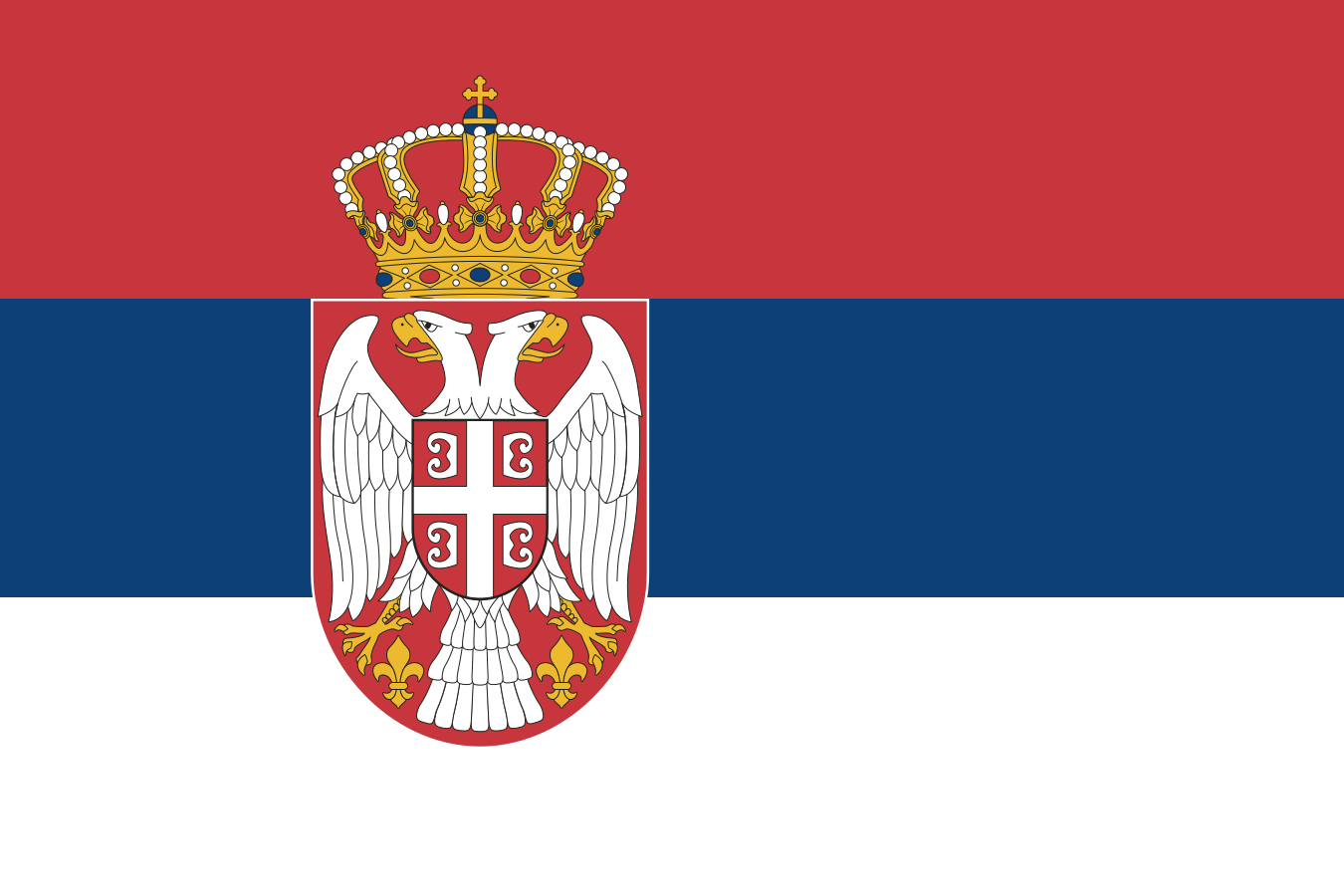 SRB
SRBSerbia, a landlocked nation in Southeast Europe, boasts a population of around 6.6 million and spans 77,589 km², with Belgrade serving as its bustling capital and cultural hub. Once part of Yugoslavia, it has a rich history marked by medieval fortresses, Orthodox heritage, and a resilient spirit amid regional conflicts. While GDP data is unavailable here, the country thrives on manufacturing, agriculture, and growing tourism, blending Balkan traditions with modern aspirations.
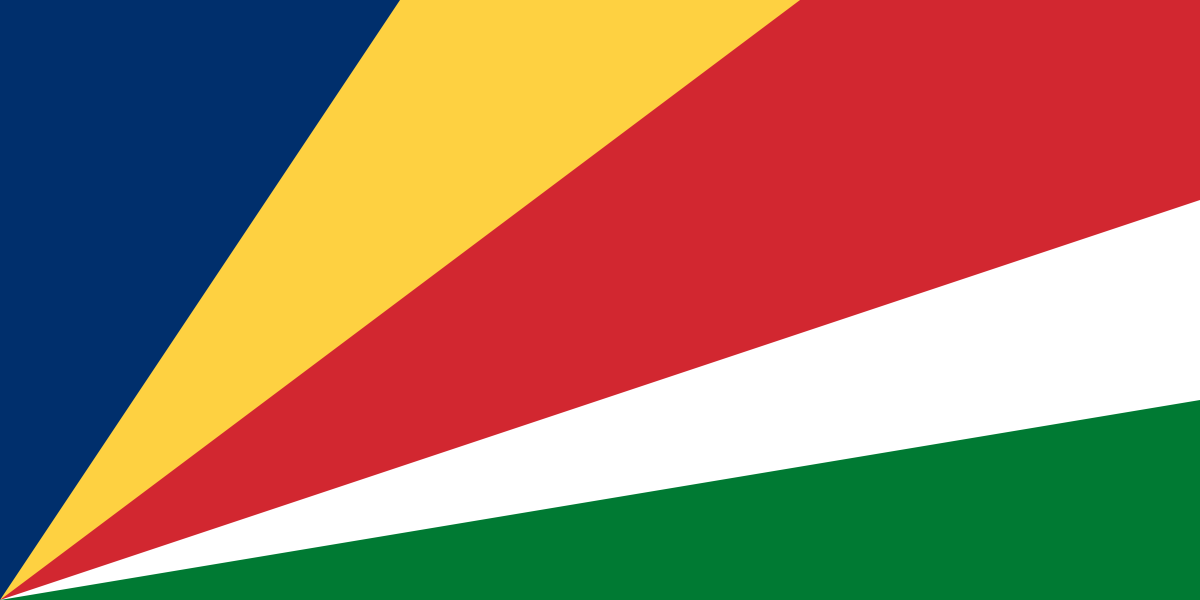 SYC
SYCSeychelles is a picturesque archipelago nation in the Indian Ocean, part of the African region, boasting a small population of around 122,729 across its 452 km² of islands. The capital, Victoria, sits on the largest island of Mahé and serves as the economic hub, with tourism and fisheries driving much of the economy (GDP data unavailable). Renowned for its crystal-clear waters, coral reefs, and unique wildlife like giant tortoises, it's a biodiversity hotspot and luxury travel paradise.
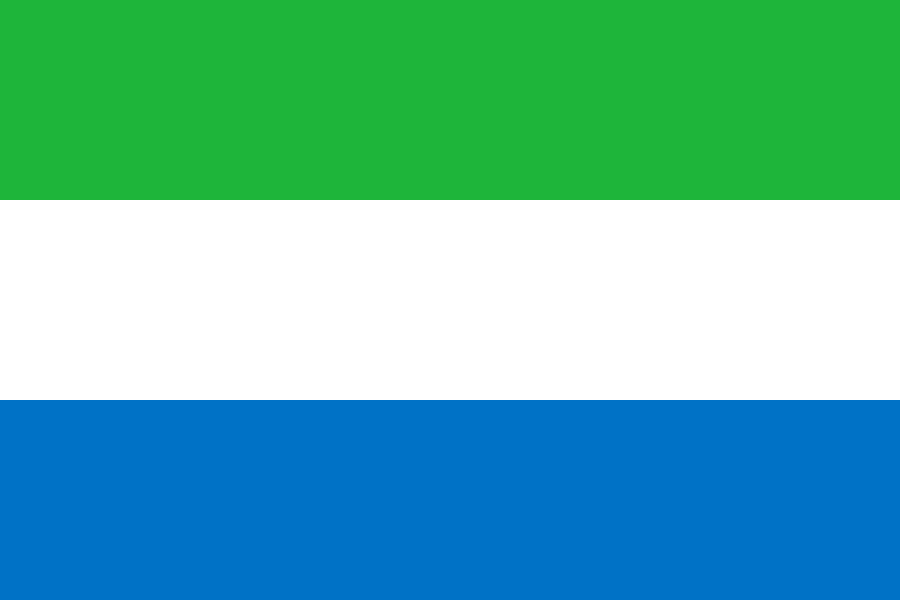 SLE
SLESierra Leone, a West African nation with a population of around 9 million, spans 71,740 km² and boasts Freetown as its vibrant capital city. Rich in natural resources like diamonds and rutile, the country has rebounded from a devastating civil war (1991-2002) and Ebola crisis, focusing on economic recovery and ecotourism. Despite challenges, its stunning beaches, rainforests, and cultural diversity make it a hidden gem in Africa.
 SGP
SGPSingapore, a bustling city-state in Southeast Asia, boasts a population of about 6.1 million people crammed into just 710 km², making it one of the world's most densely populated nations with its capital also named Singapore. Renowned for its economic prowess, it has a high GDP per capita (around $82,000 USD), driven by finance, trade, and technology hubs that blend modern skyscrapers with lush green spaces. This multicultural melting pot thrives on strict governance, efficient public transport, and a reputation as a global business gateway.
 SXM
SXMSint Maarten is a small Caribbean island nation and constituent country of the Kingdom of the Netherlands, located in the Americas with a population of about 41,349 and a compact area of just 34 km². Its capital, Philipsburg, serves as a bustling hub for tourism, featuring stunning beaches, duty-free shopping, and a vibrant mix of Dutch and French influences due to sharing the island with Saint Martin. While GDP data is unavailable, the economy thrives on hospitality, drawing millions of visitors annually to its lively resorts and cruise ports.
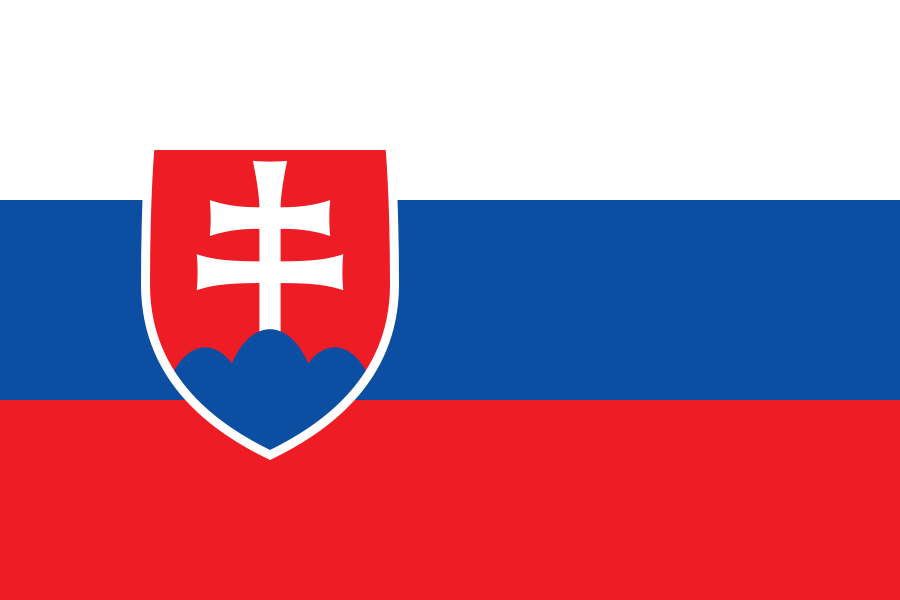 SVK
SVKSlovakia, a landlocked Central European nation with a population of about 5.4 million, spans 49,037 km² and boasts Bratislava as its vibrant capital along the Danube River. As a member of the EU and NATO, it features a diverse landscape of mountains, castles, and thermal spas, with a strong economy driven by automotive manufacturing and tech industries (though exact GDP figures vary, it's around $115 billion USD). Known for its rich folk traditions and UNESCO sites like the historic town of Banská Štiavnica, Slovakia offers a blend of natural beauty and cultural heritage.
 SVN
SVNSlovenia, a picturesque Central European nation in the heart of Europe, spans 20,273 km² and is home to a population of 2,130,638, with Ljubljana serving as its vibrant capital city. Nestled between the Alps, Adriatic Sea, and Pannonian Plain, it boasts stunning natural landscapes including Lake Bled and the Postojna Cave system. As an EU member with a high standard of living, Slovenia emphasizes sustainability and tourism, though specific GDP data is not available here.
 SLB
SLBThe Solomon Islands, an archipelago nation in Oceania with a population of about 750,325, spans 28,896 km² across nearly 1,000 islands, featuring lush rainforests, vibrant coral reefs, and a rich Melanesian culture. Its capital, Honiara on Guadalcanal, is a hub for WWII history and serves as the economic center, though GDP data is currently unavailable. Independent since 1978, the country relies on agriculture, fishing, and tourism, while facing challenges like climate change and remote geography.
 SOM
SOMSomalia, located in the Horn of Africa, spans 637,657 km² and is home to about 19.7 million people, with Mogadishu serving as its bustling capital. Despite its rich cultural heritage and strategic coastline along the Indian Ocean, the country faces ongoing challenges with economic data often unavailable (GDP: N/A), reflecting its turbulent history of conflict and recovery efforts. Engagingly, Somalia boasts ancient trade routes and resilient nomadic traditions that continue to shape its vibrant society.
 ZAF
ZAFSouth Africa, nestled at the southern tip of Africa, is home to over 63 million people across its expansive 1,221,037 km² territory, with Pretoria serving as its administrative capital. Dubbed the Rainbow Nation for its rich cultural diversity and history of overcoming apartheid, it boasts stunning landscapes from savannas teeming with wildlife to vibrant cities like Johannesburg and Cape Town. While GDP data isn't available here, the country thrives on mining, tourism, and agriculture, making it a key economic player on the continent.
 SGS
SGSSouth Georgia, a remote British Overseas Territory in the Antarctic region, spans 3,903 km² of rugged, ice-covered terrain and has no permanent population, with only seasonal researchers and visitors. Its capital, King Edward Point, serves as a hub for scientific stations, focusing on marine biology and climate studies amid abundant wildlife like penguins and seals. With no formal GDP due to its uninhabited status, the island is renowned for its biodiversity and historical significance in Antarctic exploration.
 KOR
KORSouth Korea, officially the Republic of Korea, is a dynamic East Asian nation with a population of about 51 million people packed into an area of 100,210 km², boasting the bustling capital of Seoul as its cultural and economic hub. Renowned for its tech giants like Samsung and a thriving K-pop scene, it has transformed from post-war poverty to a high-income economy, though GDP data is currently unavailable. With a blend of ancient traditions and cutting-edge innovation, it's a global leader in electronics, automobiles, and skincare.
 SSD
SSDSouth Sudan, Africa's youngest nation, gained independence from Sudan in 2011 and sits in East-Central Africa with Juba as its bustling capital, covering 619,745 km² of diverse landscapes from savannas to swamps. Home to around 15.8 million people, it's rich in oil but grapples with ongoing civil conflicts and economic instability, with GDP figures currently unavailable. Despite challenges, its cultural mosaic of over 60 ethnic groups and untapped natural resources hint at future potential.
 ESP
ESPSpain, a vibrant European nation with its capital in Madrid, covers an expansive area of 505,992 km² and boasts a population of approximately 49.3 million people. Known for its rich history, diverse culture, and stunning landscapes from the Mediterranean coast to the Pyrenees mountains, it blends ancient traditions with modern innovation. While GDP data is unavailable here, Spain remains a key player in tourism, agriculture, and renewable energy on the global stage.
 LKA
LKASri Lanka, an island nation in Asia with an area of 65,610 km², boasts a population of about 21.8 million and has its administrative capital in Sri Jayawardenepura Kotte, though Colombo serves as the commercial hub. Known for its stunning beaches, ancient ruins, and tea plantations, it's a biodiversity hotspot with a rich cultural heritage blending Buddhism, Hinduism, and colonial influences. While GDP data is unavailable here, the economy relies on tourism, agriculture, and textiles, facing recent challenges from political and economic instability.
 SDN
SDNSudan, Africa's third-largest country by area at 1,886,068 km², is home to over 51 million people and sits in the northeastern region of the continent, bordered by the Red Sea and neighbors like Egypt and Ethiopia. Its capital, Khartoum, serves as a bustling hub where the White and Blue Nile rivers converge, blending ancient history with modern challenges like political instability and economic hurdles (GDP data currently unavailable). Despite ongoing conflicts, Sudan's diverse landscapes—from deserts to fertile Nile valleys—highlight its rich cultural heritage and potential for growth.
 SUR
SURSuriname, a small South American nation in the Americas region, boasts a population of about 616,500 spread across its 163,820 km² of lush rainforests and coastal plains. Its vibrant capital, Paramaribo, is a UNESCO World Heritage site known for its colonial architecture and cultural diversity, blending Indigenous, African, Asian, and European influences. With a GDP that's not specified here, the country's economy thrives on natural resources like bauxite, gold, and oil, making it a hidden gem for eco-tourism and biodiversity.
 SJM
SJMSvalbard and Jan Mayen, a remote Norwegian territory in the Arctic Ocean, consists of the icy Svalbard archipelago and the uninhabited volcanic island of Jan Mayen, spanning 61,399 km² in Europe's northernmost reaches. With a tiny population of just 2,530 centered in the capital Longyearbyen, it's a hub for scientific research, coal mining, and polar tourism, though GDP data is unavailable due to its non-sovereign status. Famous for its stunning glaciers, midnight sun, and roaming polar bears, it operates under the unique Svalbard Treaty, allowing international access while remaining under Norwegian sovereignty.
 SWE
SWESweden, a Nordic nation in Europe with a population of about 10.6 million, spans 450,295 km² and boasts Stockholm as its vibrant capital, blending historic charm with modern innovation. Renowned for its high quality of life, progressive social policies, and stunning natural landscapes like forests and archipelagos, Sweden is a leader in sustainability and technology. (Note: GDP data not available in provided facts.)
 CHE
CHESwitzerland, a landlocked nation in Central Europe with a population of about 9 million, spans 41,284 km² and is renowned for its stunning Alpine landscapes, political neutrality, and high quality of life. Its capital is Bern, though Zurich serves as the economic hub, boasting a strong economy driven by banking, pharmaceuticals, and precision manufacturing (GDP data unavailable). Famous for chocolate, watches, and direct democracy, it's a multilingual federation divided into 26 cantons.
 SYR
SYRSyria, located in Western Asia, spans 185,180 km² and is home to about 25.6 million people, with Damascus serving as its historic capital and one of the oldest continuously inhabited cities in the world. The country has faced prolonged civil conflict since 2011, leading to economic devastation and a lack of reliable GDP data (listed as $N/A). Despite its challenges, Syria boasts rich cultural heritage, including ancient ruins like Palmyra, and borders the Mediterranean Sea, offering diverse landscapes from deserts to mountains.
 TWN
TWNTaiwan, an island nation in East Asia with a population of about 23.3 million, boasts a vibrant economy driven by high-tech manufacturing, though its GDP data is listed as N/A here (estimated around $790 billion nominally). Its capital, Taipei, is a bustling metropolis blending modern skyscrapers with rich cultural heritage, spanning an area of 36,197 km². Known for its democratic governance and semiconductor prowess, Taiwan navigates complex geopolitical tensions with mainland China.
 TJK
TJKTajikistan, a landlocked nation in Central Asia with a population of about 10.5 million, spans 143,100 km² of rugged, mountainous terrain and is bordered by Afghanistan, China, Kyrgyzstan, and Uzbekistan. Its capital, Dushanbe, serves as the cultural and economic hub, where the economy relies heavily on agriculture, remittances from abroad, and aluminum production, though detailed GDP figures are unavailable. Known for its stunning Pamir Mountains and ancient Silk Road history, the country blends Persian-influenced culture with Soviet-era legacies, facing challenges like poverty and water resource disputes.
 TZA
TZATanzania, a vibrant East African nation with a population of over 68 million, spans 947,303 km² and is renowned for its stunning natural wonders like Mount Kilimanjaro and the Serengeti National Park. Its capital, Dodoma, serves as the political hub, while Dar es Salaam remains the economic powerhouse. With diverse wildlife, beaches, and a growing economy (GDP data unavailable), it's a key player in regional tourism and agriculture.
 THA
THAThailand, a vibrant Southeast Asian nation with a population of around 66 million, spans 513,120 km² and features Bangkok as its dynamic capital, blending ancient temples with modern skyscrapers. Known for its stunning beaches, flavorful cuisine like pad Thai, and rich cultural heritage including Buddhist traditions, it attracts millions of tourists annually. While GDP data is unavailable here, the economy thrives on tourism, agriculture, and manufacturing.
 TLS
TLSTimor-Leste, also known as East Timor, is a young Southeast Asian nation in the Asia region that gained independence in 2002, with a population of about 1.4 million people spread across its 14,874 km² area and capital city of Dili. The economy relies heavily on oil and gas exports, coffee production, and tourism, though detailed GDP figures are not available here. Despite challenges like poverty and infrastructure needs, it's renowned for its stunning beaches, diverse marine life, and resilient culture blending Portuguese and indigenous influences.
 TGO
TGOTogo, a West African nation in the Africa region, spans 56,785 km² and is home to a population of 8,095,498, with its vibrant capital Lomé serving as a bustling port city on the Gulf of Guinea. Known for its diverse landscapes from coastal beaches to savanna plateaus, Togo blends French colonial influences with indigenous cultures, fostering a rich tapestry of traditions and markets. While GDP data is unavailable here, the country thrives on agriculture like cocoa and coffee exports, offering a gateway to exploring authentic West African hospitality and resilience.
 TKL
TKLTokelau is a remote Polynesian territory of New Zealand in Oceania, consisting of three coral atolls with a tiny total area of just 12 km² and Fakaofo as its administrative capital. Home to a population of about 2,608 people, it relies heavily on fishing, remittances, and aid, with no available GDP data due to its small scale. Despite its isolation, Tokelau generates all its electricity from solar power, making it a pioneer in renewable energy among Pacific islands.
 TON
TONTonga, a Polynesian kingdom in Oceania, spans 747 km² across 171 islands in the South Pacific, with a population of about 100,179 people calling Nuku'alofa its capital. As the only Pacific nation never colonized, it boasts a rich cultural heritage centered on monarchy, traditional dances, and ocean-dependent livelihoods like fishing and tourism. While GDP data is unavailable here, the economy relies on agriculture, remittances, and aid, facing challenges from climate change and natural disasters.
 TTO
TTOTrinidad and Tobago, a vibrant twin-island nation in the Caribbean region of the Americas, boasts a population of about 1.37 million and covers a compact area of 5,130 km², with Port of Spain as its bustling capital. Renowned for its rich cultural heritage, including the world-famous Carnival festival, the country thrives on a diverse economy driven by energy exports like oil and natural gas. Despite its small size, it punches above its weight in biodiversity, featuring lush rainforests, beaches, and a melting pot of African, Indian, and European influences.
 TUN
TUNTunisia, a North African nation with a land area of 163,610 km², boasts a rich history as the site of ancient Carthage and serves as a gateway between Africa and Europe, with Tunis as its vibrant capital. Home to a population of about 11.97 million people, it features a diverse economy blending tourism, agriculture, and manufacturing, though recent GDP figures are unavailable. Known for its Mediterranean beaches and the 2011 Arab Spring revolution, Tunisia remains a cultural mosaic of Arab, Berber, and European influences.
 TUR
TURTurkey, a transcontinental nation bridging Europe and Asia with a population of about 85.7 million, spans 783,562 km² and features Ankara as its capital. Known for its rich history from ancient civilizations to the Ottoman Empire, it boasts diverse landscapes from Mediterranean coasts to Anatolian plateaus. While GDP data is unavailable here, Turkey's economy thrives on manufacturing, tourism, and agriculture, blending Eastern and Western influences.
 TKM
TKMTurkmenistan, a Central Asian nation spanning 488,100 km², boasts a population of around 7 million and is known for its vast deserts, ancient Silk Road history, and abundant natural gas reserves. The capital, Ashgabat, is famed for its opulent white marble architecture and serves as the political and cultural hub. While GDP figures are not available, the economy is heavily driven by energy exports, though the country remains one of the world's most isolated and authoritarian states.
 TCA
TCAThe Turks and Caicos Islands, a British Overseas Territory in the Americas, span 948 km² and are home to a population of 50,828, with Cockburn Town serving as the capital. Known for its pristine beaches, turquoise waters, and vibrant coral reefs, it's a prime Caribbean destination for tourists and divers. While GDP data is unavailable, the economy relies heavily on tourism, offshore banking, and fishing.
 TUV
TUVTuvalu is a tiny Polynesian island nation in Oceania, boasting a population of just 10,643 across its mere 26 km² of land, making it one of the world's smallest countries by both size and population. The capital, Funafuti, serves as the hub for its atoll-based communities, where the economy relies on fishing, remittances, and international aid (with GDP data unavailable). Highly vulnerable to climate change and rising sea levels, Tuvalu captivates with its stunning coral reefs and resilient culture.
 UGA
UGAUganda, a landlocked East African nation with a population of about 45.9 million, spans 241,550 km² and is renowned for its stunning landscapes, including Lake Victoria—the source of the Nile River—and biodiverse national parks teeming with gorillas and elephants. Its capital, Kampala, serves as a bustling economic hub in the region, where agriculture drives the economy through exports like coffee and tea, though GDP data is currently unavailable. Home to over 50 ethnic groups, Uganda blends vibrant cultures with ongoing development challenges like infrastructure and healthcare improvements.
 UKR
UKRUkraine, a vast Eastern European nation spanning 603,550 km², boasts a population of about 32.8 million and is centered around its historic capital, Kyiv. Known for its fertile black soil and rich cultural heritage, it has faced ongoing geopolitical challenges, including the 2022 Russian invasion. While GDP data is currently unavailable, Ukraine remains a key player in global agriculture and energy transit.
 ARE
AREThe United Arab Emirates (UAE), located in Asia with a population of about 11.3 million, spans 83,600 km² and boasts Abu Dhabi as its capital, forming a federation of seven emirates renowned for its rapid modernization and oil-driven economy. While GDP data is unavailable here, the UAE is a global hub for trade, tourism, and innovation, featuring iconic landmarks like Dubai's Burj Khalifa and a diverse expatriate population. This desert nation blends traditional Arabian culture with futuristic skylines, making it a magnet for business and leisure travelers alike.
 GBR
GBRThe United Kingdom, located in Europe, is a constitutional monarchy with London as its bustling capital, spanning 244,376 km² and home to over 69 million people. Known for its rich history, from ancient landmarks like Stonehenge to modern icons like Big Ben, it boasts a diverse economy though current GDP data is unavailable. This island nation influences global culture through literature, music, and innovation, blending tradition with contemporary vibrancy.
 USA
USAThe United States, located in the Americas region, spans a vast area of 9,525,067 km² and boasts a population of over 340 million, making it one of the world's most populous and influential nations. Its capital, Washington, D.C., serves as the political hub for a federal republic known for its diverse landscapes, from bustling cities to expansive national parks. With a dynamic economy (GDP data not available here), the U.S. leads in innovation, culture, and global affairs, blending opportunity with a rich history of immigration and technological advancement.
 UMI
UMIThe United States Minor Outlying Islands are a collection of remote, mostly uninhabited atolls and islands scattered across the Pacific Ocean, administered as U.S. territories with Washington, D.C., serving as their de facto capital. Spanning just 34.2 km² in total area and classified in the Americas region, they lack a permanent population and have no recorded GDP, primarily functioning as wildlife refuges, military sites, or scientific outposts. Despite their isolation, these specks of land highlight America's far-flung territorial reach and ecological significance.
 VIR
VIRThe United States Virgin Islands, an unincorporated U.S. territory in the Caribbean Sea, boasts stunning beaches and a tropical climate, making it a popular tourist destination. With a population of 87,146 spread across 347 km², its capital is Charlotte Amalie on St. Thomas, and it falls within the Americas region. While GDP data is unavailable, the economy thrives on tourism, rum production, and offshore finance.
 URY
URYUruguay, a progressive South American nation in the Americas region, has a population of around 3.5 million and covers 181,034 km², with Montevideo serving as its lively capital and cultural hub. Known for its stable democracy, high quality of life, and pioneering social reforms—like legalizing marijuana and same-sex marriage—it's a beacon of liberalism in the region. The economy, driven by agriculture, beef exports, and renewable energy, supports a GDP that's not specified here but ranks among Latin America's more prosperous.
 UZB
UZBUzbekistan, a landlocked Central Asian nation with a population of about 37.9 million, boasts Tashkent as its bustling capital and spans 447,400 square kilometers of diverse landscapes from deserts to mountains. Once part of the Soviet Union, it's rich in history along the ancient Silk Road, with a economy driven by natural resources like cotton, gold, and natural gas (GDP data unavailable). This culturally vibrant country blends Islamic heritage with modern influences, making it a key player in regional trade and energy.
 VUT
VUTVanuatu is a picturesque island nation in Oceania's South Pacific, spanning 12,189 km² across over 80 islands and boasting a population of around 321,409 people. Its capital, Port Vila, serves as the economic and cultural hub, with the economy relying heavily on agriculture, tourism, and offshore financial services despite no specific GDP figure available. Known for its volcanic landscapes and vibrant Melanesian culture, Vanuatu offers a unique blend of adventure and tranquility.
 VAT
VATVatican City, the world's smallest sovereign state, spans just 0.49 km² in the heart of Rome, Europe, and serves as the spiritual and administrative center of the Roman Catholic Church. With a population of only 882, mostly clergy and Swiss Guards, it has no traditional GDP due to its unique non-commercial economy reliant on donations and tourism. Home to iconic sites like St. Peter's Basilica and the Sistine Chapel, it's governed by the Pope and holds UNESCO World Heritage status.
 VEN
VENVenezuela, a South American nation in the Americas region, spans 916,445 km² and is home to approximately 28.5 million people, with Caracas serving as its bustling capital. Rich in oil reserves and natural beauty—from Andean peaks to Caribbean coastlines—the country has faced severe economic and political challenges, reflected in its unavailable GDP figures. Despite hardships, Venezuela's vibrant culture and biodiversity continue to define its resilient spirit.
 VNM
VNMVietnam, a vibrant Southeast Asian nation in the Asia region, boasts a population of over 101 million people and spans 331,212 km², with Hanoi as its bustling capital. Known for its rich history from ancient dynasties to the Vietnam War, it features diverse landscapes from the Mekong Delta to Ha Long Bay's stunning karsts. Economically dynamic, Vietnam is a major exporter of rice, coffee, and electronics, though current GDP data is unavailable.
 WLF
WLFWallis and Futuna is a French overseas collectivity in Oceania, comprising three volcanic islands in the South Pacific known for their Polynesian culture and remote tropical vibes. With a tiny population of about 11,620 spread across just 142 km², its capital is Mata-Utu on Wallis Island, and the economy relies heavily on subsistence agriculture, fishing, and French subsidies (GDP data unavailable). This hidden gem offers stunning lagoons and a laid-back lifestyle, far from the world's hustle.
 ESH
ESHWestern Sahara is a disputed territory in North Africa, largely controlled by Morocco but claimed by the Sahrawi Arab Democratic Republic, with ongoing conflicts over its sovereignty and rich phosphate resources. It spans 266,000 km², has a population of about 600,904, and its de facto capital is El Aaiún, though GDP data is unavailable due to its contested status. Despite its arid desert landscape, it's a focal point for international diplomacy and self-determination debates.
 YEM
YEMYemen, a Middle Eastern nation on the Arabian Peninsula in Asia, covers 527,968 km² and is home to about 32.7 million people, with Sana'a as its capital. Once renowned for its ancient trade routes and as the origin of coffee cultivation, the country faces severe challenges from ongoing civil war and humanitarian crises, resulting in unreliable GDP data (listed as N/A). Despite its rich cultural heritage, including UNESCO-listed sites like the old city of Sana'a, Yemen grapples with poverty, food insecurity, and regional conflicts.
 ZMB
ZMBZambia, a landlocked nation in southern Africa, spans 752,612 km² and is home to approximately 19.7 million people, blending vibrant cultures and stunning landscapes like Victoria Falls. Its bustling capital, Lusaka, serves as the political and economic heart, driving growth in mining, agriculture, and tourism. With a youthful population and abundant natural resources, Zambia offers endless adventure for explorers and investors alike.
 ZWE
ZWEZimbabwe, a landlocked nation in southern Africa, spans 390,757 km² and is home to about 17 million people, with Harare serving as its bustling capital. Renowned for natural wonders like Victoria Falls and diverse wildlife in national parks, it boasts a rich cultural heritage influenced by Shona and Ndebele traditions. While GDP data is unavailable here, the country navigates economic challenges amid its agricultural and mining sectors.