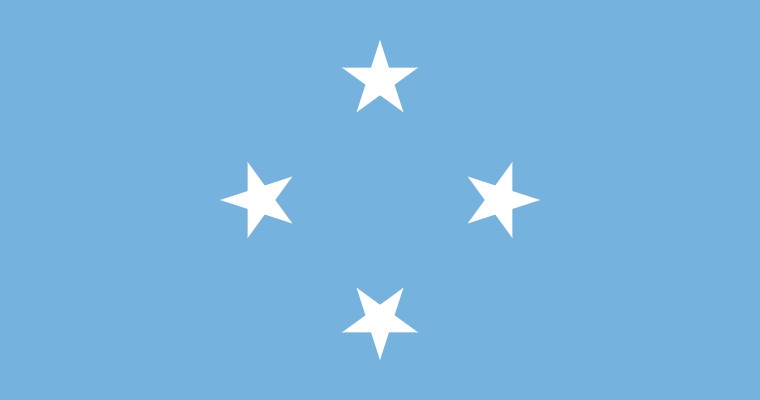
Micronesia
Federated States of Micronesia
Capital
Palikir
Region
Oceania
Population
105,564
Area (km²)
702
Micronesia, officially the Federated States of Micronesia, is a small island nation in Oceania's western Pacific Ocean, comprising over 600 islands with a total land area of just 702 km² and a population of about 105,564. Its capital, Palikir, is located on the largest island of Pohnpei, and the country relies heavily on U.S. financial aid, with GDP data not readily available due to its compact economy focused on fishing, tourism, and agriculture. Known for its stunning coral reefs and diverse marine life, Micronesia offers a tropical paradise vibe amid challenges like climate change and limited resources.
Key Insights
With a GDP per capita just under $4,000, the economy is growing at a very slow pace (0.453%). Such minimal growth makes significant improvements in living standards difficult and highlights challenges in diversifying or expanding the economic base.
Micronesia's fertility rate of 2.75 children per woman is significantly above the replacement level (2.1), indicating continued population growth pressure in the coming decades. This growth must be managed alongside limited resources and slow economic expansion.
The country faces significant health challenges, evidenced by a relatively low life expectancy of 67.2 years and an infant mortality rate of 20.8 per 1,000 live births. This suggests weaknesses in public health infrastructure and maternal/child care compared to developed nations.
While most citizens have access to electricity (86.9%), a substantial portion (over 13%) remains unconnected. Bridging this gap is critical for economic development, education, and improving the quality of life, especially in the low-urbanized, decentralized communities.
GDP (Current US$)
$441.47M
Year: 2023
GDP Per Capita
$3,919.64
GDP Growth (%)
0.45%
Inflation (%)
N/A%
Unemployment (%)
N/A%
Debt to GDP (%)
N/A%
Source: World Bank • Last updated: 12/24/2025
Historical Trends & Data Visualizations
- GDP Growth (%)
- Population
- Life Expectancy (years)
- Renewable Energy (%)
- GDP Per Capita ($)
Share This Country
External References & Resources
Wikipedia
Comprehensive encyclopedia article
Grokipedia
AI-powered encyclopedia search
Google Search
Latest news and information
Google News
Latest news coverage for Micronesia
CIA World Factbook
Official intelligence data
BBC News
Trusted news and analysis
UN Data
Official United Nations statistics
World Bank Data
Economic and development indicators