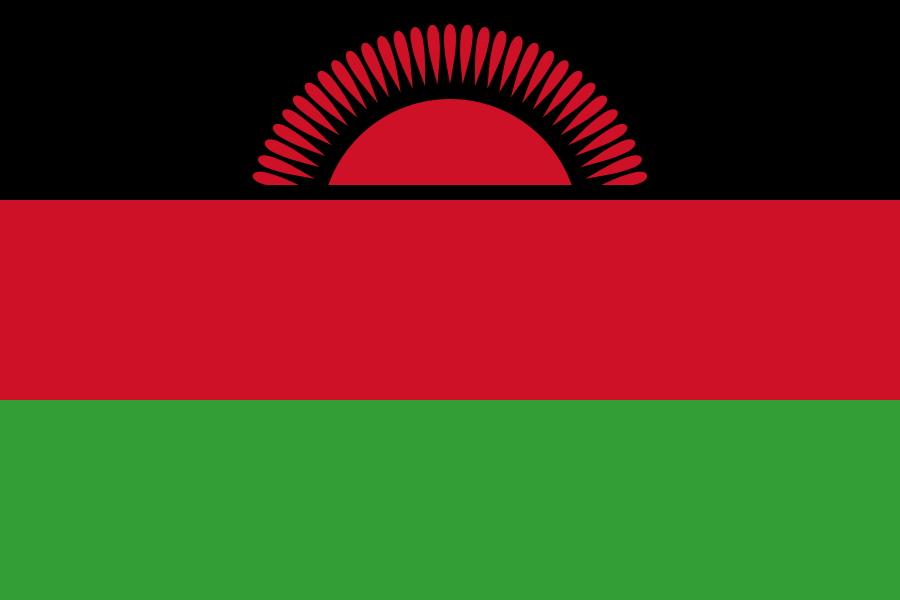
Malawi
Republic of Malawi
Capital
Lilongwe
Region
Africa
Population
20,734,262
Area (km²)
118,484
Malawi, a landlocked nation in southeastern Africa, spans 118,484 km² and is home to approximately 20.7 million people, with Lilongwe serving as its bustling capital. Often called the "Warm Heart of Africa" for its friendly inhabitants, the country boasts stunning Lake Malawi, a UNESCO World Heritage site that dominates its landscape and supports diverse wildlife. While GDP data is unavailable here, Malawi's economy relies heavily on agriculture, including tobacco and tea exports, amid ongoing development challenges.
Key Insights
Malawi retains a substantial forest cover (22.44% of total area), which is noteworthy for a country facing extreme economic hardship and high reliance on biomass for energy. Sustaining this level of forest area presents a significant environmental conservation achievement, or alternatively, a challenge against deforestation pressures.
Malawi has a high fertility rate (3.65 children per woman), which, combined with a relatively low life expectancy (67.35 years), suggests a very young population structure. This demographic pattern creates a high dependency ratio, placing strain on education, health systems, and future job creation.
Only a small fraction of the population (15.6%) has access to electricity, indicating a severe infrastructure deficit that hampers economic development and quality of life. This low access rate is a major bottleneck for industrialization and modern societal functions, particularly given the low GDP per capita.
Despite a population of over 21 million in a relatively small area (118,484 sq km), Malawi maintains an extremely low urban population share (16.98%). This high concentration of people in rural areas puts immense pressure on arable land and infrastructure, contrasting sharply with global urbanization trends.
GDP (Current US$)
$13.36B
Year: 2023
GDP Per Capita
$633.21
GDP Growth (%)
1.95%
Inflation (%)
28.79%
Unemployment (%)
5.03%
Debt to GDP (%)
N/A%
Source: World Bank • Last updated: 12/24/2025
Historical Trends & Data Visualizations
- GDP Growth (%)
- Population
- Life Expectancy (years)
- Renewable Energy (%)
- GDP Per Capita ($)
Share This Country
News
Real Estate
Events
Government
Travel & Tourism
External References & Resources
Wikipedia
Comprehensive encyclopedia article
Grokipedia
AI-powered encyclopedia search
Google Search
Latest news and information
Google News
Latest news coverage for Malawi
CIA World Factbook
Official intelligence data
BBC News
Trusted news and analysis
UN Data
Official United Nations statistics
World Bank Data
Economic and development indicators