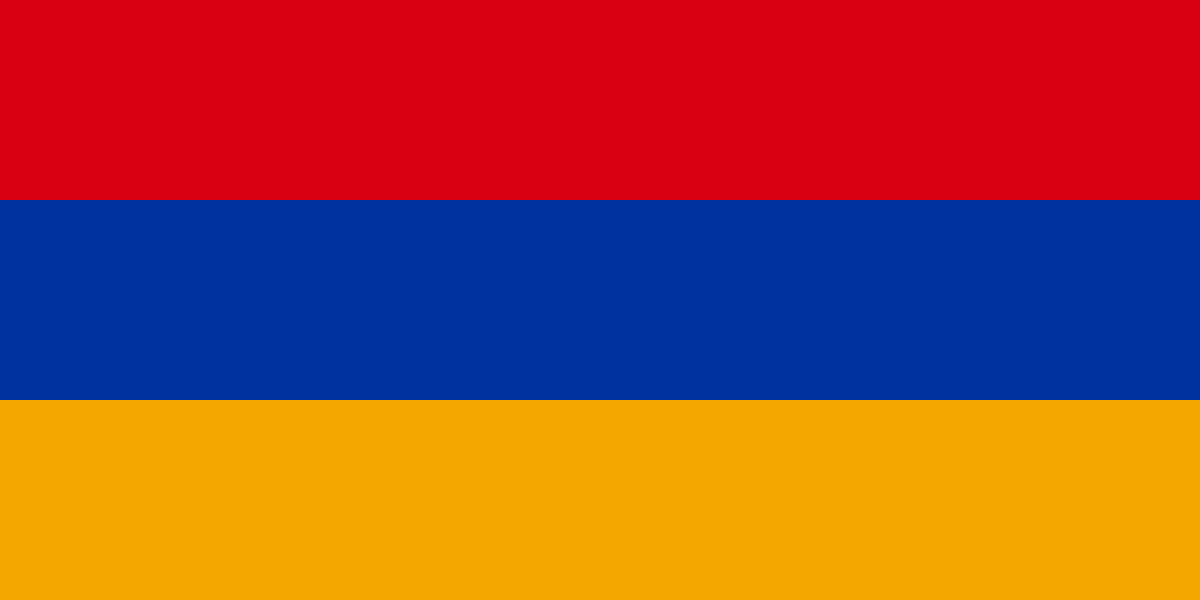
Armenia
Republic of Armenia
Capital
Yerevan
Region
Asia
Population
3,076,200
Area (km²)
29,743
Armenia, a landlocked nation in Western Asia, covers 29,743 km² and is home to about 3.07 million people, with Yerevan serving as its vibrant capital and cultural hub. Though GDP data is unavailable here, the country boasts a rich history as one of the world's oldest civilizations, blending ancient monasteries with modern tech innovation. Nestled in the Caucasus Mountains, it's famed for its dramatic landscapes, including the symbolic Mount Ararat, and a resilient spirit amid regional challenges.
Key Insights
Armenia experienced robust economic expansion with an impressive 8.300% GDP growth rate in 2023, suggesting strong economic activity. However, this growth did not fully translate into job creation, as evidenced by a significantly high unemployment rate of 13.245%. This suggests structural issues or a lag in the labor market absorbing the benefits of rapid economic expansion.
With a literacy rate of 99.840%, Armenia demonstrates an exceptionally high level of basic educational attainment, placing it among the global leaders. This near-universal literacy provides a strong human capital foundation, which is crucial for transitioning to a knowledge-based economy and sustaining long-term development despite its relatively modest GDP per capita.
Armenia managed to keep inflation remarkably low at 1.980% despite achieving a high GDP growth rate of 8.300%. This combination is unusual, as rapid economic growth often leads to demand-pull inflationary pressures. This suggests effective monetary policy management or perhaps external factors keeping price increases subdued.
Armenia has achieved 100.000% access to electricity, a significant milestone that ensures basic infrastructure coverage for all citizens. This complete electrification is vital for quality of life and economic productivity, especially when compared to many developing nations with similar economic profiles.
GDP (Current US$)
$24.19B
Year: 2023
GDP Per Capita
$8,159.09
GDP Growth (%)
8.3%
Inflation (%)
1.98%
Unemployment (%)
13.25%
Debt to GDP (%)
48.06%
Source: World Bank • Last updated: 1/23/2026
Historical Trends & Data Visualizations
- GDP Growth (%)
- Population
- Life Expectancy (years)
- Renewable Energy (%)
- GDP Per Capita ($)
Share This Country
News
Real Estate
Events
Government
Travel & Tourism
External References & Resources
Wikipedia
Comprehensive encyclopedia article
Grokipedia
AI-powered encyclopedia search
Google Search
Latest news and information
Google News
Latest news coverage for Armenia
CIA World Factbook
Official intelligence data
BBC News
Trusted news and analysis
UN Data
Official United Nations statistics
World Bank Data
Economic and development indicators