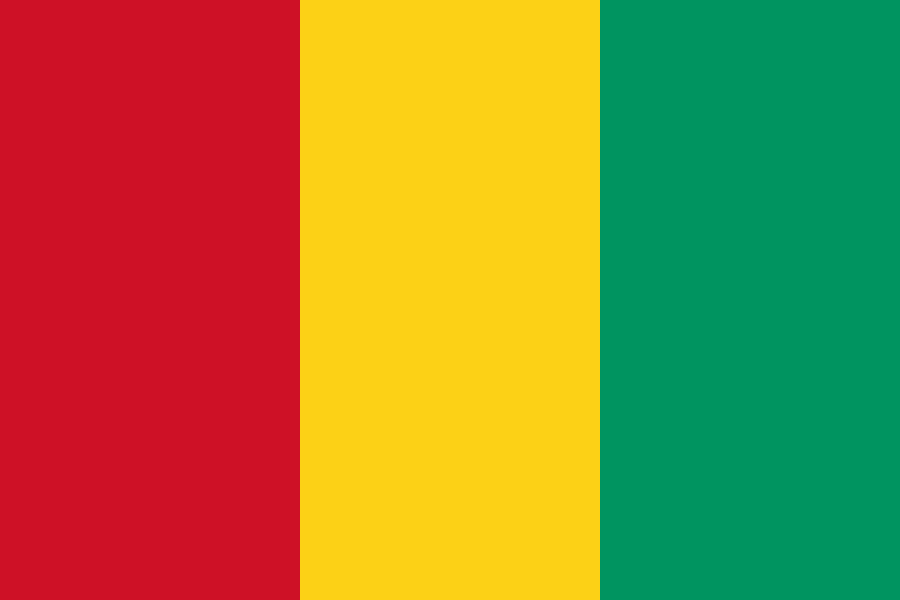
Guinea
Republic of Guinea
Capital
Conakry
Region
Africa
Population
14,363,931
Area (km²)
245,857
Guinea, a West African nation with a population of about 14.4 million, spans 245,857 km² and boasts diverse landscapes from coastal plains to mountainous interiors. Its capital, Conakry, serves as the economic hub, though GDP data is currently unavailable, reflecting ongoing development challenges amid rich mineral resources like bauxite. Despite political instability, Guinea's vibrant culture and biodiversity make it a fascinating spot on the continent.
Key Insights
Access to electricity stands at just over 51%, meaning nearly half the population lacks reliable power. While this figure represents progress, the lack of universal access remains a significant barrier to industrial development, education, and modern healthcare delivery across the country.
Despite economic growth and population expansion, Guinea maintains a relatively high percentage of forest cover, nearly a quarter of its total land area. This suggests that conservation efforts or geographical factors have mitigated widespread deforestation, which is often a side effect of rapid development in resource-rich nations.
Less than 40% of Guinea's population resides in urban areas, which is low compared to many other developing nations and the global average (around 57%). This suggests that while GDP growth is strong, it may be driven by rural resource extraction rather than diversified urban industrialization, limiting the benefits of agglomeration.
Guinea faces a critical public health challenge, as evidenced by an infant mortality rate of 61.5 per 1,000 live births. This figure is significantly higher than the global average (around 27), pointing to inadequate maternal healthcare, poor sanitation, and limited access to essential medical services.
GDP (Current US$)
$22.41B
Year: 2023
GDP Per Capita
$1,555.49
GDP Growth (%)
5.54%
Inflation (%)
7.81%
Unemployment (%)
5.24%
Debt to GDP (%)
N/A%
Source: World Bank • Last updated: 12/24/2025
Historical Trends & Data Visualizations
- GDP Growth (%)
- Population
- Life Expectancy (years)
- Renewable Energy (%)
- GDP Per Capita ($)
Share This Country
News
Real Estate
Government
Travel & Tourism
External References & Resources
Wikipedia
Comprehensive encyclopedia article
Grokipedia
AI-powered encyclopedia search
Google Search
Latest news and information
Google News
Latest news coverage for Guinea
CIA World Factbook
Official intelligence data
BBC News
Trusted news and analysis
UN Data
Official United Nations statistics
World Bank Data
Economic and development indicators