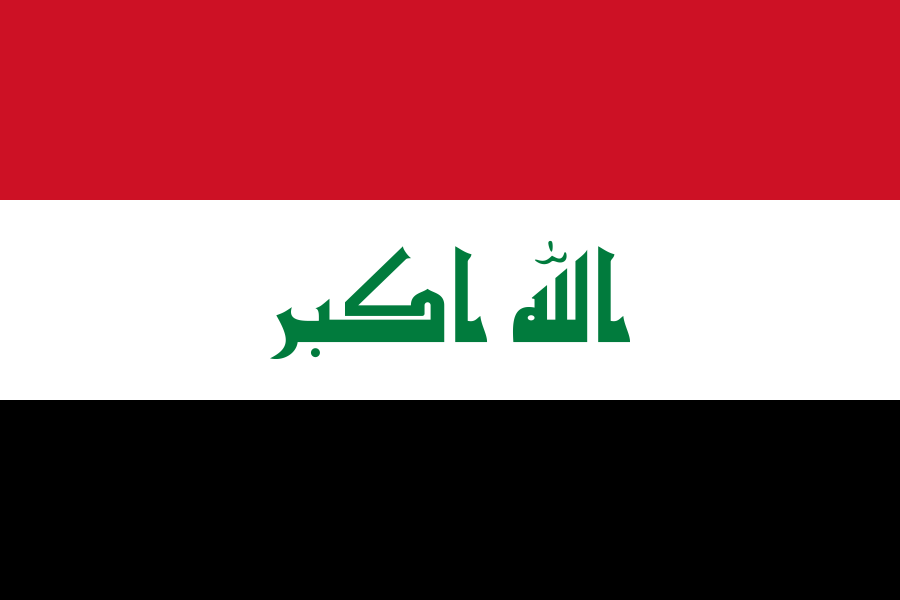
Iraq
Republic of Iraq
Capital
Baghdad
Region
Asia
Population
46,118,793
Area (km²)
438,317
Iraq, a Middle Eastern nation in Asia with Baghdad as its capital, spans 438,317 km² and is home to over 46 million people, boasting a rich history as the cradle of ancient civilizations like Mesopotamia. Despite its vast oil reserves driving the economy (though recent GDP figures are unavailable), the country faces ongoing challenges from political instability and reconstruction efforts post-conflicts. Known for iconic sites like the Tigris and Euphrates rivers, Iraq blends diverse cultures, including Arab, Kurdish, and Assyrian influences, amid a resilient push toward modernization.
Key Insights
The unemployment rate of 15.447% is exceptionally high, likely disproportionately affecting the young and educated population. This high rate, combined with moderate inflation (4.358%), presents a significant challenge for social stability and future economic development, requiring urgent job creation policies.
Nearly 70% of Iraq's population lives in urban areas, indicating rapid urbanization and placing immense strain on infrastructure and services in major cities. Furthermore, the high fertility rate of 3.25 suggests continued rapid population growth (currently 45-46 million), compounding the pressure on urban resources and job markets.
Iraq reports 100% access to electricity, which is a significant achievement and a positive indicator of basic infrastructure reach. However, this statistic often masks issues of reliability, quality, and hours of service, which are frequently cited as major problems in the region.
Iraq has achieved a respectable life expectancy of 72.32 years, suggesting improvements in overall healthcare and living conditions. However, the infant mortality rate remains relatively high at 20.800 per 1,000 live births, indicating persistent challenges in maternal and neonatal health care access and quality.
GDP (Current US$)
$268.88B
Year: 2023
GDP Per Capita
$5,965.32
GDP Growth (%)
0.52%
Inflation (%)
4.36%
Unemployment (%)
15.45%
Debt to GDP (%)
N/A%
Source: World Bank • Last updated: 12/24/2025
Historical Trends & Data Visualizations
- GDP Growth (%)
- Population
- Life Expectancy (years)
- Renewable Energy (%)
- GDP Per Capita ($)
Share This Country
Real Estate
Events
Government
Travel & Tourism
External References & Resources
Wikipedia
Comprehensive encyclopedia article
Grokipedia
AI-powered encyclopedia search
Google Search
Latest news and information
Google News
Latest news coverage for Iraq
CIA World Factbook
Official intelligence data
BBC News
Trusted news and analysis
UN Data
Official United Nations statistics
World Bank Data
Economic and development indicators