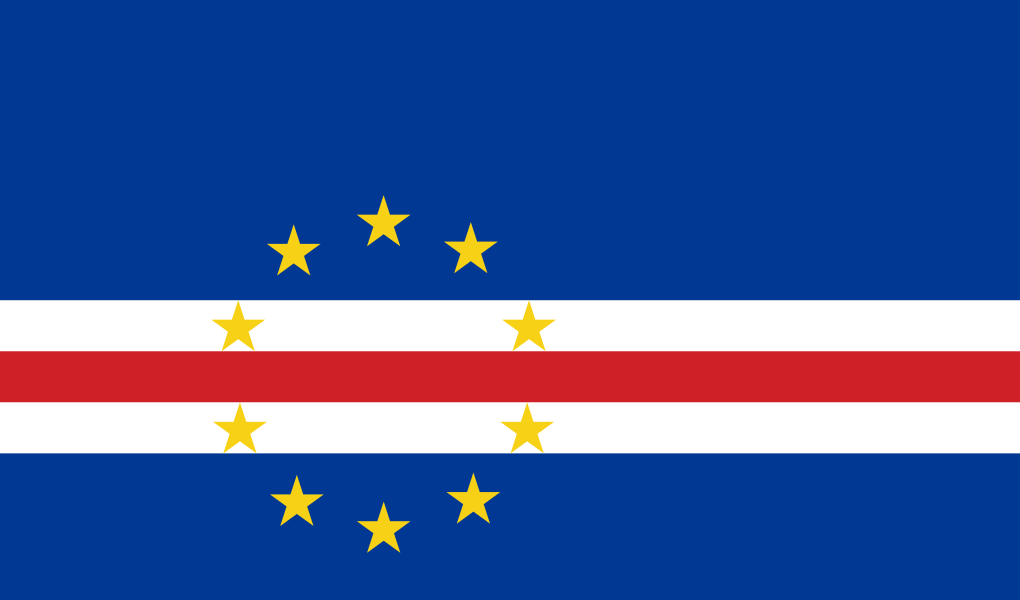
Cape Verde
Republic of Cabo Verde
Capital
Praia
Region
Africa
Population
491,233
Area (km²)
4,033
Cape Verde, officially Cabo Verde, is an archipelago nation in the Atlantic Ocean off West Africa's coast, with a population of around 491,233 spread across 4,033 km² of volcanic islands. Its capital, Praia, serves as the economic and cultural hub on Santiago Island. Known for its Creole heritage, stunning beaches, and morna music, this African country thrives on tourism and fisheries despite limited natural resources.
Key Insights
Cape Verde experienced robust GDP growth (4.795%) in 2023, indicating economic recovery or expansion. However, this growth is paired with a high unemployment rate (11.971%), suggesting that the economic expansion is not generating enough jobs to absorb the available labor force, potentially due to reliance on capital-intensive sectors like tourism.
A remarkable 75.9% of the population lives in urban areas, reflecting significant internal migration or density. Furthermore, the 98.6% access to electricity is extremely high for a West African nation, indicating successful infrastructure development and electrification efforts across its small, scattered islands.
Cape Verde boasts a high life expectancy of 76.06 years, which is substantially higher than the African continental average (around 64 years). This figure is comparable to many developed countries and suggests strong public health infrastructure and access to care, despite the relatively modest GDP per capita.
With a fertility rate of just 1.52 children per woman, Cape Verde is well below the replacement rate (2.1). This characteristic is typical of developed or rapidly developing nations and indicates a rapidly slowing population growth and a future challenge related to an aging population structure.
GDP (Current US$)
$2.50B
Year: 2023
GDP Per Capita
$4,794.9
GDP Growth (%)
4.8%
Inflation (%)
3.72%
Unemployment (%)
11.97%
Debt to GDP (%)
N/A%
Source: World Bank • Last updated: 12/24/2025
Historical Trends & Data Visualizations
- GDP Growth (%)
- Population
- Life Expectancy (years)
- Renewable Energy (%)
- GDP Per Capita ($)
Share This Country
News
Real Estate
Events
Government
Travel & Tourism
External References & Resources
Wikipedia
Comprehensive encyclopedia article
Grokipedia
AI-powered encyclopedia search
Google Search
Latest news and information
Google News
Latest news coverage for Cape Verde
CIA World Factbook
Official intelligence data
BBC News
Trusted news and analysis
UN Data
Official United Nations statistics
World Bank Data
Economic and development indicators