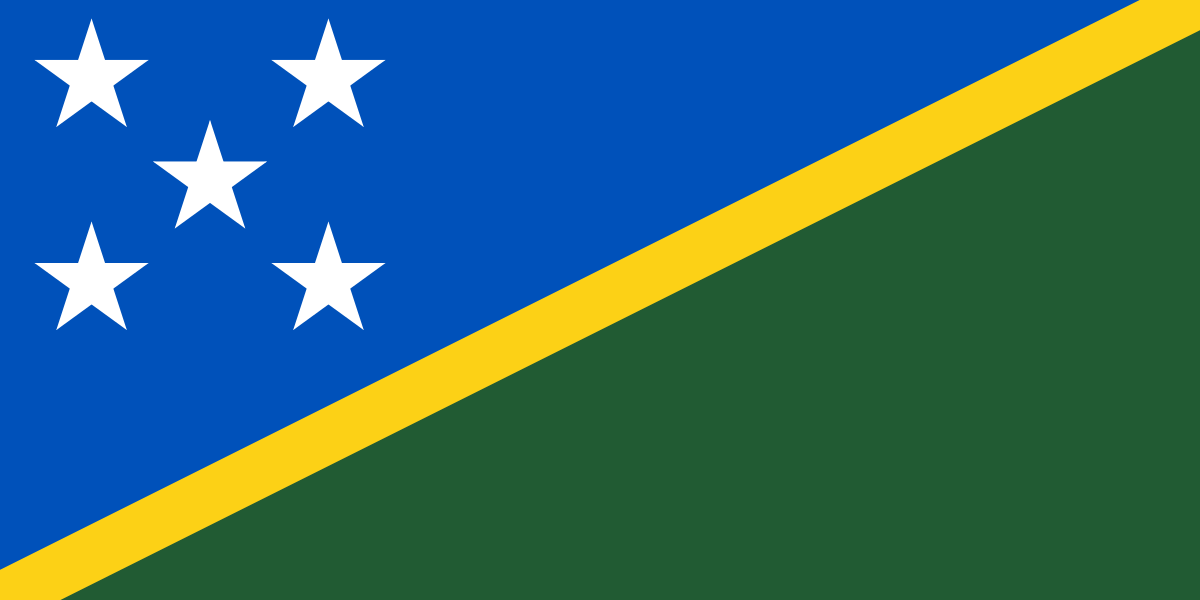
Solomon Islands
Capital
Honiara
Region
Oceania
Population
750,325
Area (km²)
28,896
The Solomon Islands, an archipelago nation in Oceania with a population of about 750,325, spans 28,896 km² across nearly 1,000 islands, featuring lush rainforests, vibrant coral reefs, and a rich Melanesian culture. Its capital, Honiara on Guadalcanal, is a hub for WWII history and serves as the economic center, though GDP data is currently unavailable. Independent since 1978, the country relies on agriculture, fishing, and tourism, while facing challenges like climate change and remote geography.
Key Insights
The Solomon Islands maintains a relatively high life expectancy (70.53 years) and a moderate infant mortality rate (16.5 per 1,000 live births) for a developing nation, despite low urbanization (only 30%). This suggests effective, albeit geographically challenged, primary healthcare delivery or strong traditional community support systems.
A high percentage (81.3%) of the population has access to electricity, which is a significant achievement given the challenging geography of an archipelago nation. However, this figure likely masks substantial disparities between the capital (Honiara) and remote outer islands, where infrastructure costs are prohibitive.
An overwhelming majority of the Solomon Islands' land area (over 90%) is covered by forest. This vast forest area represents a crucial natural resource and biodiversity asset, but also highlights the significant challenge of balancing economic development with conservation efforts and sustainable logging practices.
With a high fertility rate (3.56 children per woman), the Solomon Islands is experiencing rapid population growth, which places significant pressure on public services and infrastructure. This rate is substantially higher than the global average (approx. 2.3), indicating a very young population structure and future demographic challenges.
GDP (Current US$)
$1.51B
Year: 2023
GDP Per Capita
$1,882.64
GDP Growth (%)
2.84%
Inflation (%)
5.89%
Unemployment (%)
1.46%
Debt to GDP (%)
N/A%
Source: World Bank • Last updated: 12/24/2025
Historical Trends & Data Visualizations
- GDP Growth (%)
- Population
- Life Expectancy (years)
- Renewable Energy (%)
- GDP Per Capita ($)
Share This Country
Real Estate
Events
Government
Travel & Tourism
External References & Resources
Wikipedia
Comprehensive encyclopedia article
Grokipedia
AI-powered encyclopedia search
Google Search
Latest news and information
Google News
Latest news coverage for Solomon Islands
CIA World Factbook
Official intelligence data
BBC News
Trusted news and analysis
UN Data
Official United Nations statistics
World Bank Data
Economic and development indicators