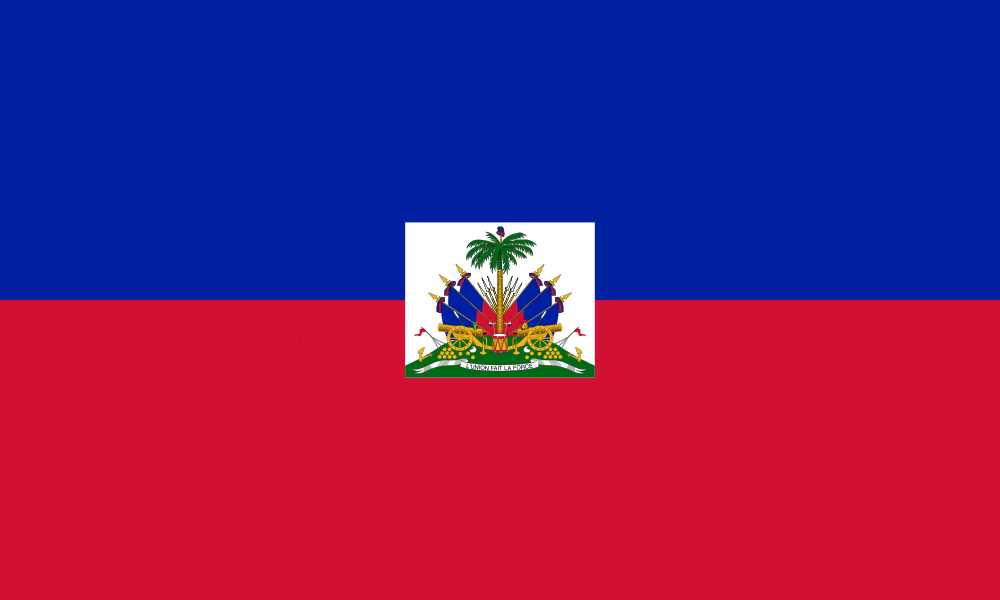
Haiti
Republic of Haiti
Capital
Port-au-Prince
Region
Americas
Population
11,867,032
Area (km²)
27,750
Haiti, located in the Caribbean region of the Americas and sharing the island of Hispaniola with the Dominican Republic, has a population of about 11.9 million people spread across 27,750 km². Its capital, Port-au-Prince, serves as the bustling economic and cultural hub, though the nation faces ongoing challenges like political instability and natural disasters. Despite economic hurdles (with GDP data currently unavailable), Haiti boasts a rich history as the world's first black-led republic, born from a successful slave revolution in 1804.
Key Insights
The infant mortality rate stands at 40.300 per 1,000 live births, which is extremely high by global standards and indicative of severe deficiencies in maternal and child healthcare. This statistic underscores the urgent need for improvements in sanitation, nutrition, and accessible medical care.
Haiti exhibits demographic stress with a relatively high fertility rate (2.66) combined with a low life expectancy (64.94 years). This pattern suggests a young, rapidly growing population facing significant health challenges and insufficient public services, placing continuous pressure on limited resources.
Only slightly more than half of the population (51.300%) has access to electricity, highlighting a critical infrastructure deficit. This lack of reliable power severely hampers economic activity, educational opportunities, and quality of life for nearly half of Haiti's 11.6 million residents.
With 54.450% of its population living in urban areas, Haiti is more urbanized than many countries with significantly higher GDP per capita. This level of urbanization, coupled with low economic indicators ($1,705.76 GDP per capita), often strains infrastructure and services in major cities like Port-au-Prince, indicating 'over-urbanization' relative to industrial capacity.
GDP (Current US$)
$19.85B
Year: 2023
GDP Per Capita
$1,705.76
GDP Growth (%)
-1.86%
Inflation (%)
36.81%
Unemployment (%)
14.56%
Debt to GDP (%)
N/A%
Source: World Bank • Last updated: 12/24/2025
Historical Trends & Data Visualizations
- GDP Growth (%)
- Population
- Life Expectancy (years)
- Renewable Energy (%)
- GDP Per Capita ($)
Share This Country
News
Real Estate
Events
Government
Travel & Tourism
External References & Resources
Wikipedia
Comprehensive encyclopedia article
Grokipedia
AI-powered encyclopedia search
Google Search
Latest news and information
Google News
Latest news coverage for Haiti
CIA World Factbook
Official intelligence data
BBC News
Trusted news and analysis
UN Data
Official United Nations statistics
World Bank Data
Economic and development indicators