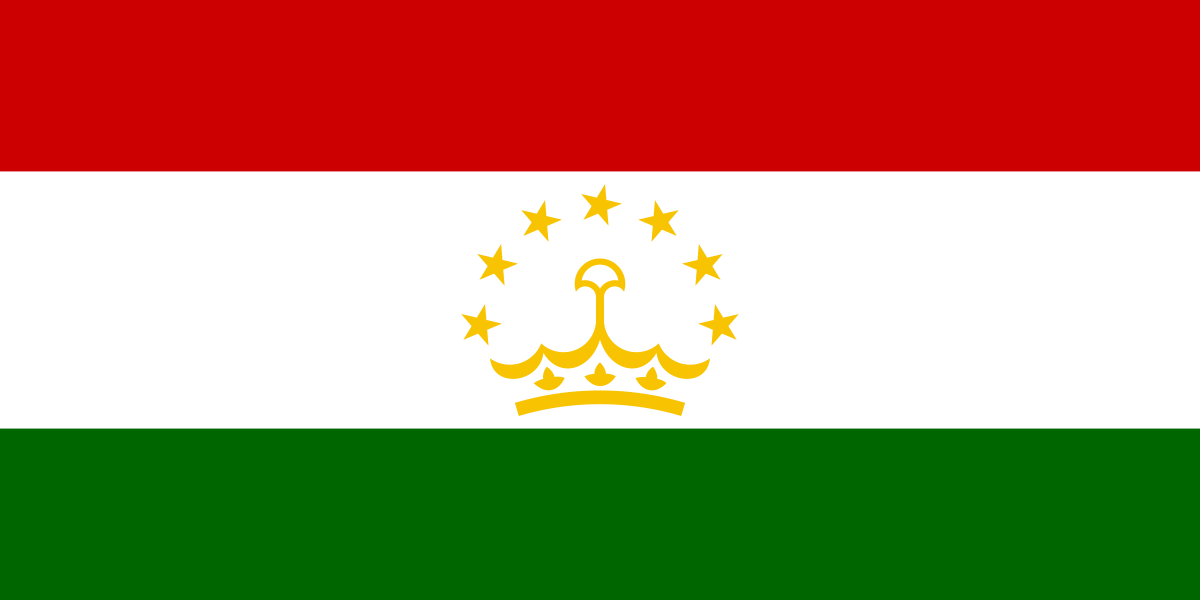
Tajikistan
Republic of Tajikistan
Capital
Dushanbe
Region
Asia
Population
10,499,000
Area (km²)
143,100
Tajikistan, a landlocked nation in Central Asia with a population of about 10.5 million, spans 143,100 km² of rugged, mountainous terrain and is bordered by Afghanistan, China, Kyrgyzstan, and Uzbekistan. Its capital, Dushanbe, serves as the cultural and economic hub, where the economy relies heavily on agriculture, remittances from abroad, and aluminum production, though detailed GDP figures are unavailable. Known for its stunning Pamir Mountains and ancient Silk Road history, the country blends Persian-influenced culture with Soviet-era legacies, facing challenges like poverty and water resource disputes.
Key Insights
Tajikistan has a life expectancy of 71.79 years, which is moderate globally but relatively high given its low economic status. However, the infant mortality rate remains high at 22.900 per 1,000 live births, indicating persistent challenges in maternal and child health care access and quality.
Despite impressive GDP growth, the country faces a substantial challenge with an unemployment rate reported at 11.546%. Coupled with the low GDP per capita, this high unemployment suggests structural issues in job creation and a reliance on remittances, likely masking the true extent of underemployment and poverty.
Only 26.189% of Tajikistan's population lives in urban areas, which is very low compared to many neighboring Central Asian and global averages. This low urbanization rate suggests a predominantly rural economy and potentially limits the scale of industrialization and modern service sector development.
Tajikistan maintains a high fertility rate (3.07), significantly above the replacement level (2.1), driving rapid population growth. This demographic pressure puts strain on the high unemployment rate (11.546%) and the country's limited economic resources, requiring sustained high GDP growth just to maintain current living standards.
GDP (Current US$)
$12.24B
Year: 2023
GDP Per Capita
$1,178.48
GDP Growth (%)
8.3%
Inflation (%)
N/A%
Unemployment (%)
11.55%
Debt to GDP (%)
N/A%
Source: World Bank • Last updated: 12/24/2025
Historical Trends & Data Visualizations
- GDP Growth (%)
- Population
- Life Expectancy (years)
- Renewable Energy (%)
- GDP Per Capita ($)
Share This Country
News
Real Estate
Events
Government
Travel & Tourism
External References & Resources
Wikipedia
Comprehensive encyclopedia article
Grokipedia
AI-powered encyclopedia search
Google Search
Latest news and information
Google News
Latest news coverage for Tajikistan
CIA World Factbook
Official intelligence data
BBC News
Trusted news and analysis
UN Data
Official United Nations statistics
World Bank Data
Economic and development indicators