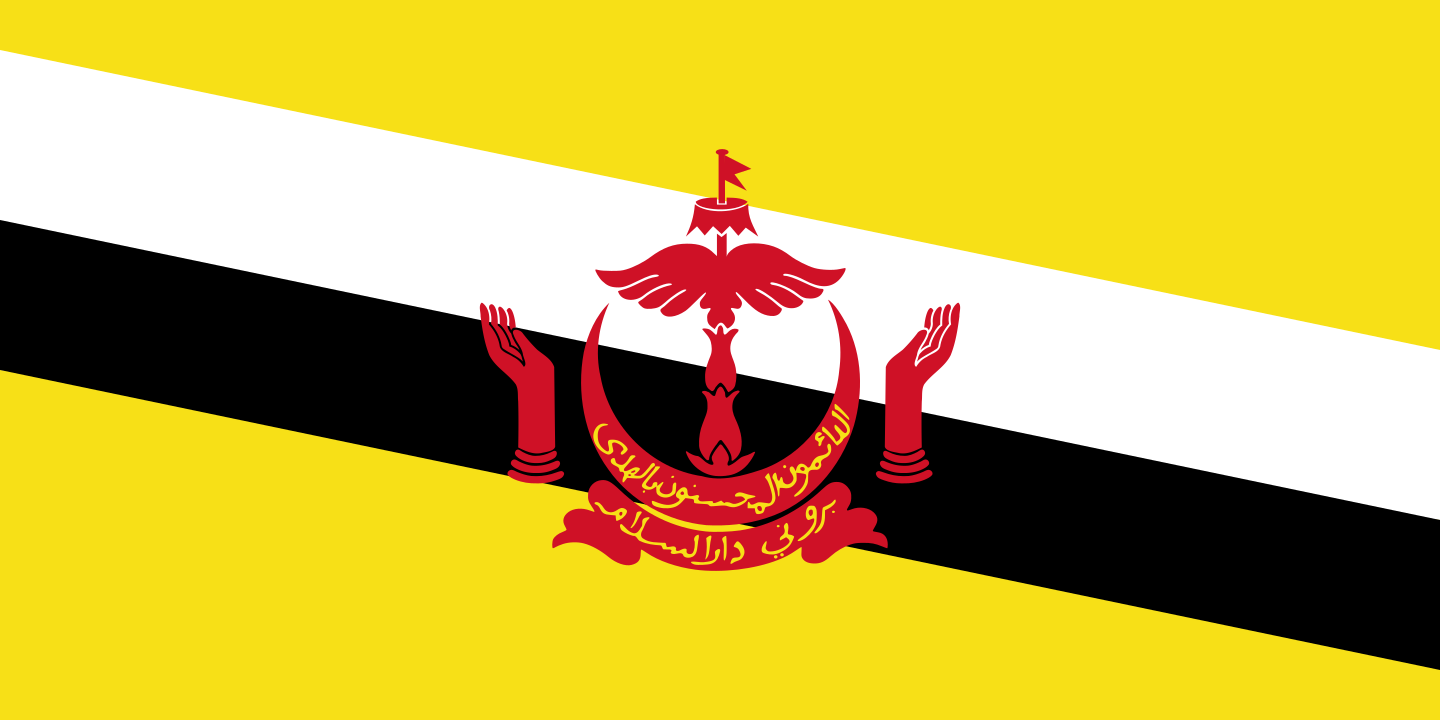
Brunei
Nation of Brunei, Abode of Peace
Capital
Bandar Seri Begawan
Region
Asia
Population
455,500
Area (km²)
5,765
Brunei, a small sovereign state in Southeast Asia, boasts a population of about 455,500 and covers an area of 5,765 km², with Bandar Seri Begawan as its vibrant capital. Known for its oil-rich economy, the nation thrives on petroleum exports, though exact GDP figures are not available here. This absolute monarchy blends Islamic traditions with modern wealth, offering a unique glimpse into a prosperous yet compact Asian gem.
Key Insights
Brunei demonstrates strong public health outcomes, evidenced by a high life expectancy of 75.33 years, comparable to many high-income nations. Furthermore, the infant mortality rate of 8.200 per 1,000 live births is relatively low for the region, reflecting robust healthcare infrastructure and access.
Brunei experienced a very low inflation rate of 0.357% in 2023. This stability suggests effective monetary policy and potentially government subsidies keeping consumer prices low, providing a stable economic environment for its citizens compared to global trends of high post-pandemic inflation.
Despite being a major oil and gas producer, Brunei maintains an exceptionally high percentage of forest cover, with 72.106% of its land area covered by forests. This commitment to conservation contrasts sharply with many other rapidly developing resource-rich nations and highlights a strong focus on environmental preservation.
Brunei's fertility rate of 1.75 is significantly below the replacement level of 2.1, indicating that the population is not naturally sustaining itself through births alone. This trend suggests potential future demographic challenges, such as an aging population and a shrinking workforce, despite the current small population size.
GDP (Current US$)
$15.10B
Year: 2023
GDP Per Capita
$32,890.55
GDP Growth (%)
1.13%
Inflation (%)
0.36%
Unemployment (%)
5.18%
Debt to GDP (%)
N/A%
Source: World Bank • Last updated: 12/24/2025
Historical Trends & Data Visualizations
- GDP Growth (%)
- Population
- Life Expectancy (years)
- Renewable Energy (%)
- GDP Per Capita ($)
Share This Country
Real Estate
Events
Government
Travel & Tourism
External References & Resources
Wikipedia
Comprehensive encyclopedia article
Grokipedia
AI-powered encyclopedia search
Google Search
Latest news and information
Google News
Latest news coverage for Brunei
CIA World Factbook
Official intelligence data
BBC News
Trusted news and analysis
UN Data
Official United Nations statistics
World Bank Data
Economic and development indicators