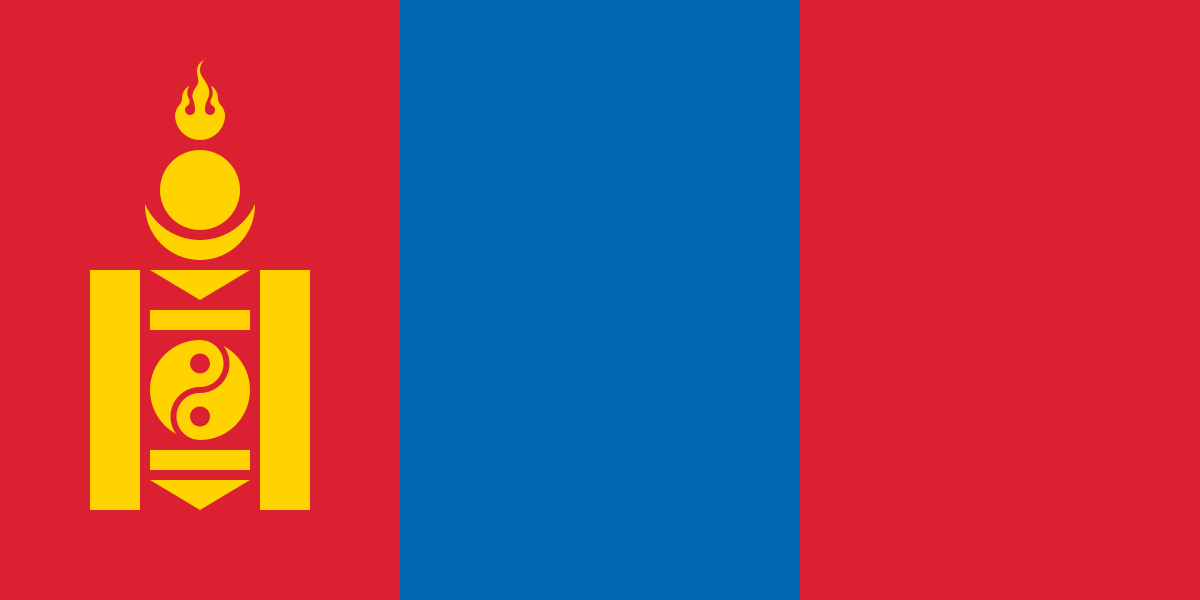
Mongolia
Capital
Ulan Bator
Region
Asia
Population
3,544,835
Area (km²)
1,564,110
Mongolia, a vast landlocked nation in Asia spanning 1,564,110 km², is home to a population of about 3.5 million people, with Ulaanbaatar as its bustling capital. Renowned for its nomadic heritage and expansive steppes, the country blends ancient traditions with modern challenges, though detailed GDP figures are currently unavailable. Despite its sparse population density, Mongolia boasts rich mineral resources and a growing tourism sector drawing adventurers to its dramatic landscapes.
Key Insights
Mongolia's fertility rate of 2.70 is significantly above the replacement level (2.1), indicating a strong potential for continued population growth. This contrasts with many developed and East Asian nations experiencing declining birth rates, suggesting a favorable demographic structure for future labor supply.
Mongolia's forest area accounts for only 9.092% of its total land area. Given its massive size (1.56 million sq km), this low percentage highlights the predominance of steppe and desert environments, making the existing forest resources particularly vulnerable to climate change and resource exploitation.
With a life expectancy of 72.12 years, Mongolia is performing relatively well, comparing favorably to the global average and showing significant progress in health outcomes. Coupled with a low infant mortality rate (11.400 per 1,000 live births), this suggests effective basic healthcare access, especially in urban centers.
Mongolia achieved a robust GDP growth rate of 7.422% in 2023, indicating significant economic activity, likely driven by resource exports. However, this rapid expansion is coupled with high inflationary pressure (10.348%), posing challenges to maintaining purchasing power and economic stability for its citizens.
GDP (Current US$)
$20.33B
Year: 2023
GDP Per Capita
$5,838.63
GDP Growth (%)
7.42%
Inflation (%)
10.35%
Unemployment (%)
5.5%
Debt to GDP (%)
N/A%
Source: World Bank • Last updated: 12/24/2025
Historical Trends & Data Visualizations
- GDP Growth (%)
- Population
- Life Expectancy (years)
- Renewable Energy (%)
- GDP Per Capita ($)
Share This Country
News
Real Estate
Events
Government
Travel & Tourism
External References & Resources
Wikipedia
Comprehensive encyclopedia article
Grokipedia
AI-powered encyclopedia search
Google Search
Latest news and information
Google News
Latest news coverage for Mongolia
CIA World Factbook
Official intelligence data
BBC News
Trusted news and analysis
UN Data
Official United Nations statistics
World Bank Data
Economic and development indicators