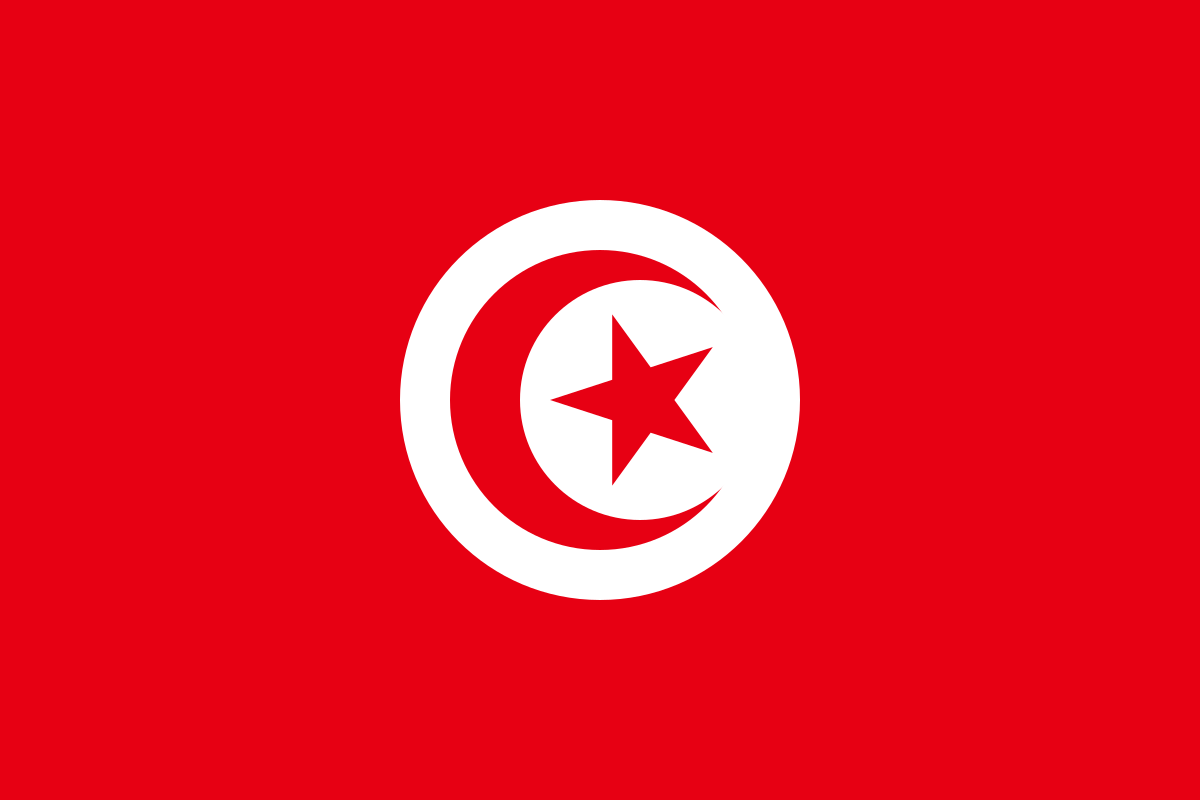
Tunisia
Tunisian Republic
Capital
Tunis
Region
Africa
Population
11,972,169
Area (km²)
163,610
Tunisia, a North African nation with a land area of 163,610 km², boasts a rich history as the site of ancient Carthage and serves as a gateway between Africa and Europe, with Tunis as its vibrant capital. Home to a population of about 11.97 million people, it features a diverse economy blending tourism, agriculture, and manufacturing, though recent GDP figures are unavailable. Known for its Mediterranean beaches and the 2011 Arab Spring revolution, Tunisia remains a cultural mosaic of Arab, Berber, and European influences.
Key Insights
Tunisia's infant mortality rate of 10.6 per 1,000 live births is relatively low compared to the regional average for Africa, further reinforcing the picture of a robust public health system. This metric is consistent with the country's high life expectancy and literacy rates.
A high percentage of the population (70.03%) lives in urban centers, which is typical for North African coastal nations but places high pressure on limited resources, especially water, in a country largely dominated by arid and semi-arid climates. This urbanization exceeds the global average.
A major achievement for Tunisia is the 100% access rate to electricity, indicating successful infrastructure development and widespread coverage across both urban and rural areas. This contrasts sharply with many Sub-Saharan African countries and supports its high urbanization rate.
Tunisia's fertility rate of 1.83 is significantly below the replacement level (2.1), placing it among countries experiencing demographic aging rather than rapid population growth typical of many African nations. This suggests future challenges related to supporting an aging population and maintaining a sufficient workforce.
GDP (Current US$)
$48.21B
Year: 2023
GDP Per Capita
$3,951.12
GDP Growth (%)
0.18%
Inflation (%)
9.33%
Unemployment (%)
15.11%
Debt to GDP (%)
N/A%
Source: World Bank • Last updated: 12/24/2025
Historical Trends & Data Visualizations
- GDP Growth (%)
- Population
- Life Expectancy (years)
- Renewable Energy (%)
- GDP Per Capita ($)
Share This Country
Real Estate
Events
Government
Travel & Tourism
External References & Resources
Wikipedia
Comprehensive encyclopedia article
Grokipedia
AI-powered encyclopedia search
Google Search
Latest news and information
Google News
Latest news coverage for Tunisia
CIA World Factbook
Official intelligence data
BBC News
Trusted news and analysis
UN Data
Official United Nations statistics
World Bank Data
Economic and development indicators