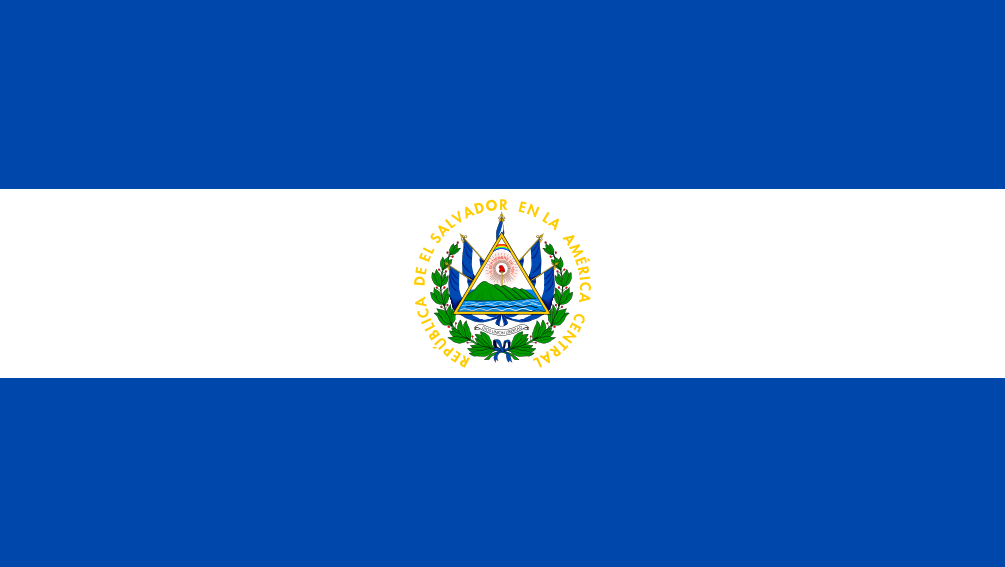
El Salvador
Republic of El Salvador
Capital
San Salvador
Region
Americas
Population
6,029,976
Area (km²)
21,041
El Salvador, the smallest and most densely populated country in Central America, spans 21,041 km² in the Americas region and is home to about 6 million people, with San Salvador as its bustling capital. Known for its volcanic landscapes, Pacific beaches, and vibrant pupusa cuisine, it has embraced innovation by adopting Bitcoin as legal tender in 2021. While GDP data is unavailable here, the nation grapples with economic challenges amid efforts to boost tourism and remittances from abroad.
Key Insights
The infant mortality rate of 9.2 per 1,000 live births is relatively low compared to the average for countries with similar GDP per capita levels. This suggests effective public health interventions, particularly in maternal and child health, despite potential resource constraints.
74.6% of El Salvador's population lives in urban areas, a high percentage comparable to highly industrialized nations. This high urbanization rate, paired with a relatively moderate GDP per capita of $5,365, suggests significant pressure on urban infrastructure and services, possibly driven by internal migration or limited rural opportunities.
El Salvador has achieved nearly universal access to electricity, with 98.3% of the population connected. This high level of infrastructure development is a significant achievement for a developing nation and is crucial for supporting economic growth and quality of life improvements.
With a fertility rate of 1.78 children per woman, El Salvador is well below the replacement level (2.1). This indicates a rapidly aging population structure and suggests that, barring significant immigration, the country's population will begin to decline in the coming decades, a trend often seen in more developed economies.
GDP (Current US$)
$33.85B
Year: 2023
GDP Per Capita
$5,365.44
GDP Growth (%)
3.54%
Inflation (%)
4.05%
Unemployment (%)
2.99%
Debt to GDP (%)
102.19%
Source: World Bank • Last updated: 12/24/2025
Historical Trends & Data Visualizations
- GDP Growth (%)
- Population
- Life Expectancy (years)
- Renewable Energy (%)
- GDP Per Capita ($)
Share This Country
Real Estate
Events
Government
Travel & Tourism
External References & Resources
Wikipedia
Comprehensive encyclopedia article
Grokipedia
AI-powered encyclopedia search
Google Search
Latest news and information
Google News
Latest news coverage for El Salvador
CIA World Factbook
Official intelligence data
BBC News
Trusted news and analysis
UN Data
Official United Nations statistics
World Bank Data
Economic and development indicators