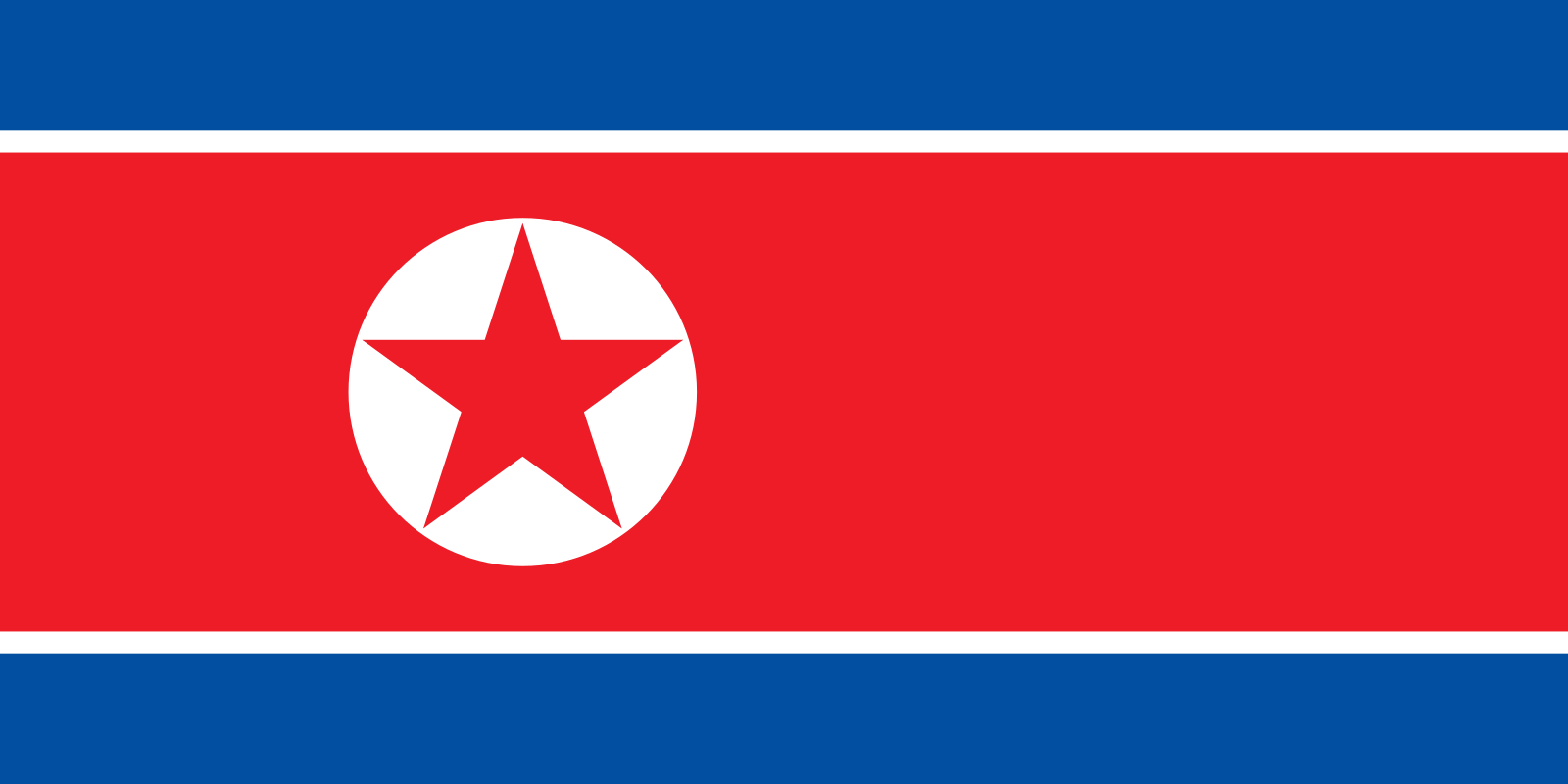
North Korea
Democratic People's Republic of Korea
Capital
Pyongyang
Region
Asia
Population
25,950,000
Area (km²)
120,538
North Korea, officially the Democratic People's Republic of Korea, is a reclusive East Asian nation in the Asia region, covering 120,538 km² with Pyongyang as its capital and a population of about 25.95 million. Its economy remains opaque, with no reliable GDP figures available due to international isolation and heavy state control. Despite global sanctions, the country is known for its massive military parades and pursuit of nuclear capabilities, making it a focal point of geopolitical tension.
Key Insights
A substantial majority of the population lives in urban areas, which is high for a developing or isolated nation. This suggests significant population concentration, likely around key industrial or administrative centers like Pyongyang, despite limited modern infrastructure and economic activity outside these areas.
Less than three-fifths of the population has access to electricity, indicating severe infrastructure deficits and energy poverty across large parts of the country. This low rate is a major constraint on economic development, public services, and quality of life.
North Korea's life expectancy of 73.64 years is surprisingly high given the documented food insecurity and limited public health resources. While lower than developed nations, it suggests successful basic healthcare maintenance or data reporting anomalies, especially when contrasted with the high infant mortality rate.
The fertility rate of 1.78 children per woman is below the replacement level (2.1). If this trend continues, North Korea faces long-term population decline and an aging demographic structure, similar to many highly developed East Asian nations, despite its low level of economic development.
GDP (Current US$)
$N/A
Year: 2023
GDP Per Capita
$N/A
GDP Growth (%)
N/A%
Inflation (%)
N/A%
Unemployment (%)
2.83%
Debt to GDP (%)
N/A%
Source: World Bank • Last updated: 12/24/2025
Historical Trends & Data Visualizations
No data available
- Population
- Life Expectancy (years)
- Renewable Energy (%)
No data available
Share This Country
External References & Resources
Wikipedia
Comprehensive encyclopedia article
Grokipedia
AI-powered encyclopedia search
Google Search
Latest news and information
Google News
Latest news coverage for North Korea
CIA World Factbook
Official intelligence data
BBC News
Trusted news and analysis
UN Data
Official United Nations statistics
World Bank Data
Economic and development indicators