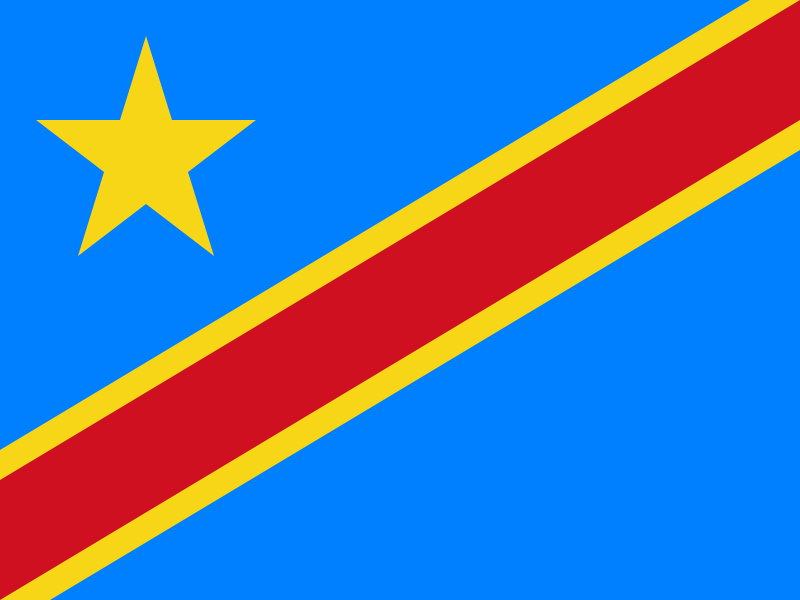
DR Congo
Democratic Republic of the Congo
Capital
Kinshasa
Region
Africa
Population
112,832,000
Area (km²)
2,344,858
The Democratic Republic of the Congo (DRC), located in Central Africa, spans 2,344,858 km², making it the second-largest country on the continent by area, with a population of over 112 million people and Kinshasa as its bustling capital. Rich in natural resources like cobalt, copper, and diamonds, the DRC faces ongoing challenges including political instability and conflict, yet it boasts immense biodiversity in the Congo Basin rainforest. Despite economic potential, detailed GDP figures are unavailable, reflecting data gaps in this vast nation.
Key Insights
The country faces significant public health challenges, evidenced by a relatively low life expectancy of 61.9 years and a high infant mortality rate of 44.5 per 1,000 live births. These figures indicate substantial unmet needs in healthcare access, sanitation, and maternal/child health services.
Nearly 45% of the population lives in urban areas, which is a surprisingly high rate for a country with such low GDP per capita and limited infrastructure access. This rapid urbanization suggests massive internal migration towards major cities (like Kinshasa), likely straining urban services and contributing to the challenge of providing basic utilities.
Over half of the country's land area is covered by forest (54.19%), positioning DR Congo as a critical global ecological asset. However, only 22.1% of the population has access to electricity, indicating a significant infrastructure deficit that likely contributes to reliance on traditional energy sources (like wood) despite the environmental importance of the forests.
DR Congo has an extremely high fertility rate (6.05 births per woman), which is a key driver of its massive and rapidly expanding population (over 105 million). This demographic structure creates immense pressure on resources, infrastructure, and the job market for future generations.
GDP (Current US$)
$69.84B
Year: 2023
GDP Per Capita
$660.21
GDP Growth (%)
8.53%
Inflation (%)
N/A%
Unemployment (%)
4.48%
Debt to GDP (%)
N/A%
Source: World Bank • Last updated: 12/24/2025
Historical Trends & Data Visualizations
- GDP Growth (%)
- Population
- Life Expectancy (years)
- Renewable Energy (%)
- GDP Per Capita ($)
Share This Country
External References & Resources
Wikipedia
Comprehensive encyclopedia article
Grokipedia
AI-powered encyclopedia search
Google Search
Latest news and information
Google News
Latest news coverage for DR Congo
CIA World Factbook
Official intelligence data
BBC News
Trusted news and analysis
UN Data
Official United Nations statistics
World Bank Data
Economic and development indicators