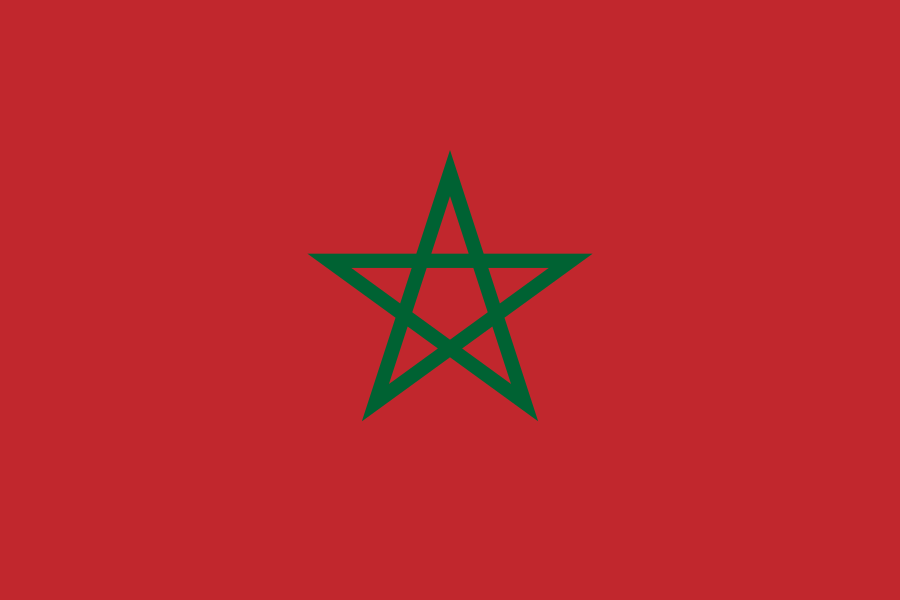
Morocco
Kingdom of Morocco
Capital
Rabat
Region
Africa
Population
36,828,330
Area (km²)
446,550
Morocco, a North African nation with a population of about 36.8 million, spans 446,550 km² and boasts a rich blend of Arab, Berber, and European influences, with Rabat as its vibrant capital. Bordered by the Atlantic Ocean and Mediterranean Sea, it's a gateway between Africa and Europe, known for its bustling markets, historic medinas, and diverse landscapes from the Sahara Desert to the Atlas Mountains. While GDP data is unavailable here, the economy thrives on agriculture, tourism, and phosphates, making it a dynamic player in the region.
Key Insights
Morocco experienced significant inflationary pressures in 2023, with inflation reaching 6.091%. This high rate substantially erodes the benefits of the moderate 3.656% GDP growth, potentially impacting the purchasing power of Moroccan citizens, especially given the lower-middle-income status indicated by the GDP per capita.
A significant infrastructure achievement for Morocco is the reported 100% access to electricity. This suggests successful national electrification programs, which is crucial for supporting economic development, education, and modernizing living standards across the country, contrasting sharply with many regional peers.
Morocco's fertility rate stands at 2.23, which is slightly above the typical replacement level of 2.1. This indicates a stable population trajectory, avoiding the rapid population decline seen in many developed nations while also moving past the high fertility rates characteristic of some lower-income countries.
With 62.674% of the population living in urban areas, Morocco exhibits a high level of urbanization, comparable to many upper-middle-income countries. This rapid shift suggests significant internal migration and pressure on urban infrastructure, potentially contributing to the 9.044% unemployment rate if job creation in cities lags behind.
GDP (Current US$)
$146.04B
Year: 2023
GDP Per Capita
$3,813.73
GDP Growth (%)
3.66%
Inflation (%)
6.09%
Unemployment (%)
9.04%
Debt to GDP (%)
N/A%
Source: World Bank • Last updated: 12/24/2025
Historical Trends & Data Visualizations
- GDP Growth (%)
- Population
- Life Expectancy (years)
- Renewable Energy (%)
- GDP Per Capita ($)
Share This Country
News
Real Estate
Events
Government
Travel & Tourism
External References & Resources
Wikipedia
Comprehensive encyclopedia article
Grokipedia
AI-powered encyclopedia search
Google Search
Latest news and information
Google News
Latest news coverage for Morocco
CIA World Factbook
Official intelligence data
BBC News
Trusted news and analysis
UN Data
Official United Nations statistics
World Bank Data
Economic and development indicators