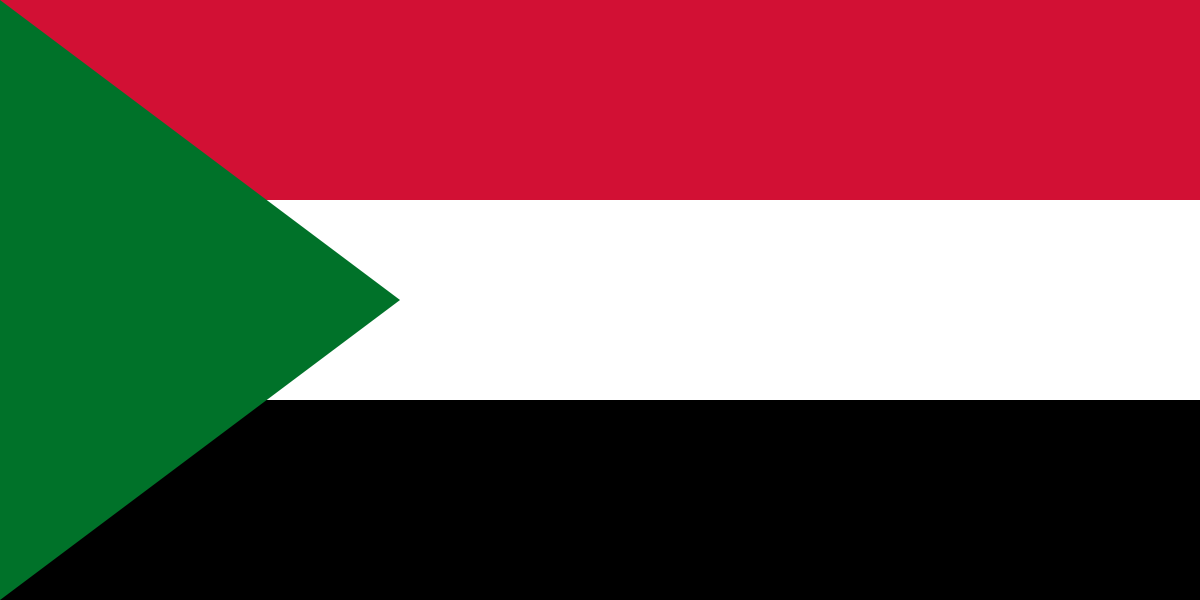
Sudan
Republic of the Sudan
Capital
Khartoum
Region
Africa
Population
51,662,000
Area (km²)
1,886,068
Sudan, Africa's third-largest country by area at 1,886,068 km², is home to over 51 million people and sits in the northeastern region of the continent, bordered by the Red Sea and neighbors like Egypt and Ethiopia. Its capital, Khartoum, serves as a bustling hub where the White and Blue Nile rivers converge, blending ancient history with modern challenges like political instability and economic hurdles (GDP data currently unavailable). Despite ongoing conflicts, Sudan's diverse landscapes—from deserts to fertile Nile valleys—highlight its rich cultural heritage and potential for growth.
Key Insights
Only about 34.8% of Sudan’s population lives in urban areas, which is low for a country with a population over 50 million. This suggests a predominantly rural economy and lifestyle, which often correlates with challenges in delivering centralized services like education and complex healthcare.
Access to electricity stands at 66%, meaning approximately one-third of the population lacks reliable power. This significant infrastructure deficit severely limits industrialization, education, and healthcare provision, especially in rural areas where the urban population is already low (34.8%).
Sudan's life expectancy of 66.33 years is relatively high compared to its extremely low GDP per capita and high infant mortality rate. While still below the global average, this figure suggests some resilience in basic public health infrastructure or cultural factors mitigating mortality risks, despite acute crises.
Despite having a very low GDP per capita (less than $800), Sudan maintains a high fertility rate of 4.32 children per woman. This combination suggests significant demographic pressure on limited economic resources, hindering long-term development and poverty reduction efforts.
GDP (Current US$)
$39.90B
Year: 2023
GDP Per Capita
$797.28
GDP Growth (%)
-29.43%
Inflation (%)
N/A%
Unemployment (%)
N/A%
Debt to GDP (%)
N/A%
Source: World Bank • Last updated: 12/24/2025
Historical Trends & Data Visualizations
- GDP Growth (%)
- Population
- Life Expectancy (years)
- Renewable Energy (%)
- GDP Per Capita ($)
Share This Country
External References & Resources
Wikipedia
Comprehensive encyclopedia article
Grokipedia
AI-powered encyclopedia search
Google Search
Latest news and information
Google News
Latest news coverage for Sudan
CIA World Factbook
Official intelligence data
BBC News
Trusted news and analysis
UN Data
Official United Nations statistics
World Bank Data
Economic and development indicators