Spain
Kingdom of Spain

Capital
Madrid
Region
Europe
Population
49,315,949
Area (km²)
505,992
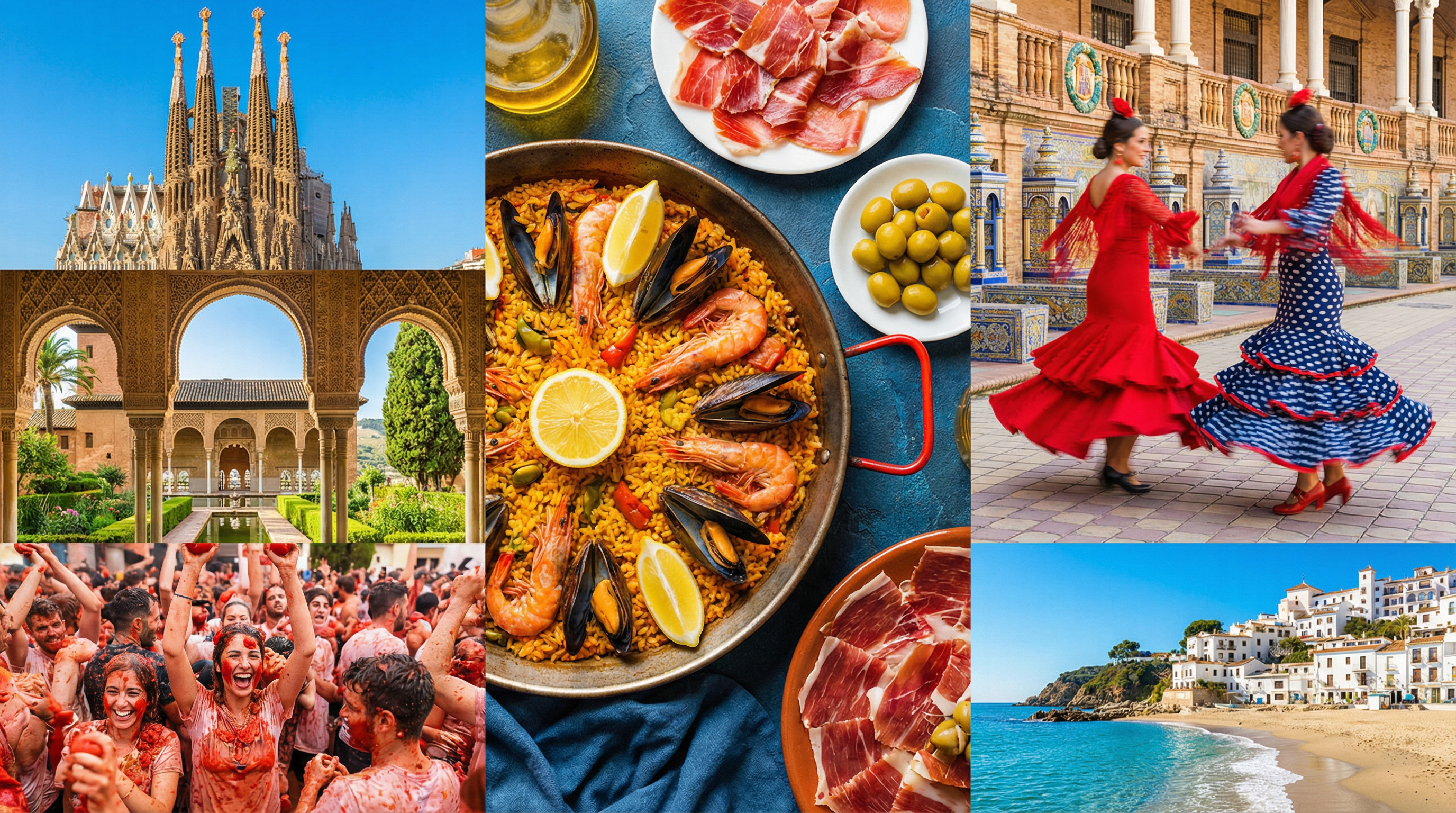
Spain, a vibrant European nation with its capital in Madrid, covers an expansive area of 505,992 km² and boasts a population of approximately 49.3 million people. Known for its rich history, diverse culture, and stunning landscapes from the Mediterranean coast to the Pyrenees mountains, it blends ancient traditions with modern innovation. While GDP data is unavailable here, Spain remains a key player in tourism, agriculture, and renewable energy on the global stage.
Key Insights
Spain maintains a healthy environmental profile regarding land use, with over 37% of its land covered by forest. Furthermore, access to electricity is universal (100%), indicating successful infrastructure development that reaches all segments of the population.
Despite Spain being a large country geographically, the population is highly concentrated, with over 80% of citizens living in urban areas (80.128%). This suggests significant internal migration toward major metropolitan centers, potentially leading to 'empty Spain' (depopulation of rural areas) and increased pressure on urban infrastructure.
Spain boasts one of the highest life expectancies globally at 83.88 years, surpassing many other high-income nations. This remarkable longevity, coupled with a very low infant mortality rate (2.600 per 1,000 live births), suggests a highly effective healthcare system and strong public health standards.
Spain's fertility rate of 1.12 is critically low, far below the replacement rate of 2.1 and among the lowest globally. This indicates a severe long-term demographic challenge, leading to rapid population aging and future strain on social security and healthcare systems.
GDP (Current US$)
$1.62T
Year: 2023
GDP Per Capita
$33,493.22
GDP Growth (%)
2.46%
Inflation (%)
3.53%
Unemployment (%)
12.18%
Debt to GDP (%)
107.3%
Source: World Bank • Last updated: 12/24/2025
Historical Trends & Data Visualizations
- GDP Growth (%)
- Population
- Life Expectancy (years)
- Renewable Energy (%)
- GDP Per Capita ($)
Share This Country
External References & Resources
Wikipedia
Comprehensive encyclopedia article
Grokipedia
AI-powered encyclopedia search
Google Search
Latest news and information
Google News
Latest news coverage for Spain
CIA World Factbook
Official intelligence data
BBC News
Trusted news and analysis
UN Data
Official United Nations statistics
World Bank Data
Economic and development indicators