Czechia
Czech Republic
Country have opposed or blocked EU plans to use or confiscate frozen Russian sovereign assets (primarily held in Belgium's Euroclear) for financing Ukraine's defense, reconstruction, or reparations and/or maintain indefinite exemptions for Russian oil imports via the Druzhba pipeline (with some ongoing gas/nuclear ties), and others sustain limited permitted trade flows amid overall ~80-90% reduction in EU-Russia commerce since 2022 (sources: Reuters, Politico, The Guardian, Responsible Statecraft, Al Jazeera, December 2025 reports).

Capital
Prague
Region
Europe
Population
10,882,341
Area (km²)
78,865
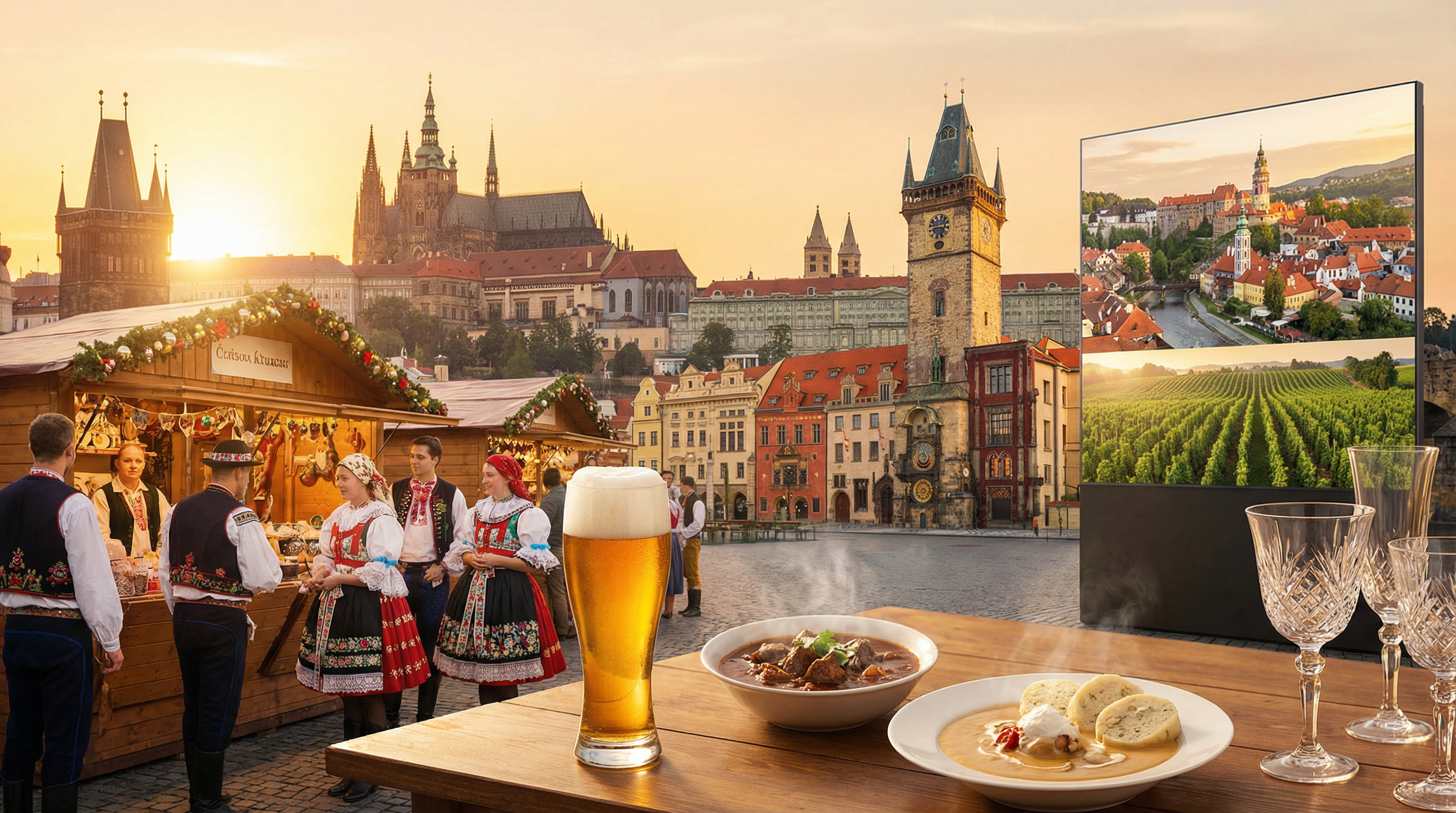
Czechia, a landlocked nation in Central Europe, boasts a population of about 10.9 million people spread across its 78,865 km² area, with Prague serving as its vibrant capital and cultural hub. Known for its rich history, medieval architecture, and beer-making heritage, the country transitioned from Czechoslovakia in 1993 and joined the EU in 2004. While GDP data is unavailable here, Czechia thrives on manufacturing, automotive exports, and tourism, blending old-world charm with modern innovation.
Key Insights
Despite being a highly industrialized Central European country with high urban density, Czechia maintains a substantial forest area covering nearly 35% of its total landmass. This indicates effective land management and environmental protection efforts in preserving natural resources alongside economic development.
With a GDP per capita of approximately $31,761, Czechia firmly establishes itself as a high-income developed economy, comparable to many Western European nations. This metric highlights the country's successful post-communist transition and integration into the global market.
Czechia's fertility rate (1.45 children per woman) is significantly below the replacement level (2.1), indicating a shrinking and aging population in the long term. While life expectancy is high (79.88 years), this low birth rate will likely put future strain on social security and healthcare systems.
Despite having a robust labor market characterized by very low unemployment, Czechia's GDP growth rate is nearly flat (0.048%). This suggests that the economy is facing significant headwinds, possibly due to high inflation, energy costs, or structural issues preventing productivity gains, even with ample available labor.
GDP (Current US$)
$345.06B
Year: 2023
GDP Per Capita
$31,761.59
GDP Growth (%)
0.05%
Inflation (%)
10.66%
Unemployment (%)
2.58%
Debt to GDP (%)
N/A%
Source: World Bank • Last updated: 12/24/2025
Historical Trends & Data Visualizations
- GDP Growth (%)
- Population
- Life Expectancy (years)
- Renewable Energy (%)
- GDP Per Capita ($)
Share This Country
News
Real Estate
Events
Government
Travel & Tourism
External References & Resources
Wikipedia
Comprehensive encyclopedia article
Grokipedia
AI-powered encyclopedia search
Google Search
Latest news and information
Google News
Latest news coverage for Czechia
CIA World Factbook
Official intelligence data
BBC News
Trusted news and analysis
UN Data
Official United Nations statistics
World Bank Data
Economic and development indicators