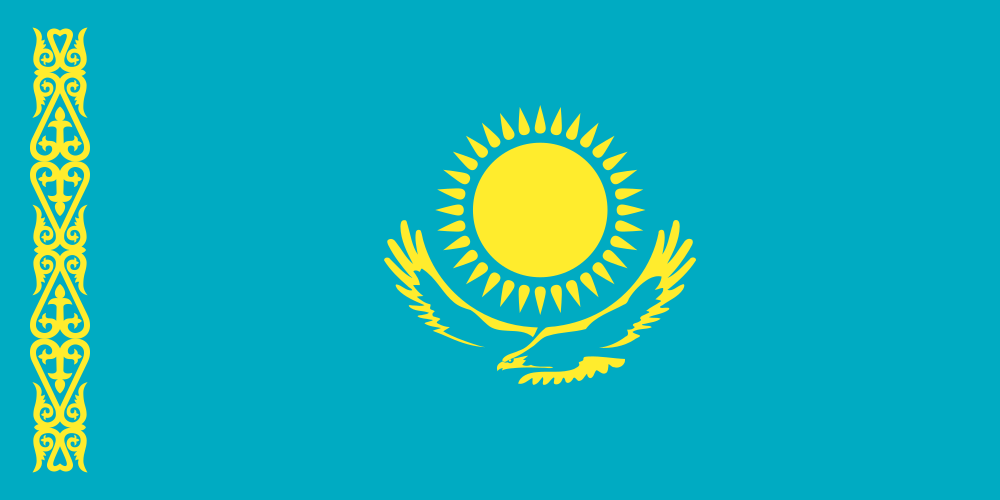
Kazakhstan
Republic of Kazakhstan
Capital
Astana
Region
Asia
Population
20,426,568
Area (km²)
2,724,900
Kazakhstan, the world's largest landlocked country, spans 2,724,900 km² in Central Asia with a population of about 20.4 million people and its capital in Astana. It's renowned for vast steppes, rich natural resources like oil and minerals, and a diverse cultural heritage blending nomadic traditions with modern development. While GDP data is currently unavailable, the nation has transitioned from a Soviet republic to a key player in regional energy markets.
Key Insights
Despite being the ninth-largest country globally, only 1.312% of Kazakhstan's land area is covered by forest. This extremely low percentage highlights the country's dominant arid and steppe geography, presenting challenges for biodiversity and carbon sequestration efforts.
With a life expectancy of 74.40 years, Kazakhstan performs well for an upper-middle-income country, indicating reasonable public health standards and quality of life. This figure is significantly higher than the global average and reflects improvements in healthcare and living conditions.
The unemployment rate in Kazakhstan remains relatively low at 4.821%, which is comparable to or better than many OECD countries. Maintaining low unemployment alongside high GDP growth suggests effective labor market absorption, even while dealing with severe inflation.
Kazakhstan exhibits a high fertility rate (3.01 children per woman), significantly above the replacement level (2.1) and higher than most developed nations. This indicates strong demographic growth potential and suggests a relatively young population structure, posing both opportunities and future demands on education and employment.
GDP (Current US$)
$261.84B
Year: 2023
GDP Per Capita
$12,879.43
GDP Growth (%)
5.1%
Inflation (%)
14.73%
Unemployment (%)
4.82%
Debt to GDP (%)
20.89%
Source: World Bank • Last updated: 12/24/2025
Historical Trends & Data Visualizations
- GDP Growth (%)
- Population
- Life Expectancy (years)
- Renewable Energy (%)
- GDP Per Capita ($)
Share This Country
News
Real Estate
Events
Government
Travel & Tourism
External References & Resources
Wikipedia
Comprehensive encyclopedia article
Grokipedia
AI-powered encyclopedia search
Google Search
Latest news and information
Google News
Latest news coverage for Kazakhstan
CIA World Factbook
Official intelligence data
BBC News
Trusted news and analysis
UN Data
Official United Nations statistics
World Bank Data
Economic and development indicators