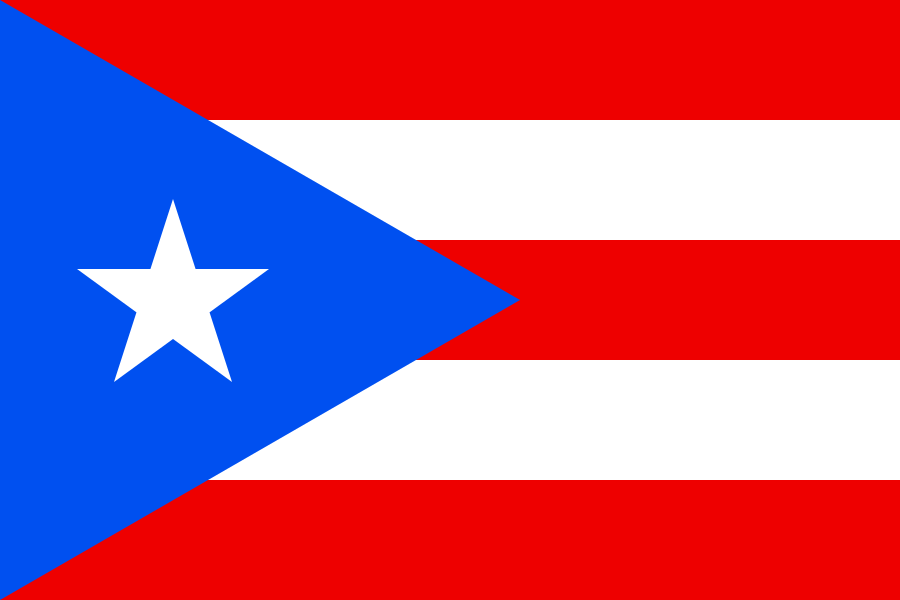
Puerto Rico
Commonwealth of Puerto Rico
Capital
San Juan
Region
Americas
Population
3,203,295
Area (km²)
8,870
Puerto Rico, an unincorporated U.S. territory in the Americas, boasts a population of about 3.2 million across its 8,870 km² of lush Caribbean islands, with San Juan as its vibrant capital known for historic forts and colorful architecture. While GDP data is unavailable here, the island thrives on tourism, pharmaceuticals, and manufacturing, blending Spanish colonial heritage with modern American influences. Famous for its beaches, bioluminescent bays, and cultural festivals like salsa music, Puerto Rico offers a unique mix of tropical paradise and resilient spirit despite challenges like hurricanes and economic fluctuations.
Key Insights
Puerto Rico exhibits a remarkably high GDP per capita, comparable to many developed nations in Europe and North America. At nearly $37,000, this figure places it firmly in the high-income bracket, illustrating a significant economic output relative to its population size, despite the complex challenges associated with its territorial status.
The fertility rate of 0.92 is extremely low, far below the replacement rate of 2.1 and significantly lower than most global averages. This suggests a rapidly aging population and a strong demographic contraction, likely driven by high emigration rates and low birth rates, posing long-term challenges for the labor market and social services.
Puerto Rico reports 100% access to electricity, an achievement typical of highly developed nations. This metric highlights successful infrastructure development and widespread utility access, which is crucial for supporting both the high GDP per capita and the highly urbanized population.
With over 94% of the population living in urban areas, Puerto Rico is exceptionally urbanized, contrasting sharply with many other Caribbean nations. This concentration of population likely contributes to efficiency in service delivery and economic activity, but also puts stress on infrastructure in and around San Juan.
GDP (Current US$)
$118.48B
Year: 2023
GDP Per Capita
$36,980.79
GDP Growth (%)
0.73%
Inflation (%)
N/A%
Unemployment (%)
5.73%
Debt to GDP (%)
N/A%
Source: World Bank • Last updated: 12/24/2025
Historical Trends & Data Visualizations
- GDP Growth (%)
- Population
- Life Expectancy (years)
- Renewable Energy (%)
- GDP Per Capita ($)
Share This Country
News
Real Estate
Events
Government
Travel & Tourism
External References & Resources
Wikipedia
Comprehensive encyclopedia article
Grokipedia
AI-powered encyclopedia search
Google Search
Latest news and information
Google News
Latest news coverage for Puerto Rico
CIA World Factbook
Official intelligence data
BBC News
Trusted news and analysis
UN Data
Official United Nations statistics
World Bank Data
Economic and development indicators