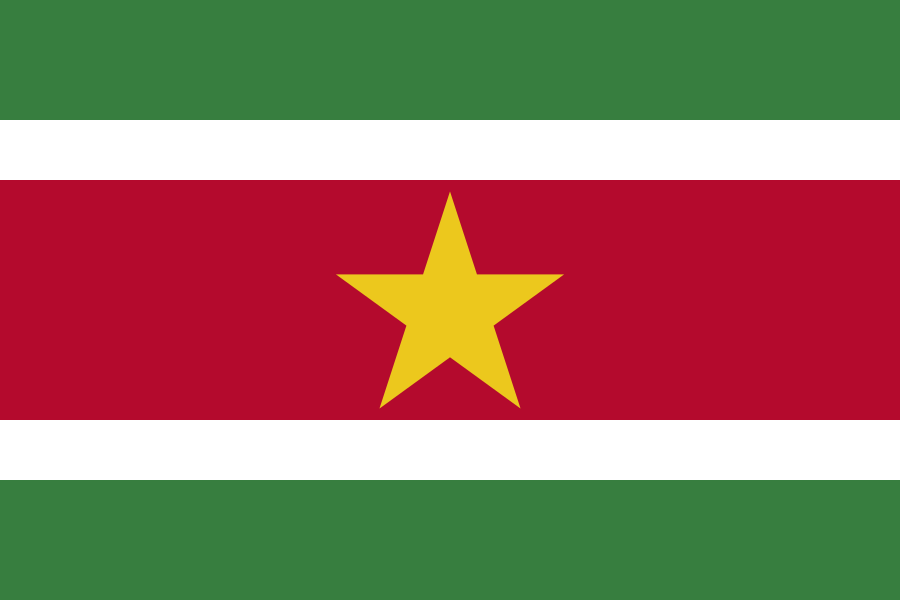
Suriname
Republic of Suriname
Capital
Paramaribo
Region
Americas
Population
616,500
Area (km²)
163,820
Suriname, a small South American nation in the Americas region, boasts a population of about 616,500 spread across its 163,820 km² of lush rainforests and coastal plains. Its vibrant capital, Paramaribo, is a UNESCO World Heritage site known for its colonial architecture and cultural diversity, blending Indigenous, African, Asian, and European influences. With a GDP that's not specified here, the country's economy thrives on natural resources like bauxite, gold, and oil, making it a hidden gem for eco-tourism and biodiversity.
Key Insights
Suriname's fertility rate of 2.25 is slightly above the replacement level (2.1), indicating a population that is sustaining itself naturally, contrasting with many developed nations experiencing population decline. This suggests a relatively stable demographic future, assuming migration remains constant.
The country maintains a respectable life expectancy of 73.63 years, comparable to many upper-middle-income nations. However, the infant mortality rate of 15.2 per 1,000 live births is relatively high for the region, suggesting ongoing challenges in prenatal and early childhood healthcare access or quality.
Suriname has achieved near-universal access to electricity, reaching 99.6% of its population. This is a significant infrastructure achievement, especially for a developing nation with a small population spread across a large, heavily forested territory, indicating successful utility deployment.
A striking contrast exists between Suriname's vast, untouched forest area and its highly concentrated population, with over two-thirds (65.7%) living in urban areas. This suggests that population centers are highly localized, likely along the coast or major rivers, leaving the interior largely uninhabited.
GDP (Current US$)
$3.47B
Year: 2023
GDP Per Capita
$5,521.98
GDP Growth (%)
2.42%
Inflation (%)
51.59%
Unemployment (%)
7.63%
Debt to GDP (%)
N/A%
Source: World Bank • Last updated: 12/24/2025
Historical Trends & Data Visualizations
- GDP Growth (%)
- Population
- Life Expectancy (years)
- Renewable Energy (%)
- GDP Per Capita ($)
Share This Country
News
Real Estate
Events
Government
Travel & Tourism
External References & Resources
Wikipedia
Comprehensive encyclopedia article
Grokipedia
AI-powered encyclopedia search
Google Search
Latest news and information
Google News
Latest news coverage for Suriname
CIA World Factbook
Official intelligence data
BBC News
Trusted news and analysis
UN Data
Official United Nations statistics
World Bank Data
Economic and development indicators