Netherlands
Kingdom of the Netherlands

Capital
Amsterdam
Region
Europe
Population
18,100,436
Area (km²)
41,865
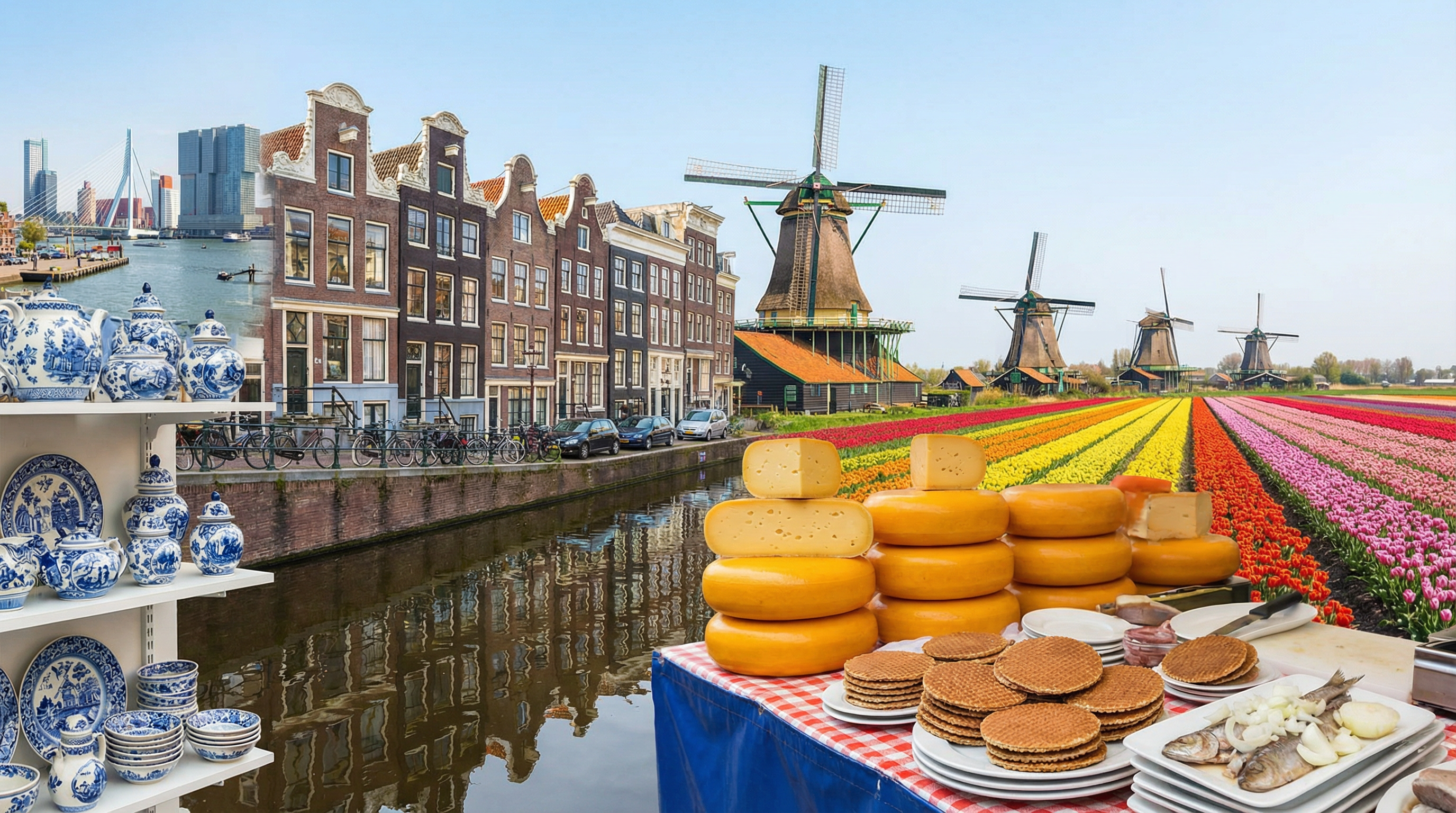
The Netherlands, a vibrant European nation with a population of 18,100,436, spans 41,865 km² and boasts Amsterdam as its lively capital, renowned for its canals and cultural heritage. This densely populated country is famous for its innovative water management, tulip fields, and progressive policies, blending historic charm with modern efficiency. While GDP data is unavailable here, the Netherlands thrives on trade, agriculture, and tech, making it a key player in global commerce.
Key Insights
Despite having an extremely high GDP per capita ($63,515.60), placing it among the wealthiest nations globally, the Netherlands experienced negative GDP growth (-0.598%) in 2023. This indicates a technical economic contraction or recessionary pressures, a noteworthy challenge for such a high-income economy.
The Netherlands reported a significant inflation rate (3.838%) in 2023, yet maintained an exceptionally low unemployment rate (3.537%). This combination suggests a tight labor market potentially contributing to inflationary pressures, challenging policymakers aiming for price stability without sacrificing employment.
A staggering 95.322% of the population lives in urban areas, making the Netherlands one of the most highly urbanized countries globally. Given its small area (41,865 sq km), this density highlights intense pressure on infrastructure, housing, and land use planning, especially for agriculture and conservation.
The fertility rate stands at a very low 1.43 children per woman, significantly below the replacement level of 2.1. This indicates a long-term demographic challenge, likely leading to population aging and potential future labor shortages, despite the current positive population growth.
GDP (Current US$)
$1.14T
Year: 2023
GDP Per Capita
$63,515.6
GDP Growth (%)
-0.6%
Inflation (%)
3.84%
Unemployment (%)
3.54%
Debt to GDP (%)
N/A%
Source: World Bank • Last updated: 12/24/2025
Historical Trends & Data Visualizations
- GDP Growth (%)
- Population
- Life Expectancy (years)
- Renewable Energy (%)
- GDP Per Capita ($)
Share This Country
News
Real Estate
Events
Government
Travel & Tourism
External References & Resources
Wikipedia
Comprehensive encyclopedia article
Grokipedia
AI-powered encyclopedia search
Google Search
Latest news and information
Google News
Latest news coverage for Netherlands
CIA World Factbook
Official intelligence data
BBC News
Trusted news and analysis
UN Data
Official United Nations statistics
World Bank Data
Economic and development indicators