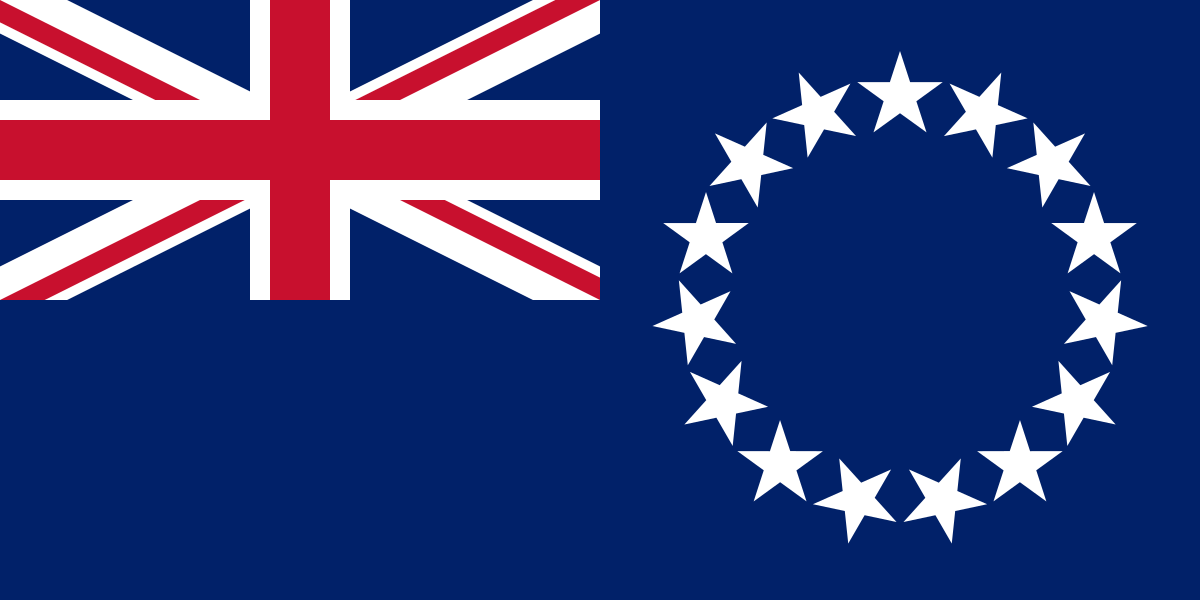
Cook Islands
Capital
Avarua
Region
Oceania
Population
15,040
Area (km²)
236
The Cook Islands, a self-governing archipelago in free association with New Zealand, lies in the South Pacific region of Oceania and spans just 236 km² across 15 islands. Home to a population of 15,040, its vibrant capital Avarua on Rarotonga buzzes with Polynesian culture, stunning lagoons, and a tourism-driven economy (GDP data unavailable). This tropical paradise offers pristine beaches and marine reserves, making it a hidden gem for eco-adventurers.
Key Insights
As part of Polynesia, the Cook Islands shares cultural and linguistic ties with other major Pacific islands (like New Zealand and French Polynesia). However, its small land area and geographic isolation mean it faces unique challenges in trade, tourism, and maintaining cultural continuity against external influences.
The Cook Islands’ small population (15,040) spread across a tiny landmass (236 sq km) highlights the vulnerability of its infrastructure and economy to natural disasters. A single severe weather event could impact a significant percentage of the national population and physical assets.
The capital, Avarua, must serve as the administrative, commercial, and transportation hub for the entire nation of 15,040 people. This suggests that Avarua is likely one of the smallest national capitals in the world, requiring highly centralized infrastructure relative to its size.
With a population of just over 15,000, the Cook Islands is one of the smallest sovereign or self-governing territories globally. This microstate status presents unique challenges in governance, resource management, and maintaining essential services compared to larger nations.
No economic data available
Share This Country
Real Estate
Government
Travel & Tourism
External References & Resources
Wikipedia
Comprehensive encyclopedia article
Grokipedia
AI-powered encyclopedia search
Google Search
Latest news and information
Google News
Latest news coverage for Cook Islands
CIA World Factbook
Official intelligence data
BBC News
Trusted news and analysis
UN Data
Official United Nations statistics
World Bank Data
Economic and development indicators