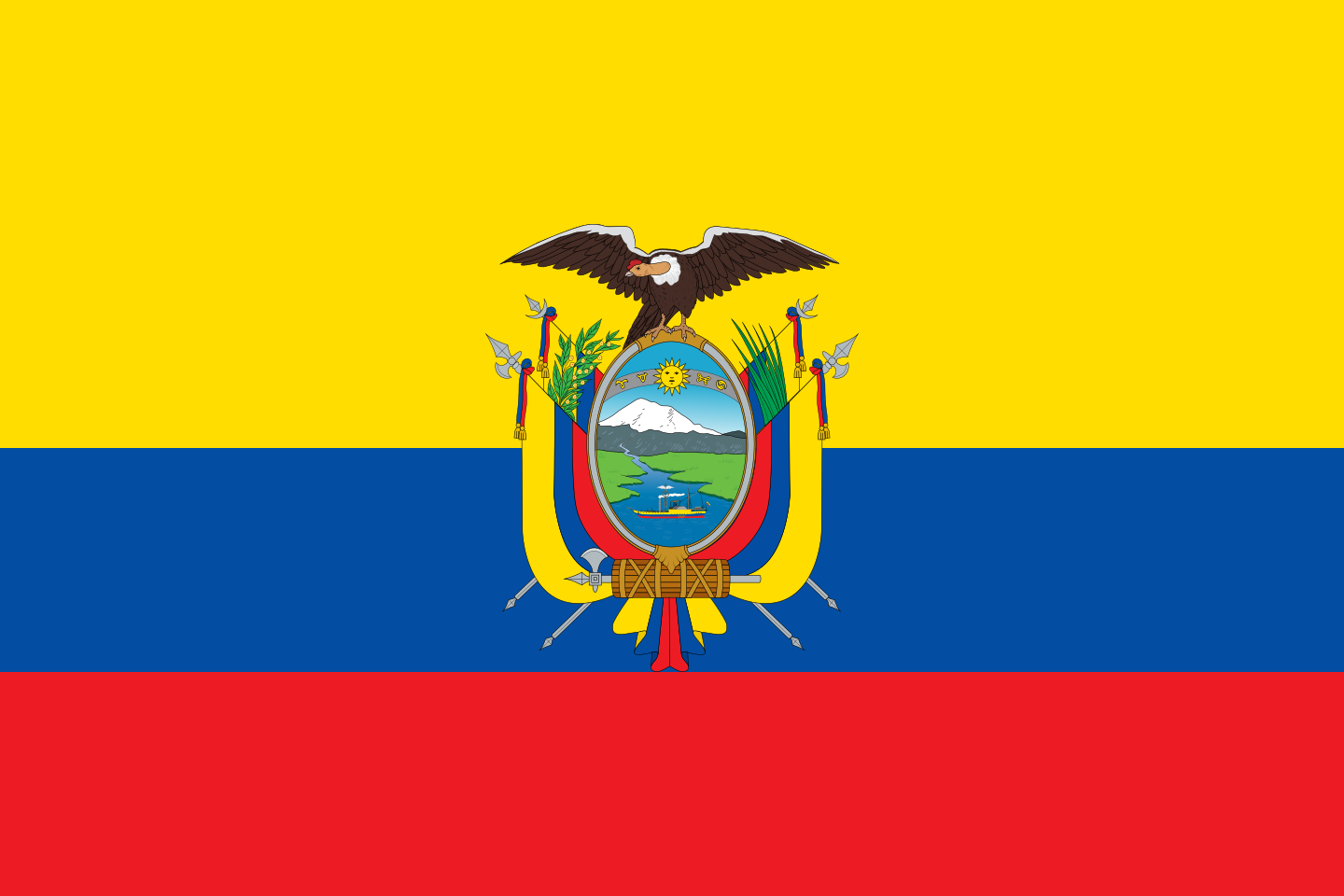
Ecuador
Republic of Ecuador
Capital
Quito
Region
Americas
Population
18,103,660
Area (km²)
276,841
Ecuador, nestled in the Andes of South America within the Americas region, boasts a population of about 18 million people across its 276,841 km² territory, with Quito serving as its high-altitude capital. Known for straddling the equator—hence its name—and featuring diverse ecosystems from Amazon rainforests to the iconic Galápagos Islands, the country thrives on oil exports, agriculture, and tourism. While GDP data is unavailable here, Ecuador's economy is emerging, supported by its biodiversity and cultural heritage.
Key Insights
Ecuador’s life expectancy is relatively high at 77.39 years, comparable to many upper-middle-income countries. However, the Infant Mortality Rate (11.100 per 1,000 live births) indicates ongoing challenges in neonatal and early childhood healthcare, suggesting disparities in health outcomes.
Ecuador maintains a substantial forest area, covering 49.545% of its total land area. This high percentage highlights the country's critical role in global biodiversity and suggests successful conservation efforts, despite pressures from economic development and resource extraction.
With 63.131% of its population living in urban areas, Ecuador is highly urbanized. Crucially, access to electricity is nearly universal at 98.700%. This high rate of infrastructure access suggests successful national electrification programs, supporting both urban and rural development.
Ecuador's Fertility Rate stands at 1.82, which is below the replacement level (2.1). This indicates that the population growth is slowing down and the country is rapidly aging, a trend usually associated with highly developed economies, presenting future challenges for social security and workforce size.
GDP (Current US$)
$121.15B
Year: 2023
GDP Per Capita
$6,737.85
GDP Growth (%)
1.99%
Inflation (%)
2.22%
Unemployment (%)
3.51%
Debt to GDP (%)
N/A%
Source: World Bank • Last updated: 12/24/2025
Historical Trends & Data Visualizations
- GDP Growth (%)
- Population
- Life Expectancy (years)
- Renewable Energy (%)
- GDP Per Capita ($)
Share This Country
News
Real Estate
Events
Government
Travel & Tourism
External References & Resources
Wikipedia
Comprehensive encyclopedia article
Grokipedia
AI-powered encyclopedia search
Google Search
Latest news and information
Google News
Latest news coverage for Ecuador
CIA World Factbook
Official intelligence data
BBC News
Trusted news and analysis
UN Data
Official United Nations statistics
World Bank Data
Economic and development indicators