Malta
Republic of Malta
Country have opposed or blocked EU plans to use or confiscate frozen Russian sovereign assets (primarily held in Belgium's Euroclear) for financing Ukraine's defense, reconstruction, or reparations and/or maintain indefinite exemptions for Russian oil imports via the Druzhba pipeline (with some ongoing gas/nuclear ties), and others sustain limited permitted trade flows amid overall ~80-90% reduction in EU-Russia commerce since 2022 (sources: Reuters, Politico, The Guardian, Responsible Statecraft, Al Jazeera, December 2025 reports).
Capital
Valletta
Region
Europe
Population
574,250
Area (km²)
316
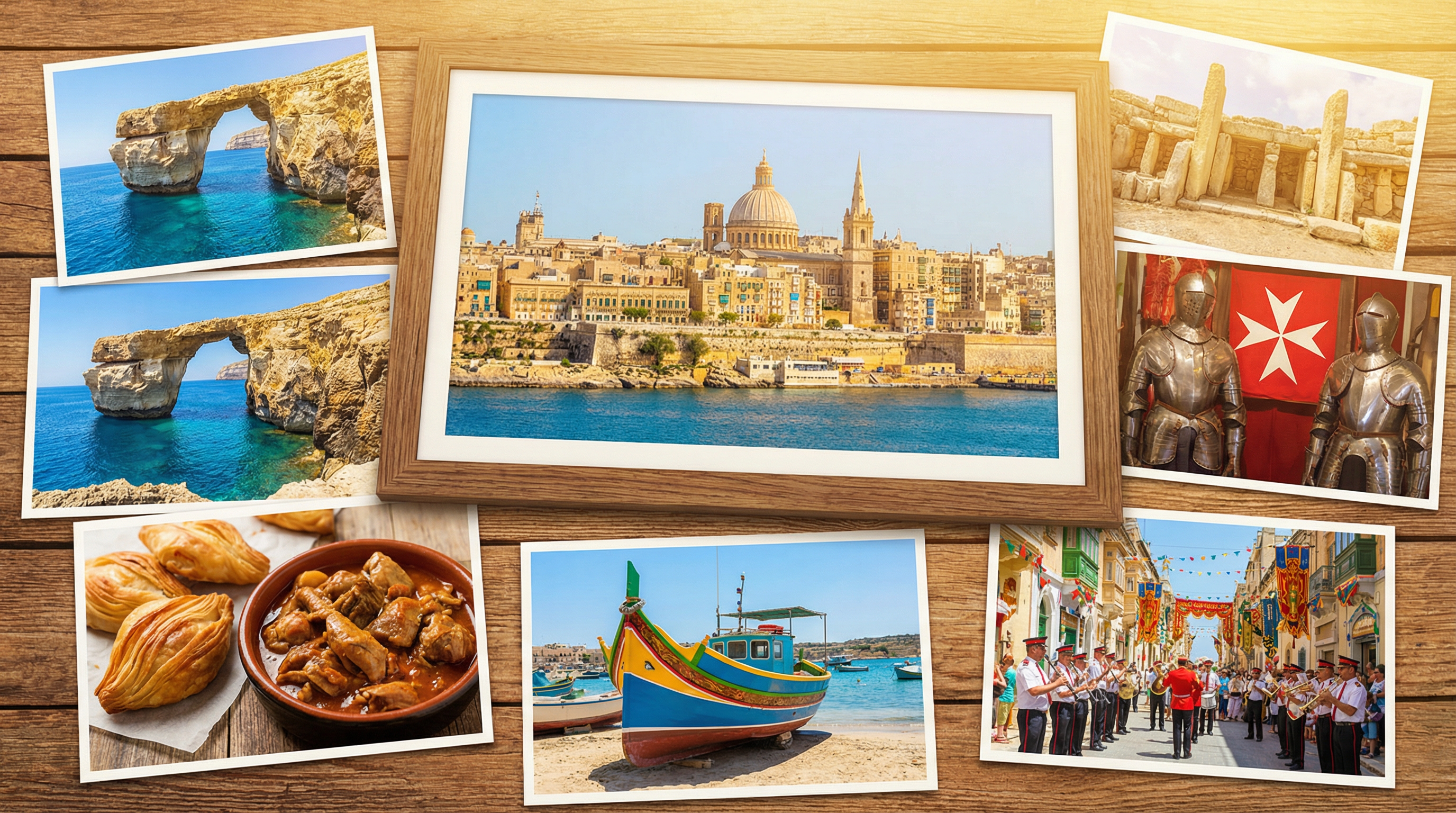
Malta is a small island nation in the Mediterranean Sea, part of Europe, with a population of about 574,250 spread across just 316 km², making it one of the world's most densely populated countries. Its capital, Valletta, is a UNESCO World Heritage site renowned for its Baroque architecture and historic fortifications. While GDP data isn't available here, Malta thrives on tourism, financial services, and maritime trade, blending ancient history with modern EU membership for a vibrant cultural scene.
Key Insights
Malta exhibits an exceptionally strong economic performance with a high GDP growth rate (10.62%) coupled with a very low unemployment rate (3.11%). This suggests a rapidly expanding economy potentially operating near or at full employment capacity, which can lead to wage inflation and reliance on foreign labor.
Despite a high GDP per capita (over $40,900), comparable to many Western European nations, Malta is experiencing a significant inflation rate (5.09%). This suggests that the rapid economic expansion and high demand are contributing to rising prices, potentially eroding purchasing power for residents.
Malta's fertility rate stands at a critically low 1.06 children per woman, far below the replacement rate of 2.1. This indicates a rapidly aging native population and a high dependency on immigration to maintain workforce size and overall population stability, despite a recent population increase.
Malta boasts a very high life expectancy of 83.51 years, placing it among the top countries globally. This achievement is notable given its extremely high population density and small geographic area, suggesting excellent healthcare access and quality of life indicators.
GDP (Current US$)
$22.61B
Year: 2023
GDP Per Capita
$40,905.81
GDP Growth (%)
10.62%
Inflation (%)
5.09%
Unemployment (%)
3.11%
Debt to GDP (%)
N/A%
Source: World Bank • Last updated: 12/24/2025
Historical Trends & Data Visualizations
- GDP Growth (%)
- Population
- Life Expectancy (years)
- Renewable Energy (%)
- GDP Per Capita ($)
Share This Country
News
Real Estate
Events
Government
Travel & Tourism
External References & Resources
Wikipedia
Comprehensive encyclopedia article
Grokipedia
AI-powered encyclopedia search
Google Search
Latest news and information
Google News
Latest news coverage for Malta
CIA World Factbook
Official intelligence data
BBC News
Trusted news and analysis
UN Data
Official United Nations statistics
World Bank Data
Economic and development indicators