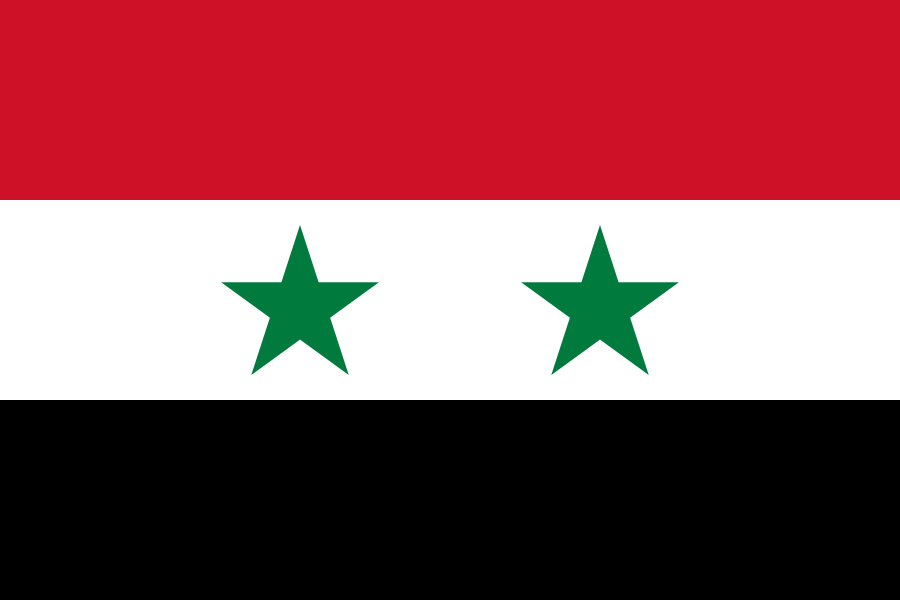
Syria
Syrian Arab Republic
Capital
Damascus
Region
Asia
Population
25,620,000
Area (km²)
185,180
Syria, located in Western Asia, spans 185,180 km² and is home to about 25.6 million people, with Damascus serving as its historic capital and one of the oldest continuously inhabited cities in the world. The country has faced prolonged civil conflict since 2011, leading to economic devastation and a lack of reliable GDP data (listed as $N/A). Despite its challenges, Syria boasts rich cultural heritage, including ancient ruins like Palmyra, and borders the Mediterranean Sea, offering diverse landscapes from deserts to mountains.
Key Insights
The reported 88.4% access to electricity suggests that, despite the war, a significant portion of the population remains connected to the grid, or this figure reflects a pre-conflict baseline. However, 'access' does not equate to reliability, and severe power rationing is a known reality across the country.
The infant mortality rate of 19 per 1,000 live births is relatively high compared to developed nations (typically <5) and reflects ongoing stress on the healthcare system, sanitation, and access to prenatal/postnatal care, likely exacerbated by conflict and internal displacement.
With a fertility rate of 2.71 children per woman, Syria is well above the replacement rate of 2.1. This high rate, coupled with the moderate life expectancy, indicates strong potential for future population growth, posing significant challenges for resource allocation and recovery efforts.
The reported unemployment rate of nearly 13.2% highlights severe economic distress and lack of opportunities. Given the massive destruction of infrastructure and the informal nature of much of the economy, the true underemployment and lack of productive work is likely much higher than this official figure suggests.
GDP (Current US$)
$N/A
Year: 2023
GDP Per Capita
$N/A
GDP Growth (%)
N/A%
Inflation (%)
N/A%
Unemployment (%)
13.19%
Debt to GDP (%)
N/A%
Source: World Bank • Last updated: 12/24/2025
Historical Trends & Data Visualizations
- GDP Growth (%)
- Population
- Life Expectancy (years)
- Renewable Energy (%)
- GDP Per Capita ($)
Share This Country
External References & Resources
Wikipedia
Comprehensive encyclopedia article
Grokipedia
AI-powered encyclopedia search
Google Search
Latest news and information
Google News
Latest news coverage for Syria
CIA World Factbook
Official intelligence data
BBC News
Trusted news and analysis
UN Data
Official United Nations statistics
World Bank Data
Economic and development indicators