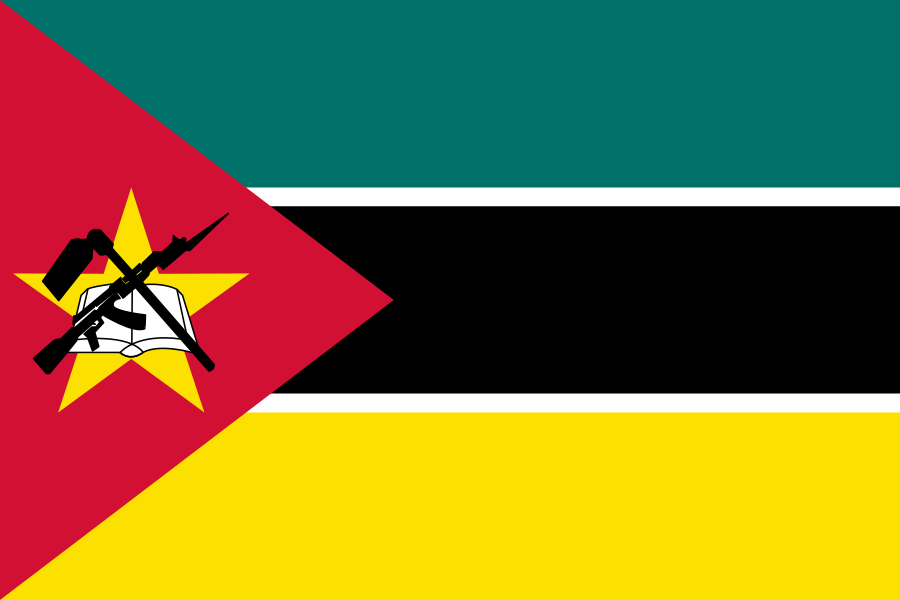
Mozambique
Republic of Mozambique
Capital
Maputo
Region
Africa
Population
34,090,466
Area (km²)
801,590
Mozambique, a vibrant Southeast African nation, spans 801,590 km² along the Indian Ocean coast, boasting a population of over 34 million and the bustling capital of Maputo. Rich in natural resources like coal and natural gas, it has transitioned from a turbulent post-colonial history to a growing economy focused on agriculture, mining, and tourism. Despite challenges like poverty and climate vulnerabilities, its stunning beaches, diverse wildlife, and cultural heritage make it a hidden gem in Africa.
Key Insights
The reported unemployment rate is surprisingly low at 3.519%, which is comparable to many developed nations. However, in a low-income country like Mozambique, this figure likely reflects widespread underemployment and participation in the informal, low-productivity sector rather than full, high-quality employment.
Mozambique has achieved a life expectancy of 63.61 years, which is above the average for low-income countries, suggesting improvements in public health. Nevertheless, the infant mortality rate remains high at 45.4 per 1,000 live births, indicating persistent challenges in maternal and neonatal care and access to basic healthcare services.
Mozambique exhibits a robust GDP growth rate of 5.481%, which is strong for the region. However, this growth starts from a very low base, resulting in a GDP per capita of only $622, highlighting the significant challenge of translating national economic growth into widespread individual prosperity.
The extremely high fertility rate of 4.76 children per woman suggests a rapidly expanding population, placing immense pressure on future resources, education, and employment infrastructure. While the median age is not provided, this high fertility rate combined with a life expectancy of 63.61 years indicates a very young population structure.
GDP (Current US$)
$20.92B
Year: 2023
GDP Per Capita
$622
GDP Growth (%)
5.48%
Inflation (%)
7.13%
Unemployment (%)
3.52%
Debt to GDP (%)
72.66%
Source: World Bank • Last updated: 12/24/2025
Historical Trends & Data Visualizations
- GDP Growth (%)
- Population
- Life Expectancy (years)
- Renewable Energy (%)
- GDP Per Capita ($)
Share This Country
News
Real Estate
Events
Government
Travel & Tourism
External References & Resources
Wikipedia
Comprehensive encyclopedia article
Grokipedia
AI-powered encyclopedia search
Google Search
Latest news and information
Google News
Latest news coverage for Mozambique
CIA World Factbook
Official intelligence data
BBC News
Trusted news and analysis
UN Data
Official United Nations statistics
World Bank Data
Economic and development indicators