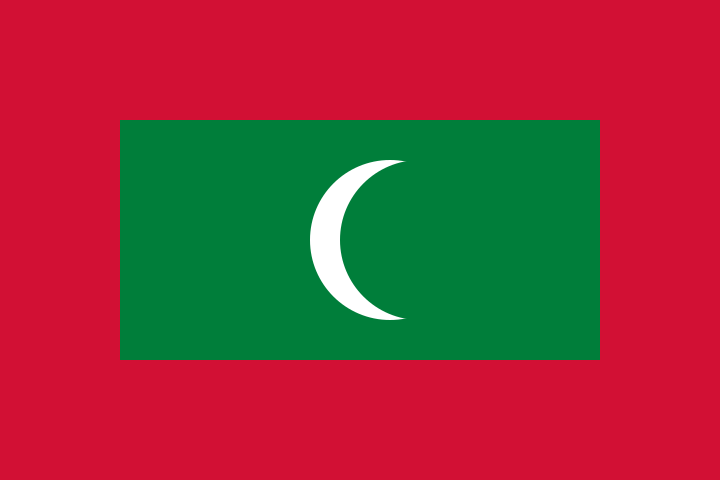
Maldives
Republic of the Maldives
Capital
Malé
Region
Asia
Population
515,132
Area (km²)
300
The Maldives, a tropical island nation in South Asia, spans just 300 km² across 26 atolls in the Indian Ocean, with a population of about 515,132 and its bustling capital in Malé. Renowned for its stunning coral reefs and luxury resorts, it relies heavily on tourism and fishing, though recent GDP figures are unavailable. This low-lying archipelago faces significant challenges from climate change and rising sea levels, making it a global symbol of environmental vulnerability.
Key Insights
The Maldives has a very low percentage of forest area (2.752%), reflecting its small land area (300 sq km) and the intense development pressure on habitable islands, particularly for tourism and housing. This scarcity underscores the nation's vulnerability to environmental changes and land loss.
Only 41.5% of the population is classified as urban, which is relatively low compared to many small, dense island nations. However, given that the country is composed of over 1,000 islands, this figure implies extreme population concentration in the capital region (Malé) and a few other key hubs.
A significant achievement for an island nation spread across many atolls, Maldives reports complete access to electricity for its population. This highlights successful infrastructure development and universal service provision, essential for supporting the high quality of life indicated by other metrics.
The fertility rate of 1.58 is significantly below the replacement level of 2.1, indicating that the native population is not naturally sustaining itself. This trend, common in developed economies, suggests potential future challenges related to an aging population and labor force dependency.
GDP (Current US$)
$6.62B
Year: 2023
GDP Per Capita
$12,587.61
GDP Growth (%)
4.94%
Inflation (%)
2.93%
Unemployment (%)
4.24%
Debt to GDP (%)
N/A%
Source: World Bank • Last updated: 12/24/2025
Historical Trends & Data Visualizations
- GDP Growth (%)
- Population
- Life Expectancy (years)
- Renewable Energy (%)
- GDP Per Capita ($)
Share This Country
News
Real Estate
Government
Travel & Tourism
External References & Resources
Wikipedia
Comprehensive encyclopedia article
Grokipedia
AI-powered encyclopedia search
Google Search
Latest news and information
Google News
Latest news coverage for Maldives
CIA World Factbook
Official intelligence data
BBC News
Trusted news and analysis
UN Data
Official United Nations statistics
World Bank Data
Economic and development indicators