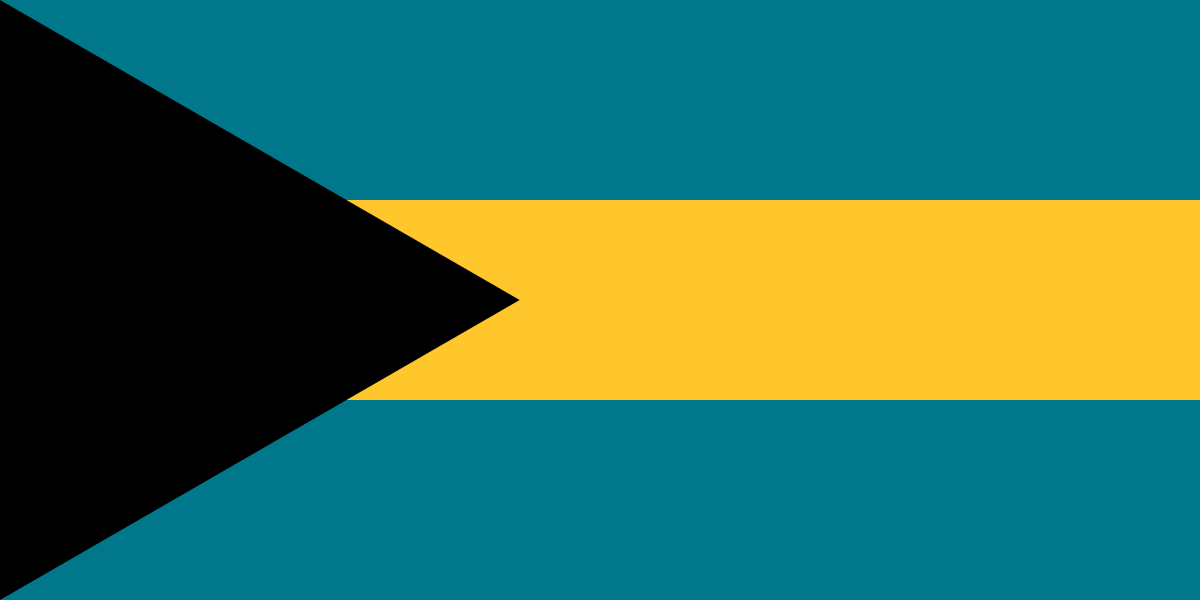
Bahamas
Commonwealth of the Bahamas
Capital
Nassau
Region
Americas
Population
398,165
Area (km²)
13,943
The Bahamas, an archipelago nation in the Americas, boasts a population of around 398,165 spread across 13,943 km² of tropical islands, with Nassau as its bustling capital. Known for its stunning beaches and vibrant tourism-driven economy, the country offers a mix of British colonial history and Caribbean culture. While GDP data is unavailable here, it's a popular haven for offshore finance and cruise ship visitors.
Key Insights
The Bahamas exhibits a high-income economy with a GDP per capita of over $38,000, placing it among the wealthiest nations globally, especially in the Americas. However, the GDP growth rate is relatively modest at 3.048%, suggesting mature economic development or potential limitations to rapid expansion, possibly due to reliance on tourism.
The Bahamas has achieved 100% access to electricity, a significant infrastructure milestone that is critical for development and quality of life. This achievement is particularly notable for an archipelagic nation, demonstrating robust national utility coverage despite geographical challenges.
The fertility rate of 1.37 is significantly below the replacement level (2.1), indicating that the population is not replacing itself naturally. If this trend continues, the Bahamas will face demographic challenges, including an aging population and a shrinking workforce, despite its relatively young current population structure.
A striking 81.321% of the population resides in urban areas, suggesting a high concentration of inhabitants, likely in the capital, Nassau, and Freeport. This high urbanization rate is typical of small island states but creates significant pressure on infrastructure and resources in concentrated areas.
GDP (Current US$)
$15.27B
Year: 2023
GDP Per Capita
$38,231.77
GDP Growth (%)
3.05%
Inflation (%)
3.05%
Unemployment (%)
8.64%
Debt to GDP (%)
73.73%
Source: World Bank • Last updated: 1/23/2026
Historical Trends & Data Visualizations
- GDP Growth (%)
- Population
- Life Expectancy (years)
- Renewable Energy (%)
- GDP Per Capita ($)
Share This Country
Real Estate
Events
Government
Travel & Tourism
External References & Resources
Wikipedia
Comprehensive encyclopedia article
Grokipedia
AI-powered encyclopedia search
Google Search
Latest news and information
Google News
Latest news coverage for Bahamas
CIA World Factbook
Official intelligence data
BBC News
Trusted news and analysis
UN Data
Official United Nations statistics
World Bank Data
Economic and development indicators