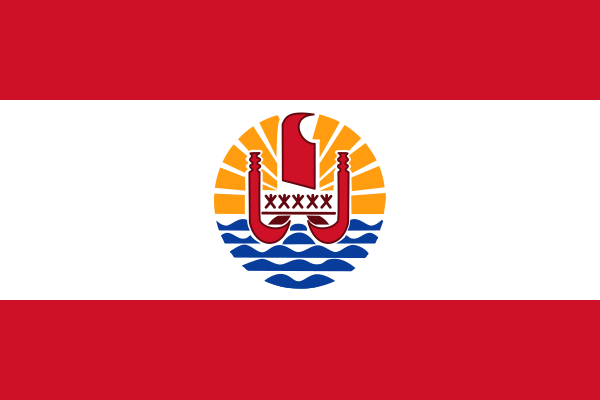
French Polynesia
Capital
Papeetē
Region
Oceania
Population
279,500
Area (km²)
4,167
French Polynesia, an overseas collectivity of France in the South Pacific Ocean, spans over 118 islands and atolls across Oceania, covering 4,167 km² of land with a population of about 279,500. Its capital, Papeetē on Tahiti, serves as the economic and cultural hub, renowned for black-sand beaches, vibrant coral reefs, and Polynesian heritage. While GDP data is not available, the economy thrives on tourism, pearl farming, and fishing, drawing visitors to its idyllic tropical paradise.
Key Insights
Despite being composed of numerous islands and atolls, over 61% of the population resides in urban areas, indicating high concentration around centers like Papeetē. This level of urbanization suggests potential pressure on infrastructure and resources in key population hubs.
Despite strong GDP growth (2.773%) and high GDP per capita, the unemployment rate remains relatively high at nearly 11.75%. This suggests a structural mismatch between available jobs (likely in tourism/services) and the skills or location of the workforce.
French Polynesia has achieved 100% access to electricity, a critical infrastructure milestone often difficult to attain in dispersed island nations. This full coverage supports both high quality of life and sustained economic activity across the territory.
While life expectancy is high, the fertility rate is quite low at 1.50 children per woman, falling well below the replacement rate (2.1). This combination suggests an aging population structure and potential future demographic challenges related to population decline and workforce shrinkage.
GDP (Current US$)
$6.14B
Year: 2023
GDP Per Capita
$21,832.28
GDP Growth (%)
2.77%
Inflation (%)
N/A%
Unemployment (%)
11.75%
Debt to GDP (%)
N/A%
Source: World Bank • Last updated: 12/24/2025
Historical Trends & Data Visualizations
- GDP Growth (%)
- Population
- Life Expectancy (years)
- Renewable Energy (%)
- GDP Per Capita ($)
Share This Country
News
Real Estate
Events
Government
Travel & Tourism
External References & Resources
Wikipedia
Comprehensive encyclopedia article
Grokipedia
AI-powered encyclopedia search
Google Search
Latest news and information
Google News
Latest news coverage for French Polynesia
CIA World Factbook
Official intelligence data
BBC News
Trusted news and analysis
UN Data
Official United Nations statistics
World Bank Data
Economic and development indicators