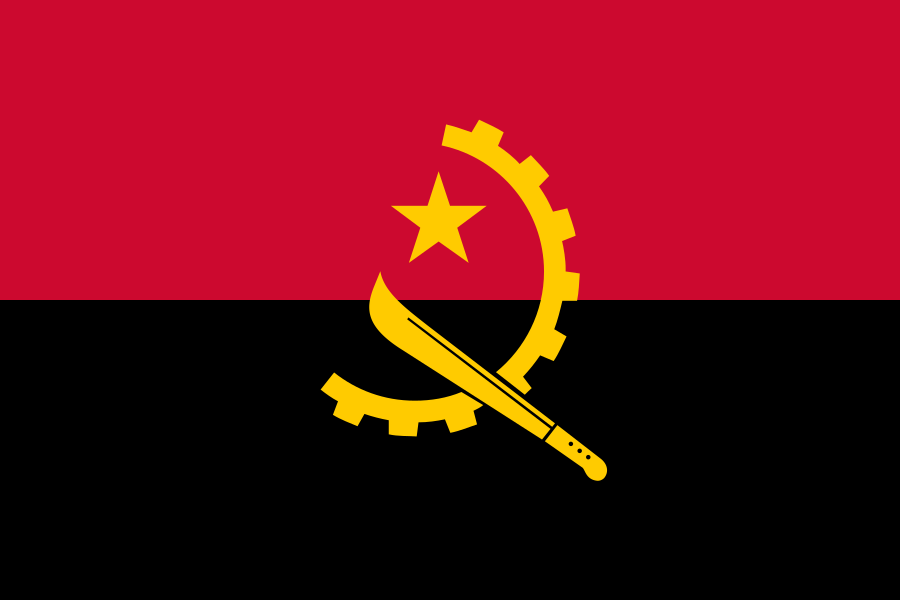
Angola
Republic of Angola
Capital
Luanda
Region
Africa
Population
36,170,961
Area (km²)
1,246,700
Angola, a vast Southern African nation spanning 1,246,700 km², is home to over 36 million people and boasts Luanda as its bustling capital city. Rich in natural resources like oil and diamonds, it has emerged from decades of civil war to focus on economic diversification, though detailed GDP figures are currently unavailable. With stunning landscapes from Atlantic beaches to inland savannas, Angola offers a blend of vibrant culture and untapped potential.
Key Insights
Angola exhibits a high rate of urbanization, with nearly 70% of its population living in urban areas. This figure is quite high for a country with a GDP per capita just under $3,000, suggesting significant internal migration, potentially driven by resource concentration (oil) and limited rural opportunities, leading to pressure on urban infrastructure like the capital, Luanda.
Angola maintains a very high fertility rate of 5.12 children per woman, indicating extremely rapid population expansion. This demographic characteristic places significant long-term strain on the country's economic development, education systems, and job creation capabilities, especially given the current moderate GDP growth rate of 1.26%.
The Angolan economy faces a significant challenge characterized by high double-digit inflation (13.64%) coupled with high unemployment (14.54%). This combination, often referred to as 'stagflationary' pressure, severely erodes the purchasing power of citizens while limiting job opportunities, hindering poverty reduction efforts.
Angola has achieved a relatively high life expectancy of 64.62 years compared to many sub-Saharan peers. Furthermore, the infant mortality rate, while still high globally, is notably lower at 38.3 per 1,000 live births than in many neighboring countries, suggesting targeted improvements in basic healthcare access and maternal health.
GDP (Current US$)
$107.17B
Year: 2023
GDP Per Capita
$2,916.14
GDP Growth (%)
1.26%
Inflation (%)
13.64%
Unemployment (%)
14.54%
Debt to GDP (%)
N/A%
Source: World Bank • Last updated: 1/23/2026
Historical Trends & Data Visualizations
- GDP Growth (%)
- Population
- Life Expectancy (years)
- Renewable Energy (%)
- GDP Per Capita ($)
Share This Country
News
Real Estate
Events
Government
Travel & Tourism
External References & Resources
Wikipedia
Comprehensive encyclopedia article
Grokipedia
AI-powered encyclopedia search
Google Search
Latest news and information
Google News
Latest news coverage for Angola
CIA World Factbook
Official intelligence data
BBC News
Trusted news and analysis
UN Data
Official United Nations statistics
World Bank Data
Economic and development indicators