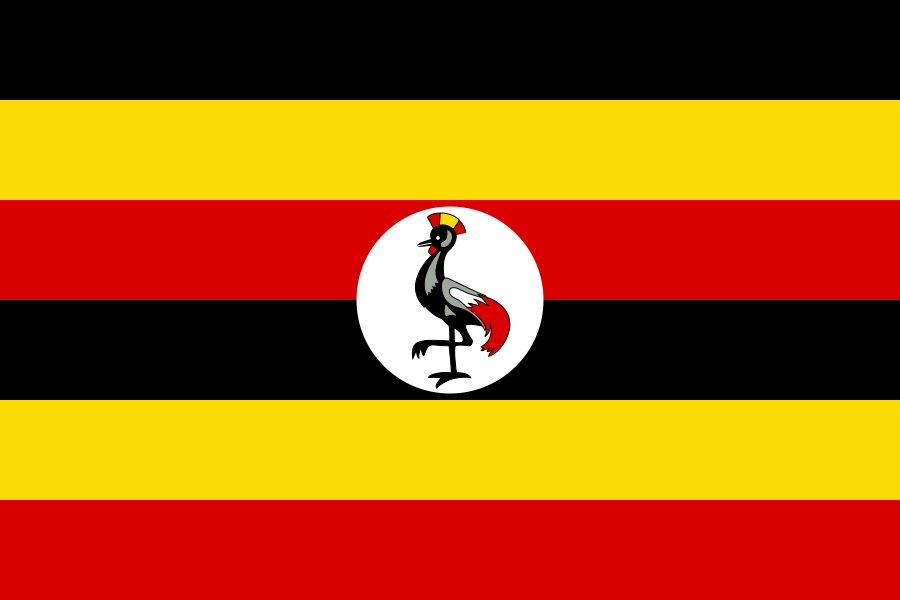
Uganda
Republic of Uganda
Capital
Kampala
Region
Africa
Population
45,905,417
Area (km²)
241,550
Uganda, a landlocked East African nation with a population of about 45.9 million, spans 241,550 km² and is renowned for its stunning landscapes, including Lake Victoria—the source of the Nile River—and biodiverse national parks teeming with gorillas and elephants. Its capital, Kampala, serves as a bustling economic hub in the region, where agriculture drives the economy through exports like coffee and tea, though GDP data is currently unavailable. Home to over 50 ethnic groups, Uganda blends vibrant cultures with ongoing development challenges like infrastructure and healthcare improvements.
Key Insights
Despite rapid population expansion driven by a high fertility rate, Uganda remains largely rural, with only 30.6% of the population living in urban areas. This suggests that the pressure of population growth is primarily being absorbed by rural infrastructure and resources, potentially straining agricultural land and services.
Uganda's economy is experiencing robust growth (5.337% GDP growth), which is slightly lower than its inflation rate (5.351%). While the growth is strong, the fact that inflation marginally exceeds real growth suggests that the average citizen's purchasing power might be stagnating or slightly eroding despite overall economic expansion.
While Uganda has made progress, only about half (51.5%) of the population has access to electricity. This significant gap highlights a major infrastructure challenge limiting economic development and quality of life for nearly half of its citizens, particularly those in rural areas.
Uganda reports a remarkably low unemployment rate of 2.787%, which is characteristic of developed economies, despite having a very low GDP per capita ($1,002.31). This disparity often indicates widespread underemployment or reliance on subsistence agriculture and informal sectors, where workers are technically employed but productivity and wages are low.
GDP (Current US$)
$48.77B
Year: 2023
GDP Per Capita
$1,002.31
GDP Growth (%)
5.34%
Inflation (%)
5.35%
Unemployment (%)
2.79%
Debt to GDP (%)
53.15%
Source: World Bank • Last updated: 12/24/2025
Historical Trends & Data Visualizations
- GDP Growth (%)
- Population
- Life Expectancy (years)
- Renewable Energy (%)
- GDP Per Capita ($)
Share This Country
News
Real Estate
Events
Government
Travel & Tourism
External References & Resources
Wikipedia
Comprehensive encyclopedia article
Grokipedia
AI-powered encyclopedia search
Google Search
Latest news and information
Google News
Latest news coverage for Uganda
CIA World Factbook
Official intelligence data
BBC News
Trusted news and analysis
UN Data
Official United Nations statistics
World Bank Data
Economic and development indicators