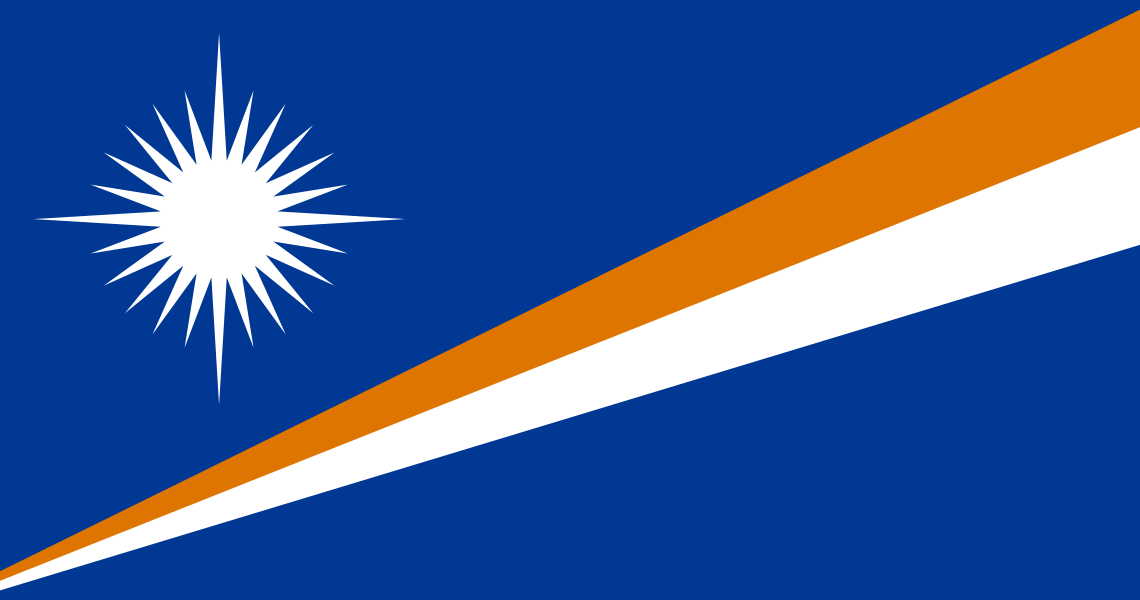
Marshall Islands
Republic of the Marshall Islands
Capital
Majuro
Region
Oceania
Population
42,418
Area (km²)
181
The Marshall Islands, a tiny island nation in Oceania spanning just 181 km², is home to around 42,418 people and consists of scattered atolls in the central Pacific Ocean. Its capital, Majuro, serves as the main hub for government and commerce, with the economy heavily reliant on U.S. aid, fishing, and copra production (though GDP figures are unavailable). Known for its stunning coral reefs and history of nuclear testing, it remains a sovereign state in free association with the United States.
Key Insights
The Marshall Islands experienced a significant economic downturn in 2023, evidenced by a substantial negative GDP growth rate. This level of contraction suggests major internal or external shocks, potentially related to dependency on external aid, fishing licenses, or the lingering effects of global economic instability on small island states.
Despite being a small nation composed primarily of atolls, the Marshall Islands exhibits a very high rate of urbanization, with over three-quarters of the population living in urban centers like Majuro. This concentration puts immense pressure on limited infrastructure and resources in these specific areas, contrasting sharply with the vast, sparsely populated outer islands.
The infant mortality rate in the Marshall Islands is significantly high at 23.5 per 1,000 live births, indicating major challenges in maternal and child healthcare access and quality. This figure is far above the average for high-income countries and suggests urgent public health intervention is needed despite relatively high GDP per capita.
A notable achievement for the Marshall Islands is achieving 100% access to electricity across the population. This level of infrastructure coverage is crucial for development and quality of life, particularly impressive given the logistical difficulties of providing power across scattered islands and atolls.
GDP (Current US$)
$263.76M
Year: 2023
GDP Per Capita
$6,793.24
GDP Growth (%)
-5.01%
Inflation (%)
N/A%
Unemployment (%)
N/A%
Debt to GDP (%)
N/A%
Source: World Bank • Last updated: 12/24/2025
Historical Trends & Data Visualizations
- GDP Growth (%)
- Population
- Life Expectancy (years)
- Renewable Energy (%)
- GDP Per Capita ($)
Share This Country
Real Estate
Events
Government
Travel & Tourism
External References & Resources
Wikipedia
Comprehensive encyclopedia article
Grokipedia
AI-powered encyclopedia search
Google Search
Latest news and information
Google News
Latest news coverage for Marshall Islands
CIA World Factbook
Official intelligence data
BBC News
Trusted news and analysis
UN Data
Official United Nations statistics
World Bank Data
Economic and development indicators