The Lukashenka regime, with Russian backing, has intensified repression, raising grave concerns over human rights violations, including arbitrary detentions, torture, and support for Russia's actions in Ukraine:
• Political Repression and Prisoner Abuse: Over 1,100 political prisoners remain detained as of late 2025, with reports of torture, forced labor (including producing Russian military gear), and deaths in custody; authorities released 227 prisoners under duress in 2024-2025, often requiring coerced guilty pleas.
• Persecution of Journalists, Bloggers, and Influencers: 37 journalists and bloggers imprisoned in 2025 for "extremism" or critical online content; Belarus ranks 4th globally in jailed media workers, with intensified raids, forced confessions, and labeling of outlets as extremist, including sentencing bloggers like Siarhei Biaspalau to 18 years in absentia.
• Support for Russia's Actions in Ukraine: Belarus facilitates Russia's war by hosting troops, allowing territorial use for attacks, and enabling military production/transshipment; this includes regime-backed human trafficking networks and joint "counterterrorism" exercises, viewed by critics as complicity in aggression against Ukraine.
• Transnational Repression and Cultural Erasure: Regime targets exiles with threats, arrests relatives, and abuses Interpol for pursuits; Russian influence erodes Belarusian identity through media control, education changes, and censorship, with over 8,900 politically charged cases since 2020.
Historical Note: These concerns regarding the Lukashenka regime (1994-present) are documented by organizations like Human Rights Watch, Amnesty International, and the UN, which suggest some violations may amount to crimes against humanity; Belarus denies excesses, framing actions as necessary for stability amid Russian alliance. This information is preserved for historical accuracy and accountability.
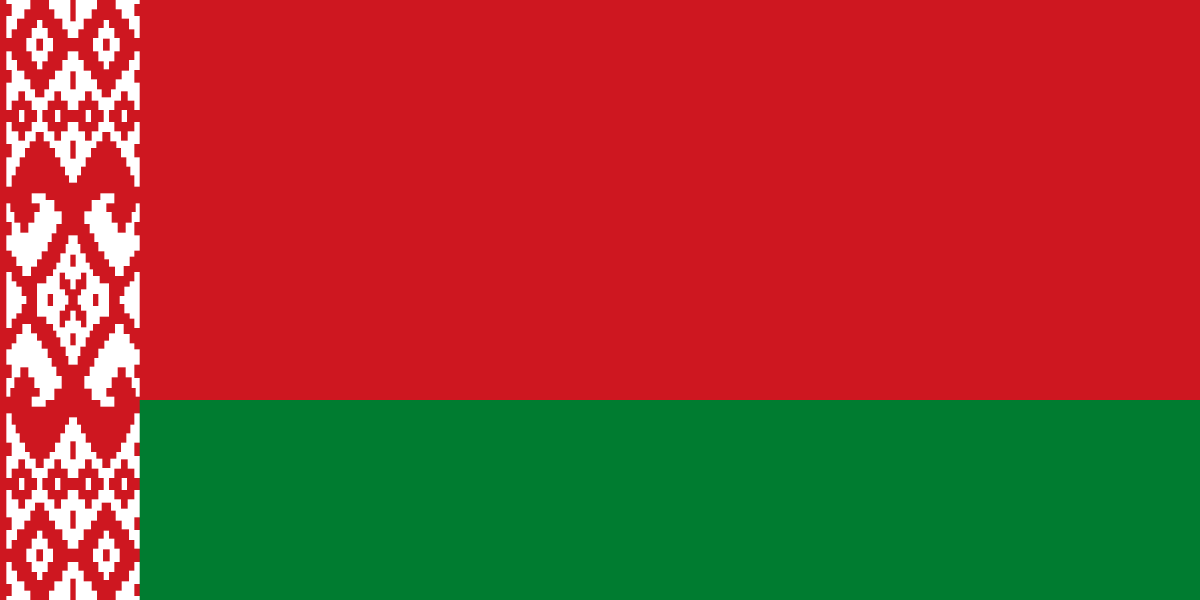
Belarus
Republic of Belarus
Capital
Minsk
Region
Europe
Population
9,109,280
Area (km²)
207,600
Belarus, a landlocked nation in Eastern Europe, boasts a population of around 9.1 million people and covers an area of 207,600 square kilometers, making it roughly the size of Kansas. Its capital, Minsk, serves as the bustling political and cultural hub, blending Soviet-era architecture with modern developments. While GDP data is currently unavailable, the country is known for its strong industrial base, including machinery and agriculture, amid its strategic position bordering Russia and the EU.
Key Insights
Belarus reports an extremely low infant mortality rate of 1.900 per 1,000 live births, a figure comparable to or better than many Western European nations. This achievement suggests a highly effective and centralized public health system focused on maternal and infant care, despite the moderate economic standing.
Belarus has achieved 100% access to electricity across the country, indicating successful infrastructure development and widespread utility coverage. This metric is a key indicator of development and quality of life, positioning Belarus favorably compared to many global peers.
Nearly four-fifths of Belarus’s population (78.815%) lives in urban areas, which is high for Eastern Europe. This concentration contrasts sharply with the country's extensive natural coverage, as 43.408% of its total area is covered by forest, highlighting a significant rural-urban divide in settlement patterns.
The fertility rate of 1.21 is significantly below the replacement level (2.1), placing Belarus among countries facing the most severe demographic crises globally. This extremely low birth rate, combined with a stable or declining population, indicates a rapidly aging society and long-term population contraction challenges.
GDP (Current US$)
$72.48B
Year: 2023
GDP Per Capita
$7,896.75
GDP Growth (%)
4.13%
Inflation (%)
5%
Unemployment (%)
3.46%
Debt to GDP (%)
N/A%
Source: World Bank • Last updated: 1/23/2026
Historical Trends & Data Visualizations
- GDP Growth (%)
- Population
- Life Expectancy (years)
- Renewable Energy (%)
- GDP Per Capita ($)
Share This Country
News
Real Estate
Events
Government
Travel & Tourism
External References & Resources
Wikipedia
Comprehensive encyclopedia article
Grokipedia
AI-powered encyclopedia search
Google Search
Latest news and information
Google News
Latest news coverage for Belarus
CIA World Factbook
Official intelligence data
BBC News
Trusted news and analysis
UN Data
Official United Nations statistics
World Bank Data
Economic and development indicators