Belgium
Kingdom of Belgium
Country have opposed or blocked EU plans to use or confiscate frozen Russian sovereign assets (primarily held in Belgium's Euroclear) for financing Ukraine's defense, reconstruction, or reparations and/or maintain indefinite exemptions for Russian oil imports via the Druzhba pipeline (with some ongoing gas/nuclear ties), and others sustain limited permitted trade flows amid overall ~80-90% reduction in EU-Russia commerce since 2022 (sources: Reuters, Politico, The Guardian, Responsible Statecraft, Al Jazeera, December 2025 reports).

Capital
Brussels
Region
Europe
Population
11,825,551
Area (km²)
30,528
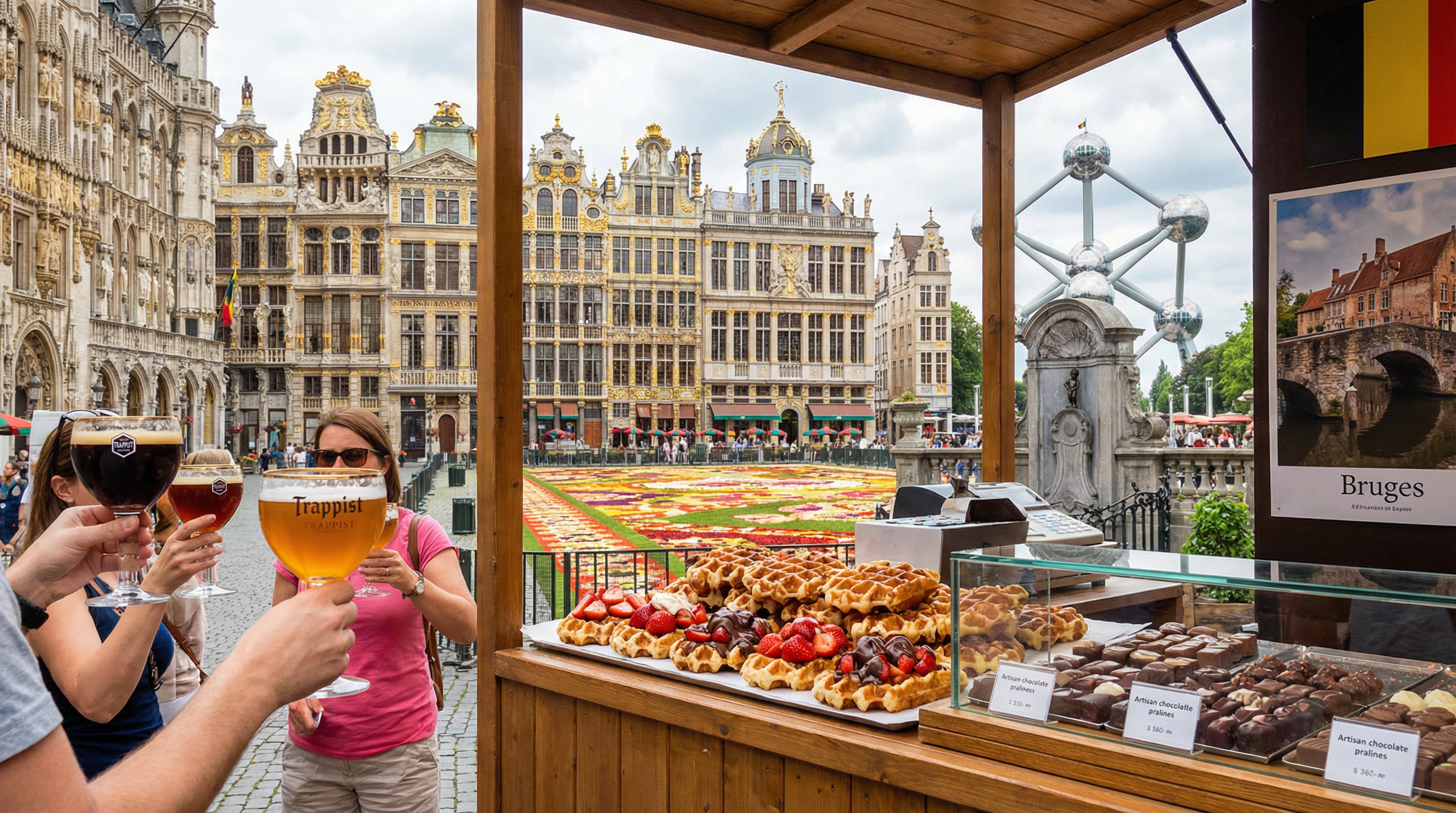
Belgium, a compact European nation spanning 30,528 km², boasts a population of about 11.8 million and serves as a key hub for the European Union with its capital, Brussels, hosting major EU institutions. Famous for its medieval cities, world-class chocolates, and diverse linguistic regions (Dutch, French, and German-speaking), it's a cultural crossroads blending Flemish and Walloon influences. With a rich history of art and architecture, Belgium punches above its weight in global affairs and cuisine.
Key Insights
The entire population of Belgium enjoys 100% access to electricity, a foundational metric for development and quality of life. However, the lack of data on renewable energy percentage and CO2 emissions per capita leaves a significant gap in understanding the sustainability and environmental impact of this universal energy access.
Belgium's fertility rate stands at a very low 1.47 children per woman, significantly below the replacement level of 2.1. This demographic trend suggests an aging population and potential future strain on social security and the workforce, a common challenge among highly developed European nations.
Despite the lack of specific data on health expenditure or literacy, Belgium demonstrates outstanding public health infrastructure, highlighted by an extremely low infant mortality rate of just 3.000 per 1,000 live births. This figure is competitive with the best-performing nations globally and indicates high-quality prenatal and postnatal care.
Belgium is one of the most urbanized countries in Europe, with 87.551% of its population living in urban areas. Given its small total area (30,528 sq km), this high urbanization rate contributes to significant population density, posing potential challenges for infrastructure and environmental management, despite 22.6% forest cover.
GDP (Current US$)
$651.33B
Year: 2023
GDP Per Capita
$55,291.48
GDP Growth (%)
1.71%
Inflation (%)
4.05%
Unemployment (%)
5.53%
Debt to GDP (%)
N/A%
Source: World Bank • Last updated: 1/23/2026
Historical Trends & Data Visualizations
- GDP Growth (%)
- Population
- Life Expectancy (years)
- Renewable Energy (%)
- GDP Per Capita ($)
Share This Country
Real Estate
Events
Government
Travel & Tourism
External References & Resources
Wikipedia
Comprehensive encyclopedia article
Grokipedia
AI-powered encyclopedia search
Google Search
Latest news and information
Google News
Latest news coverage for Belgium
CIA World Factbook
Official intelligence data
BBC News
Trusted news and analysis
UN Data
Official United Nations statistics
World Bank Data
Economic and development indicators