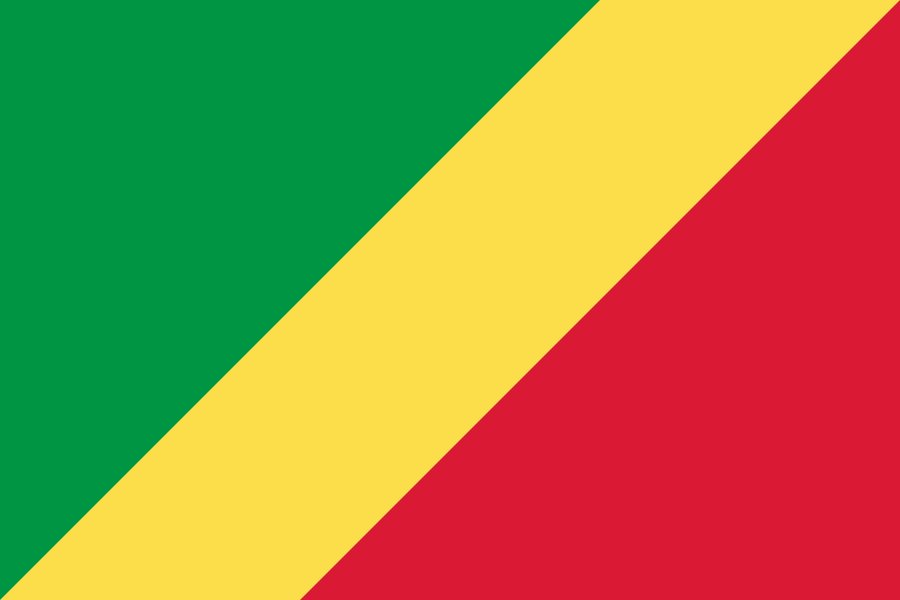
Republic of the Congo
Capital
Brazzaville
Region
Africa
Population
6,142,180
Area (km²)
342,000
The Republic of the Congo, a Central African nation often called Congo-Brazzaville, spans 342,000 km² of lush rainforests and rivers, with a population of around 6.1 million and Brazzaville as its vibrant capital. Its economy relies heavily on oil exports, though GDP figures are not available here, supporting a diverse mix of urban and rural communities. Bordered by five countries, it's known for its biodiversity hotspots like the Congo Basin, but faces challenges from political instability and infrastructure needs.
Key Insights
The country faces a critical challenge with its high unemployment rate, nearing 20%. This figure is indicative of structural economic issues and the difficulty the 1.9% GDP growth rate has in absorbing the labor force, potentially fueling social instability and hindering poverty reduction efforts.
A remarkable 64.13% of the Republic of the Congo's land area is covered by forest. This vast forest area represents a crucial global carbon sink and a significant natural resource, positioning the country as a major player in environmental conservation efforts in the Congo Basin.
The Republic of the Congo maintains a high fertility rate of 4.16 children per woman, suggesting continued rapid population growth. However, this is coupled with a relatively strong life expectancy of 65.77 years, which is above the average for Middle Africa, indicating improvements in basic healthcare and living standards.
Despite the country's status as an oil producer and its relatively high urbanization rate, only about half (51.3%) of the population has access to electricity. This significant infrastructure gap limits industrial development and reduces the quality of life for nearly half of the citizens, particularly in rural areas.
GDP (Current US$)
$15.32B
Year: 2023
GDP Per Capita
$2,477.98
GDP Growth (%)
1.91%
Inflation (%)
4.3%
Unemployment (%)
19.9%
Debt to GDP (%)
N/A%
Source: World Bank • Last updated: 12/24/2025
Historical Trends & Data Visualizations
- GDP Growth (%)
- Population
- Life Expectancy (years)
- Renewable Energy (%)
- GDP Per Capita ($)
Share This Country
Real Estate
Events
Government
Travel & Tourism
External References & Resources
Wikipedia
Comprehensive encyclopedia article
Grokipedia
AI-powered encyclopedia search
Google Search
Latest news and information
Google News
Latest news coverage for Republic of the Congo
CIA World Factbook
Official intelligence data
BBC News
Trusted news and analysis
UN Data
Official United Nations statistics
World Bank Data
Economic and development indicators