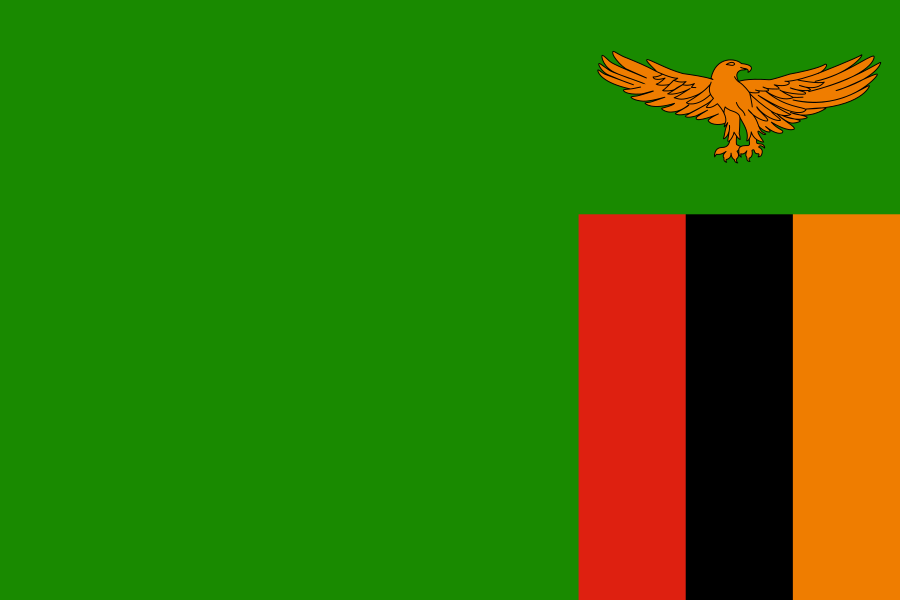
Zambia
Republic of Zambia
Capital
Lusaka
Region
Africa
Population
19,693,423
Area (km²)
752,612
Zambia, a landlocked nation in southern Africa, spans 752,612 km² and is home to approximately 19.7 million people, blending vibrant cultures and stunning landscapes like Victoria Falls. Its bustling capital, Lusaka, serves as the political and economic heart, driving growth in mining, agriculture, and tourism. With a youthful population and abundant natural resources, Zambia offers endless adventure for explorers and investors alike.
Key Insights
Despite the country's high forest cover and potential for renewable energy (often hydro), only just over half (51.100%) of the population has access to electricity. This significant energy poverty acts as a major constraint on industrialization, education, and overall quality of life, especially in rural areas.
Zambia shows moderate success in health indicators, with a life expectancy of 66.35 years, which is above the average for many lower-income countries. The infant mortality rate of 30.900 per 1,000 live births, while still high by global standards, indicates progress compared to historical African averages, suggesting targeted health interventions are having some effect.
Nearly 60% of Zambia's land area (59.524%) is covered by forests. This exceptionally high percentage highlights the country's critical role in regional biodiversity and carbon sequestration, but also underscores the challenge of balancing economic development and resource extraction with environmental preservation.
Zambia reports a high literacy rate of 82.042%, which is commendable and often associated with more developed economies. This suggests a relatively successful investment in foundational education, providing a strong human capital base despite the country's low GDP per capita and significant development challenges.
GDP (Current US$)
$27.58B
Year: 2023
GDP Per Capita
$1,330.73
GDP Growth (%)
5.37%
Inflation (%)
10.89%
Unemployment (%)
5.91%
Debt to GDP (%)
N/A%
Source: World Bank • Last updated: 12/24/2025
Historical Trends & Data Visualizations
- GDP Growth (%)
- Population
- Life Expectancy (years)
- Renewable Energy (%)
- GDP Per Capita ($)
Share This Country
News
Real Estate
Events
Government
Travel & Tourism
External References & Resources
Wikipedia
Comprehensive encyclopedia article
Grokipedia
AI-powered encyclopedia search
Google Search
Latest news and information
Google News
Latest news coverage for Zambia
CIA World Factbook
Official intelligence data
BBC News
Trusted news and analysis
UN Data
Official United Nations statistics
World Bank Data
Economic and development indicators