Slovakia
Slovak Republic
Country have opposed or blocked EU plans to use or confiscate frozen Russian sovereign assets (primarily held in Belgium's Euroclear) for financing Ukraine's defense, reconstruction, or reparations and/or maintain indefinite exemptions for Russian oil imports via the Druzhba pipeline (with some ongoing gas/nuclear ties), and others sustain limited permitted trade flows amid overall ~80-90% reduction in EU-Russia commerce since 2022 (sources: Reuters, Politico, The Guardian, Responsible Statecraft, Al Jazeera, December 2025 reports).
Capital
Bratislava
Region
Europe
Population
5,413,813
Area (km²)
49,037
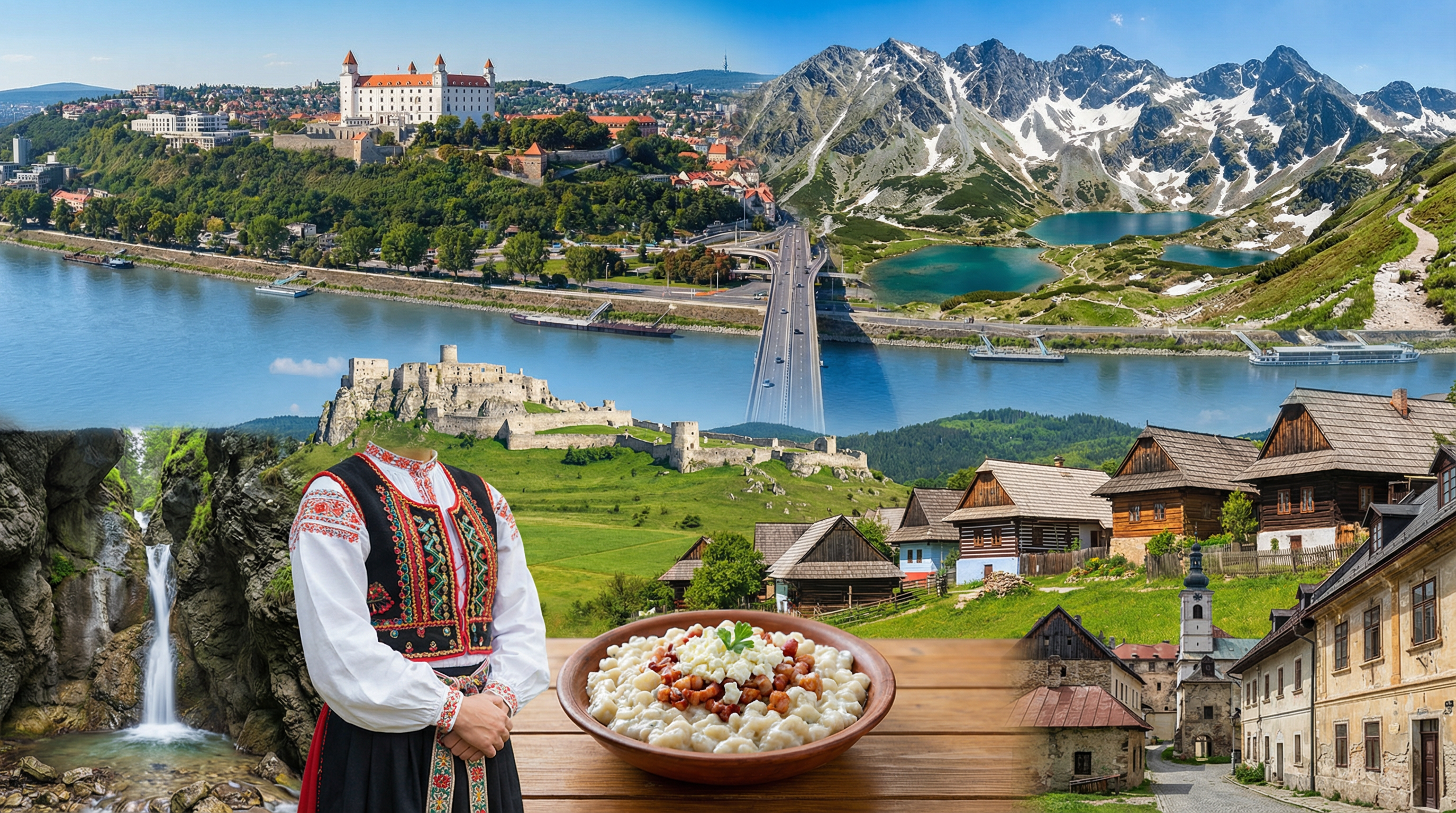
Slovakia, a landlocked Central European nation with a population of about 5.4 million, spans 49,037 km² and boasts Bratislava as its vibrant capital along the Danube River. As a member of the EU and NATO, it features a diverse landscape of mountains, castles, and thermal spas, with a strong economy driven by automotive manufacturing and tech industries (though exact GDP figures vary, it's around $115 billion USD). Known for its rich folk traditions and UNESCO sites like the historic town of Banská Štiavnica, Slovakia offers a blend of natural beauty and cultural heritage.
Key Insights
Slovakia's fertility rate is 1.49, significantly below the replacement level of 2.1. This indicates a long-term demographic challenge, suggesting that without substantial immigration, the population will likely continue to age and shrink, straining future social security and labor markets.
A significant portion of Slovakia's land, 40.056%, is covered by forest. This high percentage highlights a major environmental asset and suggests strong conservation efforts or favorable geography, contributing to biodiversity and potentially carbon sequestration.
Slovakia has achieved 100% access to electricity, a foundational indicator of development and infrastructure success. This guarantees basic necessities and supports industrial and technological advancement across the entire population.
With a GDP per capita exceeding $24,600, Slovakia maintains a remarkably low unemployment rate of 5.840%. This suggests a tight labor market and successful integration into the EU economic structure, placing it favorably compared to many other Central and Southern European nations.
GDP (Current US$)
$133.58B
Year: 2023
GDP Per Capita
$24,614.87
GDP Growth (%)
2.11%
Inflation (%)
10.53%
Unemployment (%)
5.84%
Debt to GDP (%)
N/A%
Source: World Bank • Last updated: 12/24/2025
Historical Trends & Data Visualizations
- GDP Growth (%)
- Population
- Life Expectancy (years)
- Renewable Energy (%)
- GDP Per Capita ($)
Share This Country
News
Real Estate
Events
Government
Travel & Tourism
External References & Resources
Wikipedia
Comprehensive encyclopedia article
Grokipedia
AI-powered encyclopedia search
Google Search
Latest news and information
Google News
Latest news coverage for Slovakia
CIA World Factbook
Official intelligence data
BBC News
Trusted news and analysis
UN Data
Official United Nations statistics
World Bank Data
Economic and development indicators