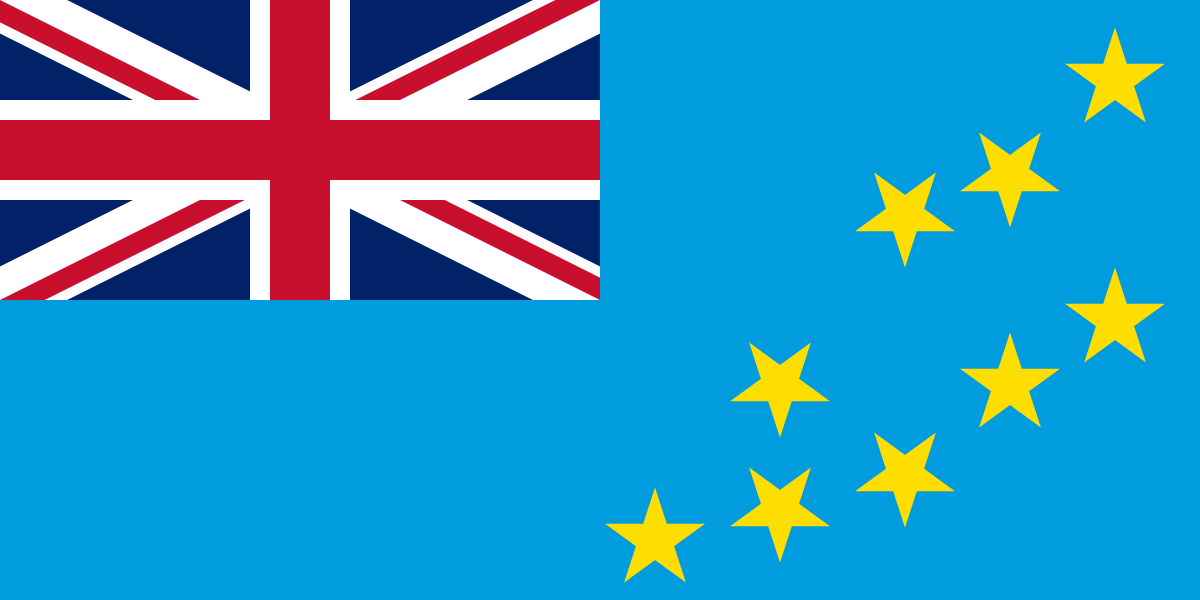
Tuvalu
Capital
Funafuti
Region
Oceania
Population
10,643
Area (km²)
26
Tuvalu is a tiny Polynesian island nation in Oceania, boasting a population of just 10,643 across its mere 26 km² of land, making it one of the world's smallest countries by both size and population. The capital, Funafuti, serves as the hub for its atoll-based communities, where the economy relies on fishing, remittances, and international aid (with GDP data unavailable). Highly vulnerable to climate change and rising sea levels, Tuvalu captivates with its stunning coral reefs and resilient culture.
Key Insights
A third of Tuvalu's limited land area (33.333%) is covered by forest. Given the nature of low-lying atolls, this high percentage of natural vegetation is crucial for ecosystem stability, coastal protection, and biodiversity, emphasizing the importance of conservation efforts in the face of climate change.
Tuvalu exhibits a high fertility rate (3.21 children per woman), which typically indicates a younger population structure. However, the relatively low life expectancy of 67.11 years suggests ongoing health challenges or environmental stressors that prevent the population from reaching higher average ages, despite the high birth rate.
Tuvalu maintains a healthy GDP growth rate of 3.853%, indicating positive economic momentum. While the total GDP is extremely small ($62.28 million), this growth rate suggests resilience and successful development efforts, potentially driven by fishing licenses or international aid.
Tuvalu has achieved 100% access to electricity for its population, a significant infrastructure milestone. This achievement is particularly noteworthy for a remote island nation and suggests successful government investment in energy grids, likely utilizing renewable sources (though the specific percentage is unavailable).
GDP (Current US$)
$62.28M
Year: 2023
GDP Per Capita
$6,344.78
GDP Growth (%)
3.85%
Inflation (%)
N/A%
Unemployment (%)
N/A%
Debt to GDP (%)
N/A%
Source: World Bank • Last updated: 12/24/2025
Historical Trends & Data Visualizations
- GDP Growth (%)
- Population
- Life Expectancy (years)
- Renewable Energy (%)
- GDP Per Capita ($)
Share This Country
Real Estate
Government
Travel & Tourism
External References & Resources
Wikipedia
Comprehensive encyclopedia article
Grokipedia
AI-powered encyclopedia search
Google Search
Latest news and information
Google News
Latest news coverage for Tuvalu
CIA World Factbook
Official intelligence data
BBC News
Trusted news and analysis
UN Data
Official United Nations statistics
World Bank Data
Economic and development indicators